Quick contact info

icon_widget_image Mon–Fri 8am–6pm, Sat 10am–2pm icon_widget_image 6720 NW 20th Ave, Fort Lauderdale, FL icon_widget_image (954) 486-2898 icon_widget_image info@browardinsulation.com

Broward Insulation

high electric bills in florida homes what s driving them 1783783574823

High Electric Bills in Florida Homes: What’s Driving Them

Executive Summary: Florida’s average residential electric bill reached $207 per month during the summer of 2026, a 45% increase from 2021 levels. Three forces are driving this: Climate Zone 1A air conditioning dependence, storm recovery surcharges, and the Florida Public Service Commission-approved FPL base rate increase that took effect January 1, 2026. The dominant causes of above-average consumption in a high electric bill Florida home are deteriorating HVAC efficiency, attic insulation with collapsed R-value, and thermal envelope air infiltration. Each is measurable and directly fixable. Attic insulation retrofits paired with comprehensive air sealing consistently deliver the highest return on investment, with FPL’s $220 ceiling insulation rebate and the federal 25C tax credit of up to $1,200 substantially reducing net project cost. A licensed energy audit from an FPL-approved contractor is the most efficient first step before any capital expenditure, it provides code-referenced diagnostics and rebate eligibility confirmation at no upfront cost.

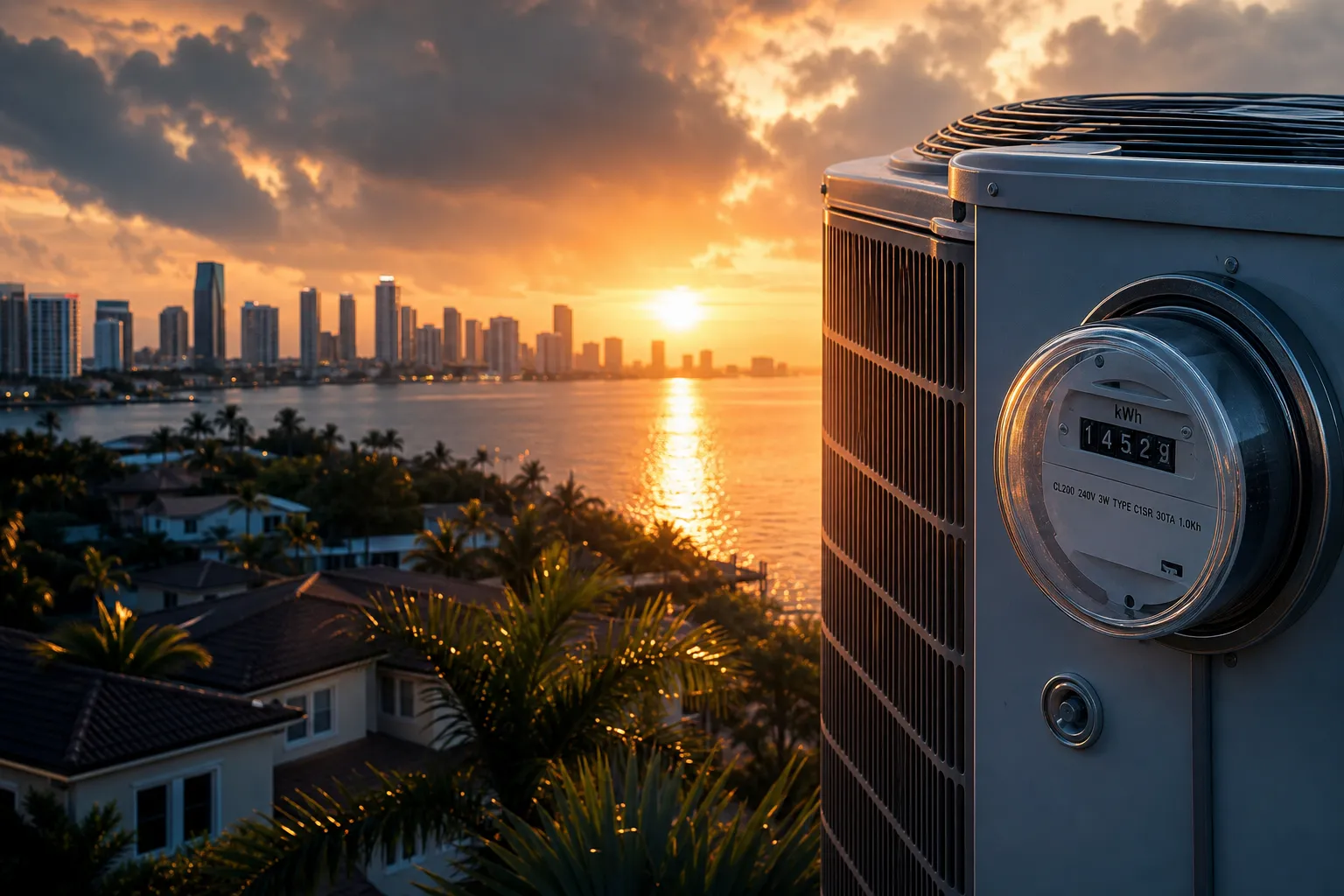
The average Florida homeowner paid $207 per month in electricity costs during the summer 2026, a figure that has climbed 45% since 2021. A high electric bill in a Florida home almost never traces back to a high utility rate. Florida’s residential rate of 15.38 cents per kilowatt-hour sits 14% below the national average of 18.83 cents per kilowatt-hour. The driver is volume. South Florida homes in IECC Climate Zone 1A consume approximately 1,100 kWh per month, compared to the national average of 875 kWh, with central air conditioning systems running 18 to 22 hours daily from June through September.

A high electric bill in a South Florida home is almost never a random outcome. It consistently traces back to one or more identifiable system failures, each with measurable energy penalties and proven remediation pathways. Contractors with nearly five decades of continuous operation in IECC Climate Zone 1A, such as Broward Insulation, can quantify these failures with diagnostic precision before a property owner commits capital to any remediation scope.

Why Florida power bills consistently outpace consumption expectations

The rate-vs.-usage paradox

Florida’s 15.38 cents per kilowatt-hour residential rate is meaningfully lower than the national average, yet summer residential bills exceed the national average by a significant margin. The explanation is consumption volume, not rate structure. A 2,000 to 2,500 square foot home in South Florida requires a 3-ton, 18 SEER central air conditioning system running nearly continuously during peak summer months, consuming 650 to 850 kWh per month from the AC unit alone. A comparable home in a temperate climate may consume 875 kWh total across all end uses combined. For independent state-level rate comparison data, see Florida electricity price information provided by industry analysts.

Climate Zone 1A imposes a latent heat load that temperate building models do not account for. Outdoor air entering the thermal envelope carries both sensible heat and moisture, requiring HVAC systems to work against humidity as well as temperature differential. This latent cooling demand extends system runtime and increases total energy consumption well beyond what standard load calculations project for equivalent square footage.

Rate increases and storm surcharges compounding the baseline

The Florida Public Service Commission approved a $6.9 billion FPL base rate increase effective January 1, 2026, the largest in FPL’s history, adding approximately $2.50 per month to the average residential bill and running through 2029. This increase layers on top of storm recovery surcharges tied to Hurricanes Ian and Milton, which added $5 to $15 per month to bills over the prior 12 to 24 months. Duke Energy customers experienced a separate 2% annual base rate increase beginning in 2025. The cumulative effect is material: a typical Broward County homeowner now pays hundreds of dollars more annually than in 2021 for identical consumption patterns. Local reporting and industry coverage document the regulatory approval and scale of the increase.

Why your Florida home has a high electric bill: benchmarking the numbers

Pulling the right numbers from your statement

The kilowatt-hour total on the utility statement, not the dollar amount, is the correct diagnostic metric for identifying system-level failures. Dollar figures fluctuate with rate adjustments and surcharge schedules; kilowatt-hour consumption isolates actual energy behavior independent of pricing variables. South Florida research and utility data suggest a typical 2,000 square foot Broward County home consumes roughly 900 to 1,200 kWh per month in summer. Usage well above that range, for example, above 1,400 kWh, often indicates a system-level issue rather than normal Climate Zone 1A load and typically warrants a professional energy assessment before the next billing cycle.

When your usage signals a fixable problem

Several observable conditions point to an insulation or thermal envelope failure rather than normal utility rate exposure:

  • Bills that spike disproportionately month-over-month with no change in occupancy, thermostat settings, or operating schedules
  • An air conditioning system that operates continuously without reaching the programmed set temperature during normal daytime conditions
  • Rooms that feel noticeably warmer than the thermostat setting despite closed supply registers, a temperature differential of several degrees may indicate envelope or system issues

These conditions are warning signs, not a confirmed diagnosis. A licensed energy audit is required to identify which specific system is generating the energy penalty, quantify the magnitude of the loss in code-referenced terms, and determine the fastest path to correcting it.

The primary culprits behind excessive energy costs in South Florida

A deteriorating or inefficiency-matched AC system

A 3-ton, 18 SEER central air conditioning system in a typical South Florida home consumes 650 to 850 kWh per month under normal operating conditions. An aging 10 to 13 SEER unit serving the same structure can consume 30 to 40% more energy for identical cooling output. Oversized systems compound this problem by short-cycling, completing temperature cycles before adequate dehumidification occurs. In Climate Zone 1A, where latent heat load frequently exceeds sensible heat load, incomplete dehumidification forces extended correction cycles that drive total consumption beyond what any efficiency rating alone would predict. For practical context on how much energy modern air conditioners use in Southwest Florida conditions, consult industry usage guidance.

Degraded attic insulation and collapsed R-value

Florida’s extreme humidity and sustained radiant heat exposure degrade fiberglass batt insulation over time, compressing the material below its rated R-value. Fiberglass insulation can lose substantial R-value when saturated or chronically exposed to high humidity, per DOE Building America Solution Center guidance, a home nominally rated at R-19 may be performing significantly below that in practice. Attic temperatures in South Florida can exceed 130°F or more during peak summer conditions, converting an under-insulated attic into a radiant heat battery that imposes a thermal load exceeding the design capacity of most residential HVAC systems. The result is extended runtimes, elevated consumption, and accelerated equipment wear, all operating simultaneously.

Air infiltration through the thermal envelope

Gaps at structural penetrations, unsealed duct connections, deteriorated weatherstripping, and unaddressed attic bypasses allow conditioned air to escape while drawing hot, humid outdoor air into the structure. Per ENERGY STAR’s Thermal Bypass Checklist and DOE Building America Solution Center data, this infiltration mechanism accounts for 25 to 40% of energy loss in vented or inadequately sealed South Florida buildings. Stack effect dynamics in two-story and multi-unit properties compound this infiltration penalty year-round, as pressure differentials between floor levels drive continuous air exchange regardless of outdoor temperature.

Running a structured home energy assessment to isolate the largest savings opportunity

What a professional energy assessment actually measures

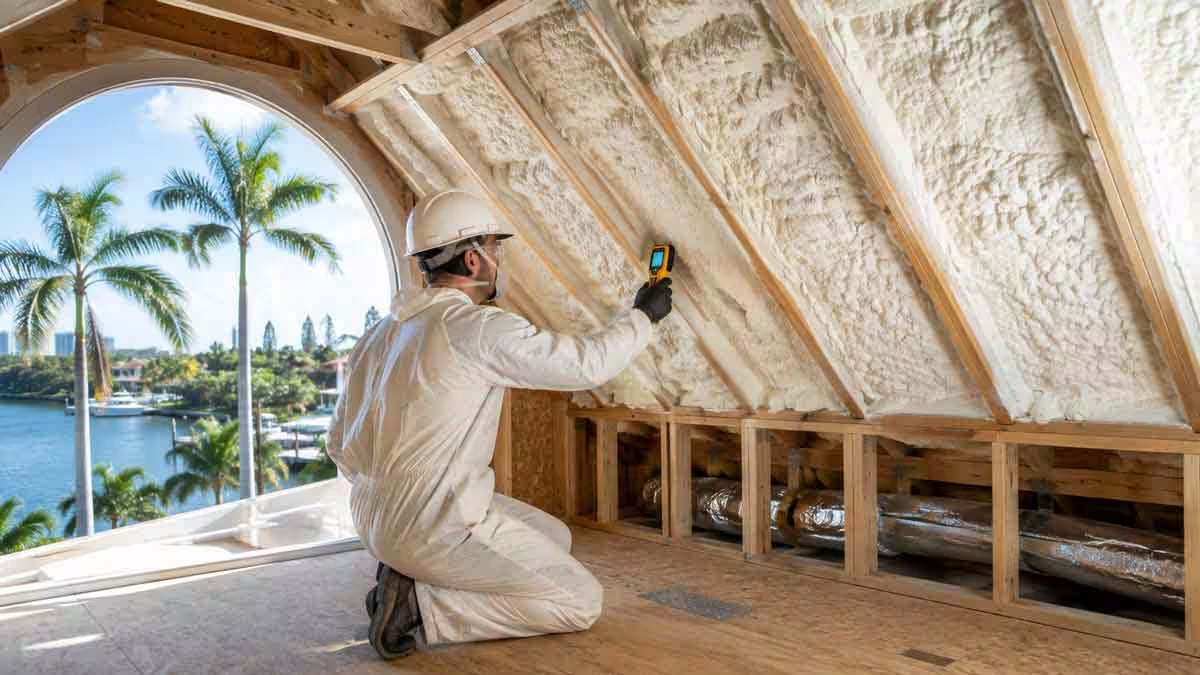
A licensed energy audit uses three primary diagnostic instruments. First, a blower door test quantifies air infiltration by depressurizing the structure and measuring airflow. Second, infrared thermography identifies envelope hot spots, insulation voids, and duct leakage locations. Third, HVAC runtime data analysis correlates system operation with outdoor conditions and thermostat programming. Together, these tools produce code-referenced, actionable findings suitable for contractor scoping and rebate documentation. A utility-provided online energy calculator produces regional averages, not property-specific diagnostics, it is not a substitute for a formal engineering scope or rebate application support.

Why duct location matters in pre-2000 South Florida construction

Homes constructed before 2000 in Broward and Palm Beach counties frequently route supply and return ducts through vented attic spaces or unconditioned crawl spaces. ENERGY STAR and DOE Building America Solution Center research documents that 25 to 40% of HVAC output is lost before conditioned air reaches the living space in these configurations, through a combination of duct leakage and conductive heat gain from the surrounding unconditioned environment. This is among the most commonly overlooked contributors to above-benchmark energy consumption in aging South Florida residential properties and warrants priority attention in any licensed energy assessment scope.

High-impact solutions ranked by return on investment and payback period

Attic insulation retrofit: the highest-ROI intervention for most Florida homes

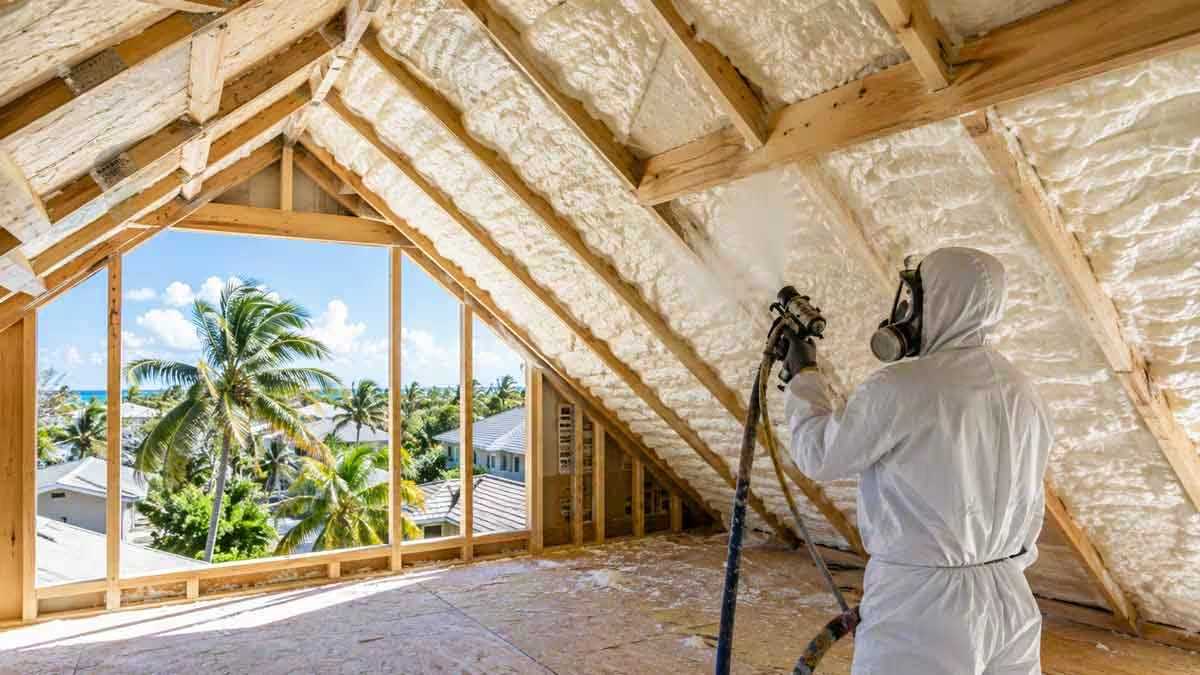
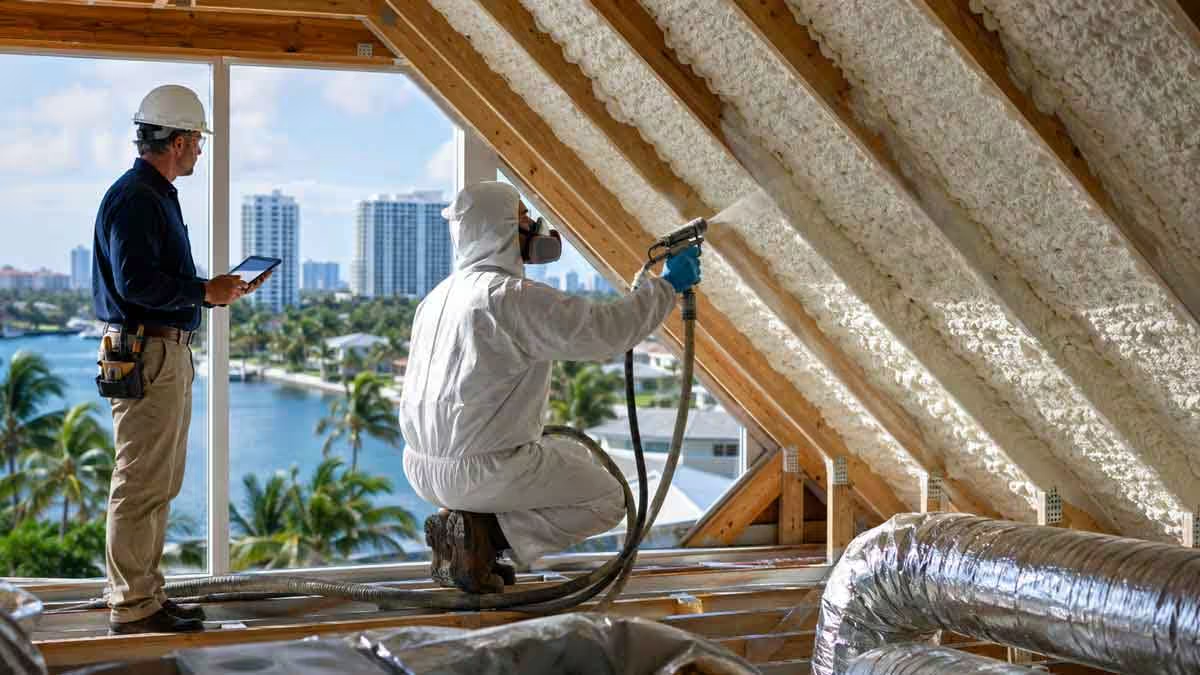
Upgrading attic insulation from degraded R-11 or R-19 to IECC-compliant R-38, paired with comprehensive air sealing at top plates, penetrations, and attic bypasses, is the single intervention with the most consistent payback profile in Climate Zone 1A. When FPL’s $220 ceiling insulation rebate and the federal Energy Efficient Home Improvement Credit of up to $1,200 are applied, local Broward County installers report payback periods of 3 to 5 years on a standard 2,000 square foot attic retrofit. Before-and-after insulation case studies demonstrate how properly executed material selection, including closed-cell spray foam and blown-in systems, performs under South Florida’s radiant heat exposure and chronic humidity profile.

HVAC system replacement and duct remediation

Replacing a sub-14 SEER unit with a 16+ SEER2 inverter-driven system reduces air conditioning energy consumption by 30 to 40%, with FPL offering $200 to $500 in instant rebates for qualifying high-efficiency systems. The ongoing R-410A refrigerant phase-out has created discounts of 20% or more on existing equipment stock, making right-now replacement more cost-effective than it has been in years. Duct sealing and rebalancing completed alongside an insulation retrofit eliminates the compounding losses that operate independently across both systems, amplifying the return on each investment when executed as a coordinated scope.

Comprehensive air sealing at the thermal envelope

Air sealing at top plates, attic bypasses, and mechanical penetrations is typically integrated into the insulation retrofit scope rather than executed as a standalone engagement. This integration directly reduces the infiltration penalty documented in the preceding section and amplifies the energy reduction produced by the insulation upgrade. The federal 25C tax credit applies to qualifying air sealing materials as part of the insulation credit category, combined costs are eligible for a 30% credit up to $1,200 annually, resetting each calendar year through 2032 with no income cap.

FPL rebates, federal credits, and no-cost energy audits: the financial case for acting now

Stacking available incentives to reduce net project cost

Two incentive programs are currently active and can be applied simultaneously for Broward County residential properties. FPL’s instant ceiling insulation rebate provides $220 at point of invoice, available exclusively through FPL-approved Participating Independent Contractors for homes with existing insulation rated below R-8. The federal Energy Efficient Home Improvement Credit (25C) provides 30% of qualifying insulation and air sealing costs up to $1,200 annually, with no income threshold and an annual reset through 2032.

A third program, the Florida Energy Saver Program, is pending final DOE launch authorization as of mid-2026. It includes two tracks: the HEAR rebate, which targets income-qualified households, and the HOMES rebate, which is designed to be available to all income levels and will offer rebates based on projected whole-home energy savings. Property owners are encouraged to register at the Florida Energy Saver Program portal now to receive launch notification when applications open. Stacking rules for combining state rebates with the federal 25C credit will be governed by program guidance at launch.

How a no-cost energy audit changes the financial calculation

Before committing capital to any envelope or HVAC upgrade, a licensed energy audit from an FPL-approved contractor produces a code-referenced diagnostic, a rebate eligibility determination, and a prioritized remediation scope at no upfront cost. This assessment ensures you address the highest-ROI fix first, rather than spending capital on a lower-priority upgrade. Broward Insulation, serving Broward, Palm Beach, and Miami-Dade counties since 1977, provides no-cost energy assessments and manages FPL rebate submissions end-to-end, allowing property owners to access available incentives without independently navigating utility rebate portals or federal tax credit documentation requirements.

The rational next step for South Florida property owners

If you’re dealing with a high electric bill in your Florida home in 2026, the root cause is almost always one or more of the same fixable failures: HVAC inefficiency, attic insulation degradation, or thermal envelope air infiltration. These failures do not resolve on their own. They compound over time as insulation continues to degrade, equipment efficiency declines, and FPL rates escalate under the current rate structure through 2029.

With FPL rebates, the 25C federal tax credit, and the Florida Energy Saver Program’s HEAR and HOMES tracks approaching launch, the net cost of a properly scoped insulation and HVAC upgrade is substantially lower than most property owners assume before a formal assessment. The incentive window has real boundaries: the 25C credit resets annually through 2032, FPL rebates are subject to program availability, and the R-410A equipment discount window will close as existing inventory is depleted.

The most rational first step is scheduling a no-cost energy audit with a licensed, FPL-approved contractor who can quantify the losses, scope the remediation to the highest-ROI interventions, and submit rebate applications on your behalf. Contact Broward Insulation to schedule a diagnostic energy assessment for your South Florida property and establish a data-driven remediation plan before the next billing cycle. For ongoing updates, case studies, and guidance, see the Broward Insulation blog.

Frequently asked questions about high electric bills in Florida homes

Why is my power bill so high in Florida?

Florida’s lower-than-average electricity rate masks the real issue: consumption volume. South Florida homes in Climate Zone 1A run central AC 18 to 22 hours a day during summer, consuming far more kilowatt-hours than homes in temperate climates. When aging insulation, air leaks, or an inefficient HVAC system are also present, consumption climbs well above regional norms.

What is a normal electric bill for a Florida home?

The average Florida residential bill reached $207 per month in summer 2026. A 2,000 square foot Broward County home typically consumes 900 to 1,200 kWh per month in summer under normal conditions. Usage consistently above that range is worth investigating with a professional energy assessment.

How can I reduce my electric bill in my Florida home?

The highest-ROI interventions for most South Florida homes are attic insulation upgrades to R-38 paired with air sealing, followed by HVAC replacement or duct remediation. FPL’s $220 ceiling insulation rebate and the federal 25C tax credit of up to $1,200 per year can significantly offset project costs. A no-cost energy audit from an FPL-approved contractor is the right starting point, it identifies which fix will deliver the greatest return before you spend anything.

Does FPL offer rebates for insulation upgrades?

Yes. FPL’s ceiling insulation rebate provides $220 at point of invoice for qualifying upgrades completed by an FPL-approved Participating Independent Contractor. Homes must have existing insulation rated below R-8 to qualify. Broward Insulation is an FPL-approved contractor and handles rebate submissions on behalf of property owners.

References and further reading: industry rate comparisons and reporting on recent regulatory actions are available from independent analysts and news outlets. For state-level electricity price comparisons, see Florida electricity prices by state. Coverage of the 2026 FPL base rate increase is available from national business reporting and local news sources, for example, Fortune’s report on the FPL rate increase and local coverage documenting regulator approval can be found at WPTV’s report on the rate hike. Practical guidance on air conditioning energy use in Southwest Florida conditions is provided by regional HVAC professionals at how much energy a new AC uses in Southwest Florida.

Post a Comment