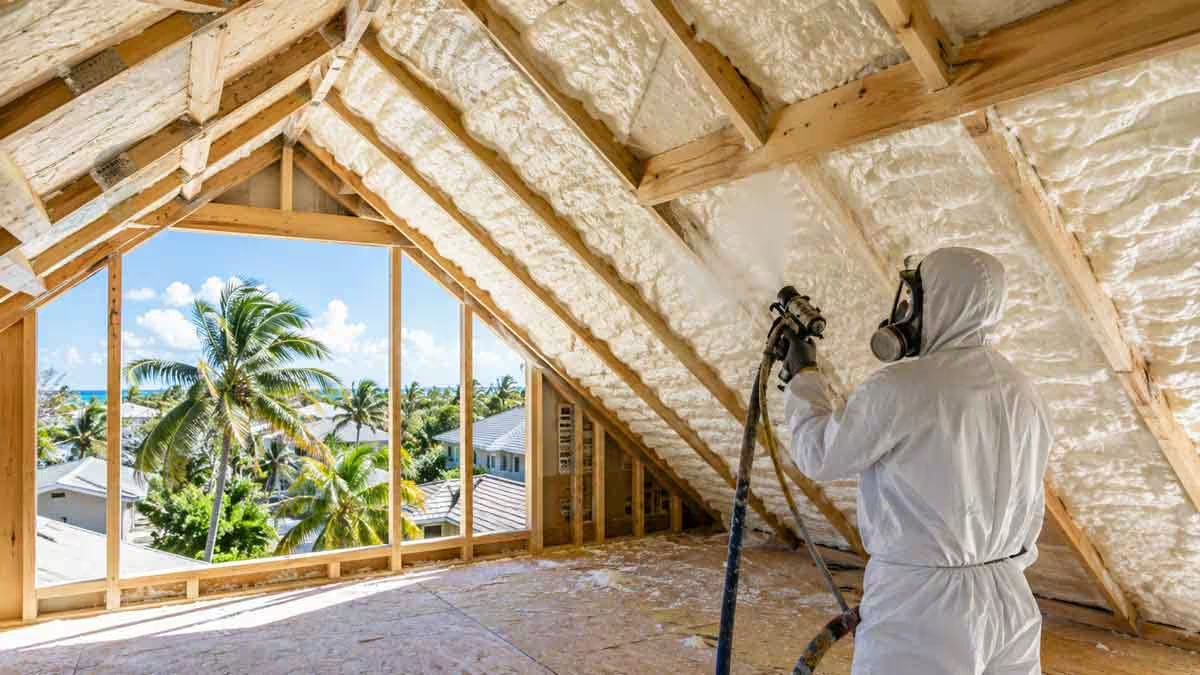
Why South Florida Homes Need Attic Spray Foam Insulation (2026 Guide)
Executive Summary: Hot, humid attics drive up cooling costs across South Florida. In **IECC Climate Zone 1A**, extreme attic heat and moisture keep an air conditioning system running longer for nearly the entire calendar year. Upgrading to attic spray foam insulation seals critical air leaks and helps limit moisture intrusion, reducing the damp conditions that allow mold and mildew to take hold.
A properly sealed attic delivers lower cooling demand and more consistent indoor temperatures while helping keep roof framing drier for longer. As a licensed, owner-direct insulation contractor, Broward Insulation Service installs spray foam attic insulation to permitted, code-compliant standards—giving homeowners, builders, and commercial property owners a lasting defense against attic heat gain that holds up through hurricane season.
Energy efficiency built this way is not incidental. It is the direct result of correctly specified, properly installed insulation, backed by local accountability where the homeowner or developer can call the owner directly.
Boosting Energy Efficiency in Fort Lauderdale Homes
Fort Lauderdale air conditioning systems work hard under sustained subtropical heat. However, your attic is often where you start to lose peak mechanical efficiency. The U.S. Department of Energy (DOE) reports that air leaks through poor insulation let cooled air escape, forcing your HVAC system to work significantly harder to maintain thermostat setpoints.
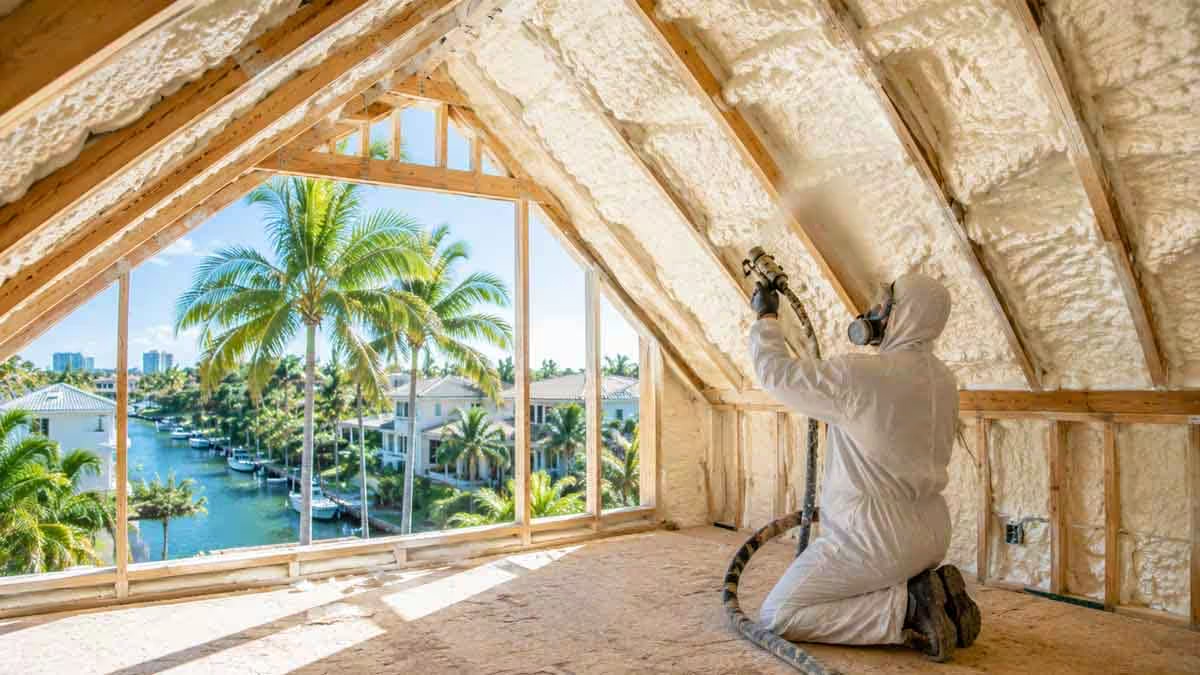
In a coastal climate, small leaks add up fast. Spray polyurethane foam (SPF) starts as a liquid, then expands into gaps across your attic framing, creating one continuous layer that cuts unwanted airflow. ENERGY STAR confirms that combining comprehensive air sealing with upgraded insulation can cut total household energy use by up to 15% when you eliminate thermal bypasses through your ceiling.
That is why attic spray foam insulation in Fort Lauderdale demands serious attention: it ensures the conditioned air you pay for stays inside your living space.

Controlling Moisture in South Florida Attics
Fixing air leaks solves only part of the coastal efficiency equation. Attic moisture in South Florida’s climate deserves equal attention, since humid outdoor air finds its way through even the smallest unsealed gaps. This is exactly the hygrothermal condition spray foam attic insulation is engineered to address:
- Air Sealing Comes First: The DOE notes that air leaks are a primary source of home energy loss. In a humid climate, those same gaps pull damp outdoor air inside via stack-effect infiltration.
- Vapor-Resistant Assemblies: Spray foam creates a continuous air barrier that resists humid airflow more effectively than fibrous loose-fill insulation, which moist air can pass through easily.
- Ventilation vs. Encapsulation: In traditional vented attics, clear intake and exhaust airflow moves humidity out. However, converting to an unvented, conditioned attic with roof-deck spray foam eliminates exterior vent pathways entirely—keeping salt-laden humidity outside.
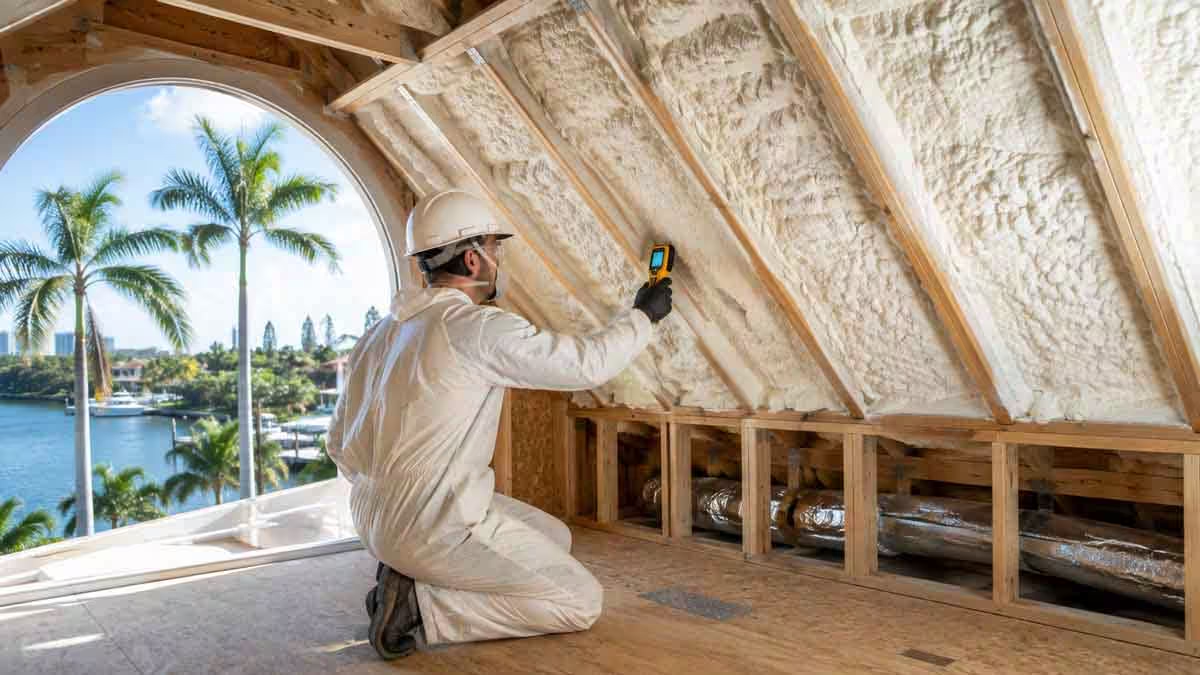
- Routine Diagnostic Checks: Musty odors, ceiling discoloration, and damp insulation are signs a moisture problem is already underway, warranting prompt intervention rather than a wait-and-see approach.
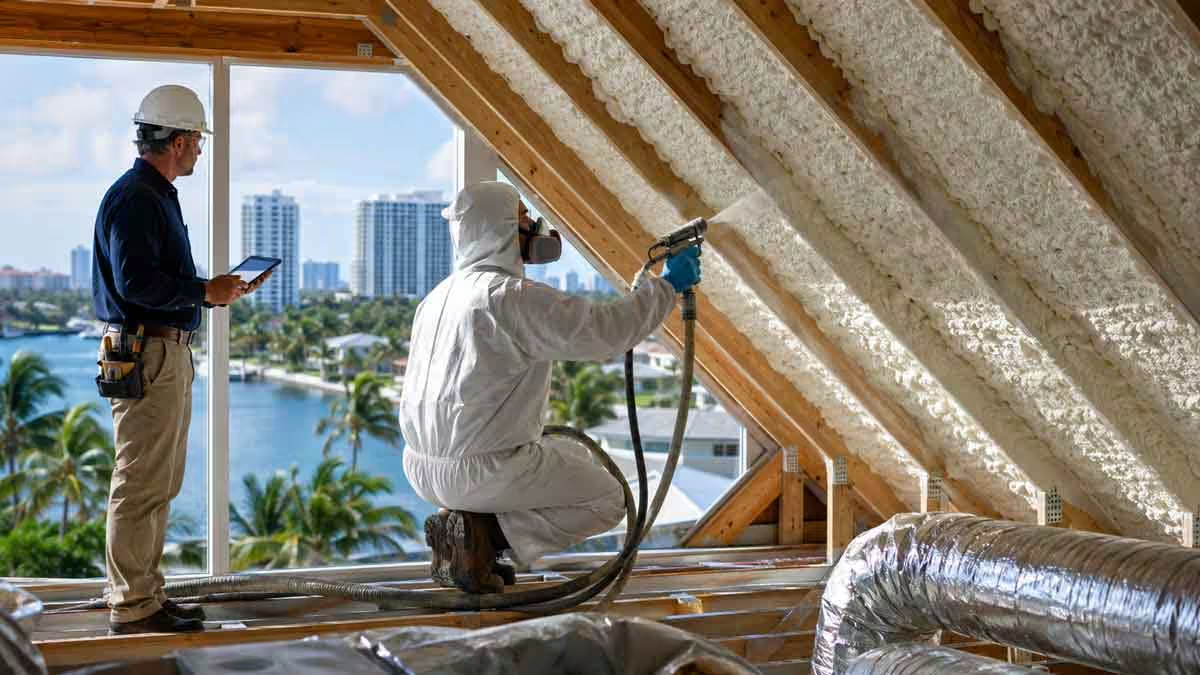
As a Fort Lauderdale insulation contractor, Broward Insulation Service builds these building-science checks into every project, with the owner directly involved in inspection and installation decisions. Learn more about our technical approach on our spray foam insulation services page.
Preventing Mold Growth and Mildew Risks
Mold colonization starts with trapped interstitial dampness. In South Florida, attic air leaks feed that damp cycle continuously. The attic often hides small framing gaps that pull humid outdoor air inside, where it condenses against cool, AC-chilled drywall surfaces.
U.S. Environmental Protection Agency (EPA) guidance warns that sustained indoor relative humidity above 50% significantly elevates mold risk. By applying closed-cell spray foam, you create a Class II vapor retarder that seals those structural cracks and limits the volume of damp exterior air entering the envelope.
Catching early warning signs—such as musty odors, clammy rooms, peeling paint, or faint spotting near supply diffusers—is critical. Addressing moisture sources and envelope air leakage at the roofline prevents minor dampness from escalating into severe indoor air quality problems.
Reducing Electricity Bills Dramatically
That same attic thermal weakness inevitably shows up on your monthly utility statement. In South Florida, spray foam insulation helps your air conditioner run less frequently by sealing the roofline against extreme solar radiation:
- Lower Cooling Runtime: Air leaks make cooling systems operate past their design cycles. Spray foam seals small gaps so your attic stops feeding hot air into living spaces below, allowing your AC to cycle normally and cutting monthly waste.
- More Stable Attic Temperatures: Sealing the underside of the roof deck prevents the South Florida sun from pushing extreme heat into the attic. With less conductive heat flow above your ceiling, your thermostat maintains stable temperatures without constant adjustments.
- Reduced Strain on Aging Equipment: When an HVAC system runs all afternoon without relief, attic heat gain is frequently the root cause. Reducing that thermal load minimizes mechanical wear on compressors and air handlers while preventing costly seasonal utility spikes.
Building Science Insight: In a traditional vented attic, summer temperatures regularly hit 140°F–160°F. Applying closed-cell spray foam directly to the roof deck converts the attic into a semi-conditioned space that stays within 5–10 degrees of your indoor living areas—slashing conductive heat transfer through your ceiling.
Enhancing Indoor Comfort Year-Round
The attic shapes thermal comfort in every room of your home. In South Florida, spray foam helps residential and commercial properties maintain steady interiors through hot summer afternoons, heavy summer rains, and brief winter cold snaps.
Because spray polyurethane foam functions simultaneously as high-R-value insulation and an air barrier, it eliminates the hot and cool patches common in multi-level homes. With fewer attic leaks, your mechanical system operates in a smooth, predictable pattern instead of aggressively chasing room-to-room temperature swings.
Furthermore, because spray foam adheres permanently to wood trusses and concrete substrates, the seal remains intact for the life of the building—unlike fibrous loose-fill insulation that can settle, drift, or compress over decades of use. You may also qualify for federal tax credits under the Energy Efficient Home Improvement Credit for eligible envelope upgrades.
Increasing Roof Lifespan and Structural Integrity
South Florida roofs endure daily thermal expansion and ultraviolet stress. Your attic insulation choice influences how fast your roof assembly ages and how well it withstands coastal weather extremes:
- Stronger Roof Deck Assembly: Closed-cell spray foam (2.0 lb/cu. ft. density) adheres structurally to roof sheathing and trusses. When correctly specified and installed, this rigid bond increases racking strength and enhances wind-uplift resistance during severe weather events.
- Reduced Thermal Stress: Uninsulated attics trap intense solar heat, baking roof framing from the underside. Encapsulating the roof deck reduces extreme temperature cycling across structural timber and sheathing.
- Continuous, Drift-Free Coverage: Traditional batt and blown-in materials can shift under severe attic drafts or settling. Spray foam cures in place, ensuring your roofline retains complete, uniform thermal coverage indefinitely.
Resisting Hurricane-Era Heat Infiltration
Attic heat does not stop at the roofline; it radiates directly into the conditioned living space below. Understanding why this happens provides the clearest case for spray foam insulation in South Florida.
Unventilated or poorly insulated attics can exceed 150°F during the region’s hottest months, turning the ceiling drywall into a large radiant heating panel. Furthermore, during high-wind coastal storm events, pressure differentials force outdoor air—and the driving rain or salt moisture it carries—through soffit vents and envelope gaps.
A continuous spray foam seal closes those pathways entirely. This structural seal matters just as much for hurricane season resilience as it does for everyday utility efficiency. By stopping heat gain and wind-driven humidity simultaneously, spray foam protects the entire structure from the top down. For more on traditional alternatives and hybrid assemblies, explore our attic insulation services.
Why South Florida Homeowners Choose Broward Insulation Service
As a Fort Lauderdale insulation contractor operating on an owner-direct basis since 1977, Broward Insulation Service inspects each attic personally. We do not rely on call-center handoffs or inexperienced subcontractors; ownership supervises the diagnostic audit and material selection on every job.
We engineer code-compliant, permitted insulation assemblies tailored to your property—whether you own a historic single-family home in Coral Ridge, a luxury oceanfront estate in Ocean Ridge, or a multi-family condominium in Coconut Creek. Contact Broward Insulation Service today to schedule an on-site attic assessment and discover what an engineered spray foam envelope can do for your property.
Frequently Asked Questions: Attic Spray Foam in South Florida
What is the difference between open-cell and closed-cell attic spray foam?
Open-cell foam is lighter, expands significantly to fill irregular cavities, and offers excellent sound deadening at approximately R-3.7 per inch. Closed-cell foam is dense and rigid, acts as an ASTM-rated Class II vapor retarder, adds structural racking strength to the roof deck, and delivers a higher thermal resistance of roughly R-6.5 to R-7.0 per inch—making it the preferred choice for moisture-prone coastal roof decks.
Does spray foam insulation under the roof deck damage roof shingles?
No. Detailed building-science studies and roofing manufacturer testing confirm that unvented attics insulated with roof-deck spray foam increase shingle temperatures by only 2°F to 5°F on average. This minor difference has no statistically significant impact on shingle lifespan or waterproofing warranties when the assembly is installed to Florida Building Code standards.
How long does an attic spray foam installation take to complete?
For a standard single-family home in Broward or Palm Beach County, most attic spray foam applications are completed within one to two days. Our crews handle site preparation, protective masking, old insulation removal (if required), foam application, and clean handover for code inspection.