5 Proven Spray Foam Moisture Defense Steps in Fort Lauderdale (2026 Guide)
Executive Summary: Moisture moves fast through many South Florida attics and rooflines. In **IECC Climate Zone 1A**, coastal humidity and rain create severe condensation risks that degrade traditional building materials and drive up cooling costs.
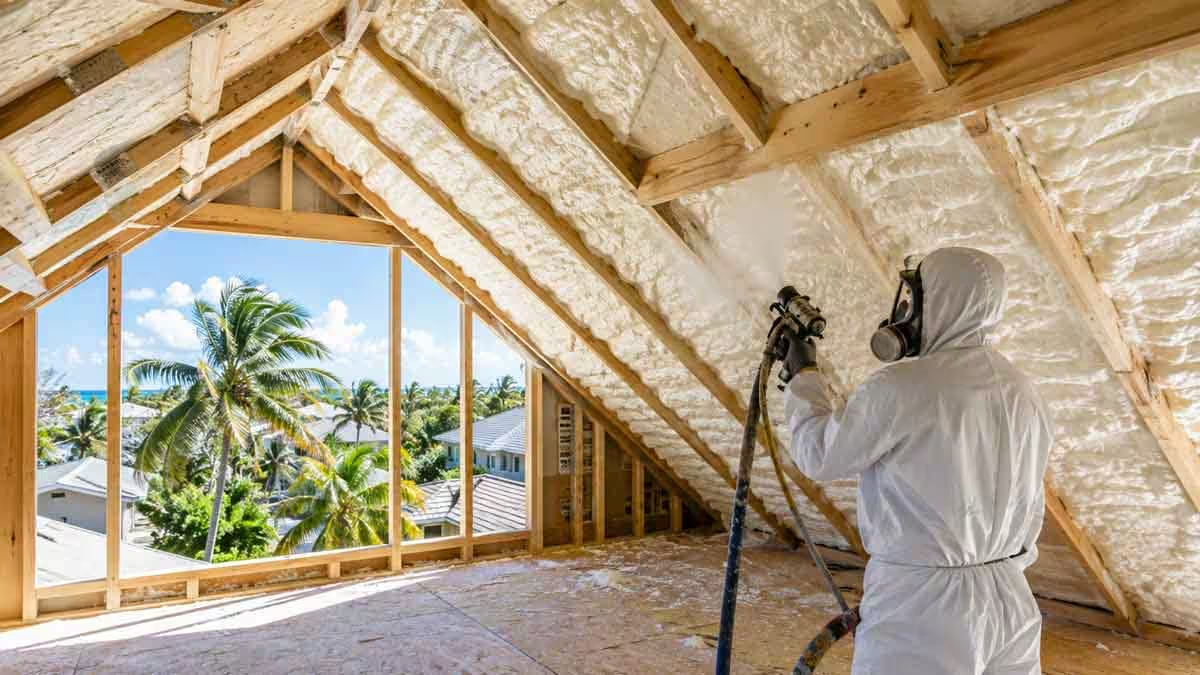
However, there are steps you can take to protect your structure, such as using high-quality spray foam attic insulation in Fort Lauderdale. Closed-cell spray foam blocks damp exterior air, seals critical framing gaps, keeps indoor temperatures steady, and eliminates the wet conditions that feed mold growth. Getting the right foam depth and professional installation ensures permanent, long-term moisture defense.
Why Fort Lauderdale Homes Need Moisture Control
Fort Lauderdale’s coastal air carries more moisture than inland regions, and that humidity finds its way indoors through soffit vents and envelope gaps. The attic is usually where moisture accumulation shows up first. Left unchecked, high humidity can saturate fiberglass batts, degrade roof sheathing, and force your HVAC system to run longer than it should.
The warning signs are easy to spot once you know what to look for. Relative humidity that stays above 60 to 70 percent for hours at a time signals a continuous moisture intrusion problem, not just a passing spike. Tracking those trends over time will reveal whether the building requires better attic airflow, dedicated mechanical dehumidification, or complete roof-deck encapsulation.
Spray foam attic insulation in homes near the coast is strongly recommended, as it stops wind-driven humidity at the roofline and supports drier, healthier indoor air.
Benefits of Spray Foam Attic Insulation
Spray foam attic insulation gives your Fort Lauderdale home a tighter thermal shell and more consistent room-to-room comfort:
- Comprehensive Air Sealing: Spray foam expands into cracks and structural seams. ENERGY STAR confirms that combining air sealing with upgraded insulation can cut household heating and cooling costs by up to 15%.
- Active Moisture Control: Closed-cell foam forms an ASTM-rated Class II vapor retarder, preventing humid outdoor air from reaching cool, AC-chilled drywall surfaces where condensation forms.
- High Thermal Resistance (R-Value): The U.S. Department of Energy (DOE) notes that closed-cell polyurethane foam delivers approximately R-6 to R-7 per inch, providing maximum insulating power in tight roof assemblies.
- Long-Term Structural Performance: Unlike loose-fill fiberglass or cellulose, rigid spray foam stays permanently in place, will not settle over time, and adds racking strength to roof framing under High-Velocity Hurricane Zone (HVHZ) wind loads.

Key Signs of Attic Moisture Damage
Attic moisture leaves distinct warning signs. Trapped moisture accelerates structural deterioration over time, so property owners should address these early indicators immediately:
- Musty Odors: A damp, earthy smell after heavy South Florida rain often indicates that roof sheathing, trusses, or fibrous insulation are retaining moisture.
- Stained Wood and Rusted Fasteners: Dark water staining on roof decking or visible rust on truss plates and roofing nails signals chronic condensation or bulk water intrusion.
- Clumping or Sagging Insulation: Traditional fiberglass or cellulose loses its thermal loft and clumps together when wet, leaving visible depressions on the attic floor.
Choosing the Right Spray Foam Thickness
Selecting the right spray foam thickness depends on wall cavity depth, coastal moisture loads, and IECC Climate Zone 1A performance mandates under the Florida Building Code. Every assembly is specified on a case-by-case basis.
For standard 2×4 exterior wall assemblies, the building code prescribes an R-13 minimum. Approximately 2 inches of closed-cell spray foam achieves this thermal threshold while simultaneously providing an impermeable moisture barrier.
Open-cell spray foam delivers a lower R-value per inch (roughly R-3.7), meaning you typically need to fill the entire cavity depth to meet thermal goals. We engineer foam depth to match code requirements, air sealing needs, and your specific energy-reduction targets. Explore our attic insulation services for hybrid and retrofit options.
Installation Process and Quality Standards
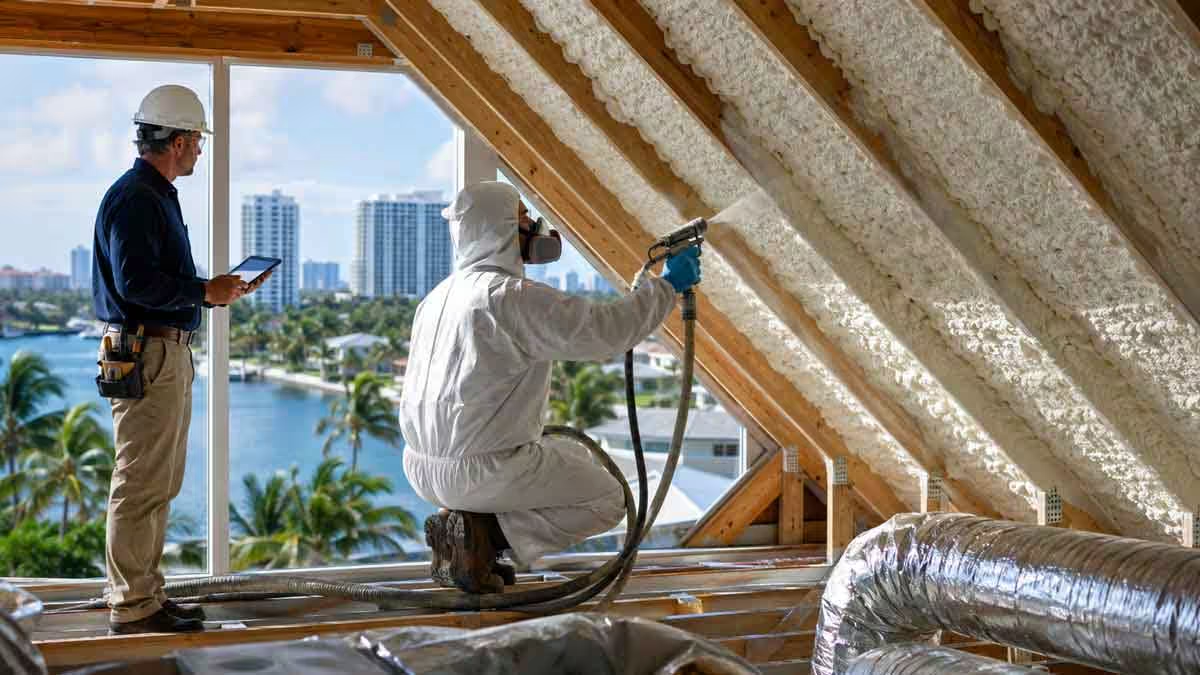
In Fort Lauderdale, moisture defense works best when the installation process is verified at every stage. At Broward Insulation Service, we follow strict quality protocols to ensure proper adhesion, safe curing, and lasting coverage:
- Substrate Inspection: We inspect framing, decking, and identify any hidden damp spots first, because spray foam insulation must bond to a clean, dry surface.
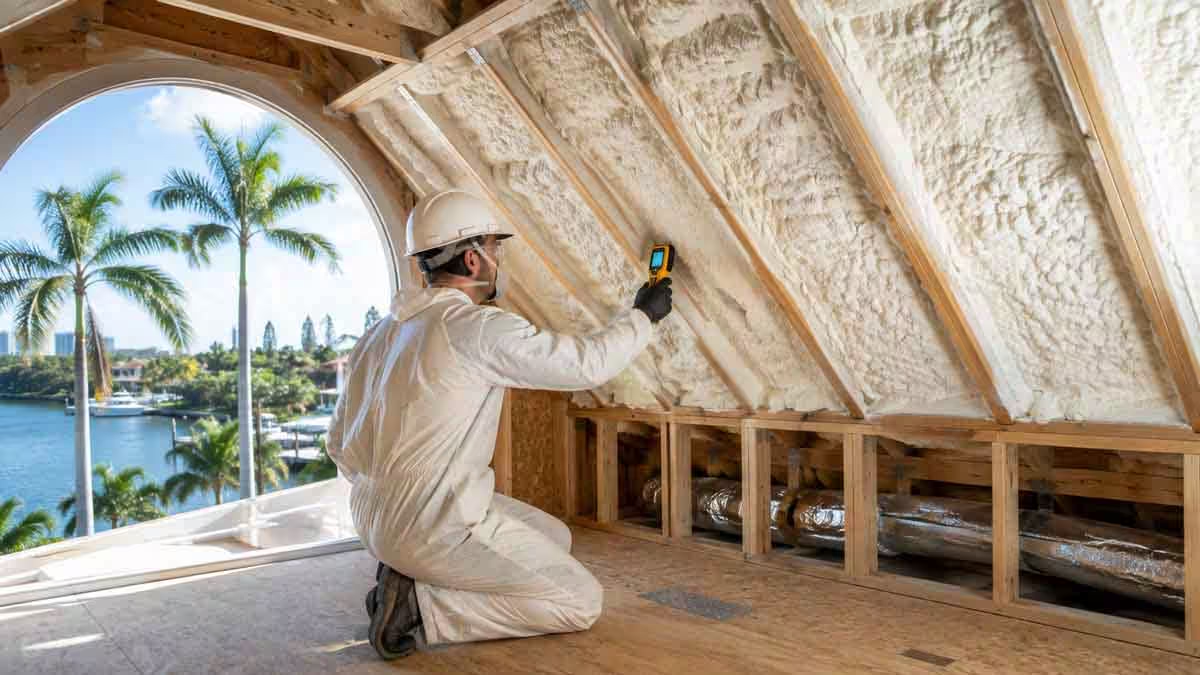
- Temperature and Humidity Checks: We verify ambient and substrate temperatures against manufacturer specifications to ensure proper chemical reaction and maximum loft.
- Ventilation and Safety (PPE): Per U.S. Environmental Protection Agency (EPA) guidelines regarding isocyanate exposure, our crews establish active site ventilation and utilize full respiratory protection.
- Controlled Application: The foam is sprayed in calibrated lifts to prevent off-ratio mixing, shrinkage, cracking, or pulling away from studs.
- Final Verification: We perform a comprehensive depth review, check thermal loft against manufacturer targets, and provide clean handover documentation for local building department inspection.
Cost Factors for Local Spray Foam Jobs
Once the project scope and moisture-defense goals are established, pricing depends on several specific assembly variables:
- Foam Type and Application Depth: Closed-cell foam carries a higher cost per square foot than open-cell foam due to its density, structural rigidity, and built-in Class II vapor retarder properties.
- Size and Access: Larger open attics benefit from economies of scale, whereas tight crawl spaces, low rooflines, or complex framing geometries require additional labor and specialized rigging.
- Scheduling and Site Demands: Permitting requirements, crew sizing, and whether a building is actively occupied shape the final investment. Most residential attics are completed in one to two days, while occupied commercial buildings may require phased after-hours scheduling.
Building Science Insight: In Fort Lauderdale’s coastal environment, investing in closed-cell spray foam on the roof deck prevents salt-air corrosion on internal roofing hardware and ductwork, extending the lifespan of your entire mechanical and structural assembly.
Maintaining Spray Foam for Longevity
Beyond competitive upfront pricing, long-term value at Broward Insulation Service shows in how well your spray foam insulation blocks moisture over time. With routine maintenance, an engineered spray foam envelope can perform effectively for the life of the structure:
- Check for Bulk Water Entry: While closed-cell foam sheds bulk water, you should inspect your roofline and plumbing assemblies after major storms. Repairing external leaks early prevents bulk water from tracking along roof framing.
- Protect Exposed Foam from UV: Ultraviolet sunlight can degrade exposed spray foam over time. Any foam visible on exterior equipment pads or unconditioned sunlit chases should be coated with a protective UV-resistant acrylic or silicone mastic.
- Schedule Periodic Reviews: The DOE links continuous air sealing with sustained household energy savings. Periodic visual checks ensure service technicians or pest activity have not breached the foam envelope over the years.
Why Fort Lauderdale Property Owners Trust Broward Insulation Service
Moisture control starts with an insulation plan tailored to your specific building assembly. That choice protects more than indoor comfort; it blocks humid coastal air, reduces mold risks, and allows your air conditioning system to run with significantly less mechanical strain during the long South Florida cooling season.
As an owner-supervised Fort Lauderdale insulation contractor operating since 1977, Broward Insulation Service matches your structure to climate-smart air sealing. From luxury coastal homes to commercial warehouses, we deliver permitted, code-compliant, and warrantied insulation work. Contact Broward Insulation Service today to schedule a comprehensive moisture and thermal risk audit for your property.
Frequently Asked Questions: Spray Foam Moisture Defense
Why is closed-cell spray foam better for Fort Lauderdale moisture control than fiberglass?
Traditional fiberglass batts are vapor-permeable, allowing humid coastal air to pass through the insulation and condense on cool AC ducts and drywall. Closed-cell spray foam forms an impermeable, rigid air and vapor barrier that physically blocks salt-laden humidity from entering the building envelope.
Can spray foam insulation cause mold in an attic?
No—when properly specified and installed. In fact, closed-cell spray foam applied to the underside of the roof deck eliminates the unvented humid attic conditions where mold thrives, converting the attic into a dry, semi-conditioned space.
Does spray foam insulation qualify for utility rebates in South Florida?
Yes. Qualifying residential attic insulation upgrades performed by an FPL Participating Independent Contractor (PIC) may be eligible for an instant $220 utility rebate when upgrading existing attic insulation below R-8. We handle the qualification and documentation on your behalf.