How to Claim the FPL $220 Ceiling Insulation Rebate
Executive Summary: The FPL insulation rebate offers a $220 instant ceiling insulation credit to qualifying residential customers whose existing ceiling insulation tests below R-8. To receive it, new insulation must be installed to a minimum of R-30 in Climate Zone 1 (Broward, Miami-Dade, and Monroe counties) or R-38 in Climate Zone 2 territories.
This installation must be performed exclusively by an FPL Participating Independent Contractor (PIC). The rebate is applied as a direct invoice deduction at the time of installation, not as a post-installation reimbursement or utility bill credit, and each premises qualifies only once per 20-year period.
Condominiums are categorically excluded from program eligibility regardless of attic accessibility or unit configuration. Broward Insulation is an active FPL-approved PIC serving Broward, Miami-Dade, and Palm Beach counties, providing turnkey rebate qualification, documentation, and material selection services calibrated to Climate Zone 1A.
Eligibility requirements every FPL residential customer must satisfy
This section functions as a compliance checklist, not a general overview. Failing any single criterion disqualifies the property from the $220 credit, making pre-qualification due diligence an essential step before contracting any insulation work.
Each requirement below is drawn directly from FPL’s Residential Ceiling Insulation Program Standards and carries equal weight in the eligibility determination.
Account, property, and equipment prerequisites
Four hard eligibility gates govern access to this program. First, the property must be served by an active FPL residential account. Second, the home must have been constructed prior to 1982. That threshold reflects when modern energy codes began mandating adequate thermal performance in new construction.
Third, the home must be equipped with whole-house central electric air conditioning and heating. Properties utilizing gas systems, hybrid HVAC configurations, or partial electric conditioning do not qualify.
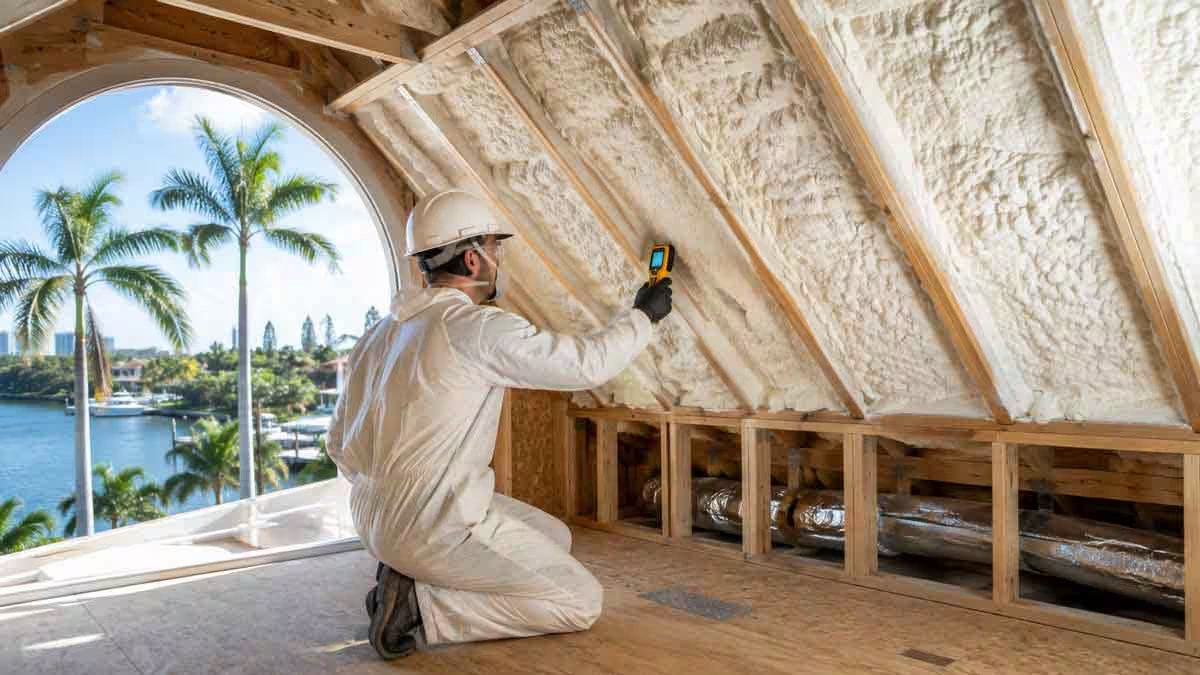
Fourth, and most critically, the existing ceiling insulation must carry a verified R-value below R-8. This must be confirmed through attic access granted to the contractor prior to installation.
The pre-1982 construction requirement has a practical implication for buyers of older South Florida properties: a home that already received energy code upgrades or insulation improvements at or above R-8 will not qualify. A physical attic inspection by a qualified PIC is the only reliable method to establish baseline R-value. Learn more about evaluating existing structures in our attic insulation Florida guide.
The 20-year restriction and rebate history
FPL’s program restricts each premises to one rebate claim per 20-year period. For purchasers of pre-1982 homes, this restriction carries direct financial significance.
A prior rebate claim on the property will void current eligibility, and the standard program does not provide an exception mechanism. During real estate due diligence, buyers of older South Florida properties should formally request documentation of any prior FPL ceiling insulation rebate claims associated with the premises address.

R-value thresholds and approved insulation materials for Climate Zone 1A
IECC Climate Zone 1A encompasses Broward, Miami-Dade, and Monroe counties and carries the lowest minimum R-value threshold in FPL’s service territory: R-30. This is calibrated to South Florida’s dominant cooling load rather than heating load.
Climate Zone 2 territories covering the remainder of FPL’s service area require a minimum of R-38 for program compliance. Understanding this distinction is essential for both material specification and project cost estimation.
Closed-cell spray foam versus blown-in insulation
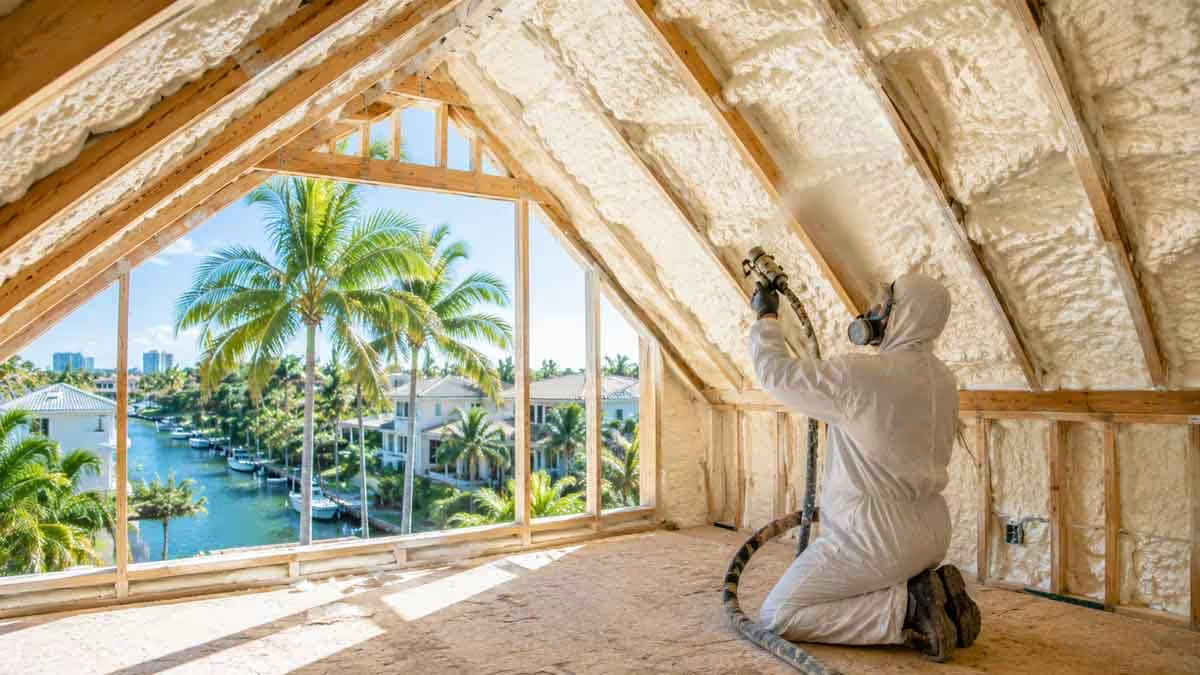
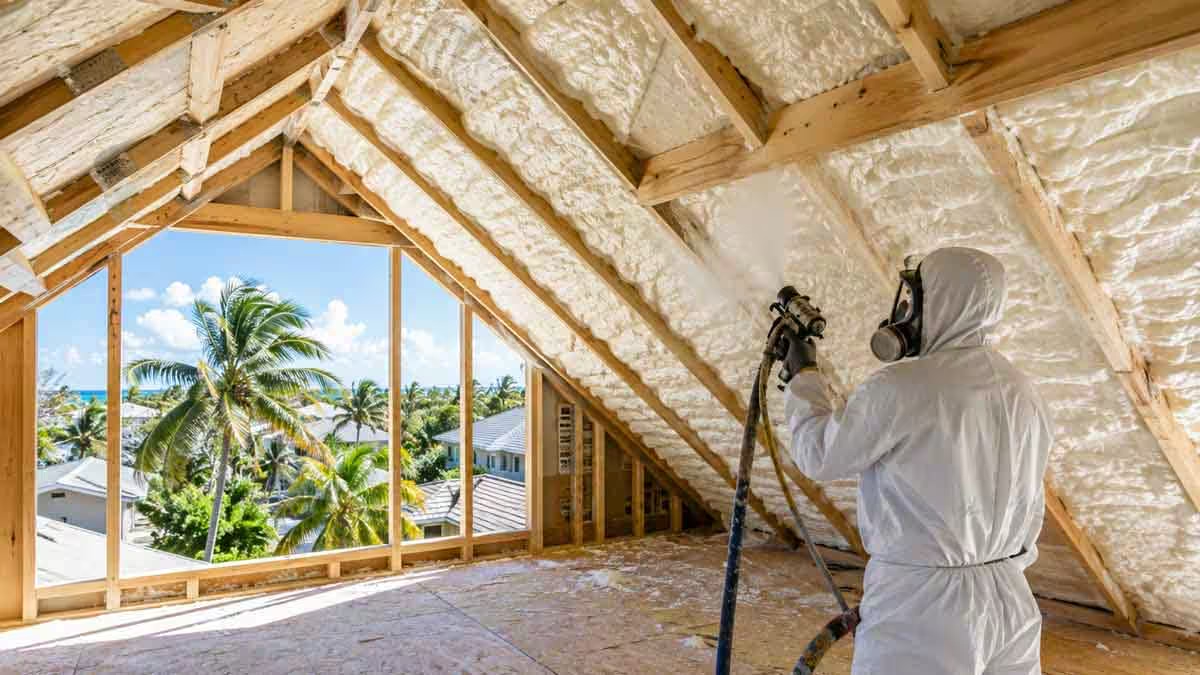
Two insulation systems dominate eligible ceiling applications in South Florida. Closed-cell spray foam functions simultaneously as a thermal barrier and a vapor retarder. That dual-performance characteristic makes it a strong candidate for conditioned-attic configurations.
Blown-in fiberglass or cellulose achieves R-30 compliance in vented attic assemblies and is often a more economical option per square foot. It is fully eligible under FPL’s program, provided thermal properties are independently verified per applicable ASTM test methods (such as ASTM C518 or C1363).
Material conditions and ASTM verification requirements
Program standards impose explicit material conditions beyond R-value alone. All insulation installed under this program must be new; refurbished or used material is expressly prohibited.
The insulation must be applied uniformly across the full attic floor, covering all conditioned space including the scuttle hole. Installation must also maintain minimum clearances around recessed lighting and gas-fired appliances per Florida Building Code requirements.
For Broward County attics, IC-rated recessed fixtures permit direct contact with blown-in insulation, while non-IC-rated fixtures require a clearance of approximately four inches. For the full program specification, see the official FPL Residential Ceiling Insulation Program Standards (PDF).
How the FPL insulation rebate instant credit is applied
The mechanism by which the FPL insulation rebate is delivered is a consistent source of customer confusion. Clarifying it upfront prevents misalignment between homeowner expectations and program reality.
FPL does not issue a check to the homeowner, apply a credit to a future utility bill, or process a post-installation reimbursement. The $220 is deducted directly from the contractor’s final invoice at the moment of project completion.
The rebate certificate and invoice deduction process
The Participating Independent Contractor issues the $220 certificate at the conclusion of the installation and deducts that amount from the final invoice presented to the homeowner.
The homeowner’s net out-of-pocket cost is reduced by $220 at the point of the financial transaction, with no additional filing requirement. The PIC retains the certificate for FPL program compliance documentation. This structure places full administrative responsibility on the contractor.
Pairing the FPL insulation rebate with federal tax credits
The FPL insulation rebate does not preclude a separate claim under the federal Residential Energy Efficiency Tax Credit, currently structured at up to 30% of project cost under IRS Form 5695.
However, IRS guidance requires that any utility rebate received be subtracted from qualified expenses before calculating the federal credit. On a $4,000 installation with a $220 credit applied, the qualified expense for federal purposes would be $3,780. Consultation with a qualified tax professional is recommended.
Condo unit and multi-family property considerations
Owners and managers of Florida condominium units must understand a categorical limitation before pursuing this FPL insulation rebate program: condominiums are explicitly excluded from eligibility.
This exclusion applies regardless of attic accessibility, unit position within the building, or HVAC configuration. The credit is reserved for eligible single-family residential properties meeting the pre-1982 construction criteria. To see examples of completed residential work, visit the Broward Insulation portfolio.
Attic accessibility and flat-roof exclusions
Beyond the condominium exclusion, inaccessible attics and flat-roof installations are categorically ineligible. Drop ceilings are also explicitly excluded from coverage. Property owners should consult directly with an FPL-approved PIC to evaluate specific building configurations before committing to project scheduling.
HOA compliance and documentation
For eligible single-family properties subject to HOA governance, covenants often require architectural approval prior to any envelope modification. A qualified contractor should prepare a material specification and installation methodology suitable for submission to the architectural review board.
In properties where thermal and acoustic performance are required, insulation assembly design must account for both program requirements and noise ordinance provisions. For specialized contractor services and HOA support, see our contractors services page.
How to verify an FPL-qualified contractor
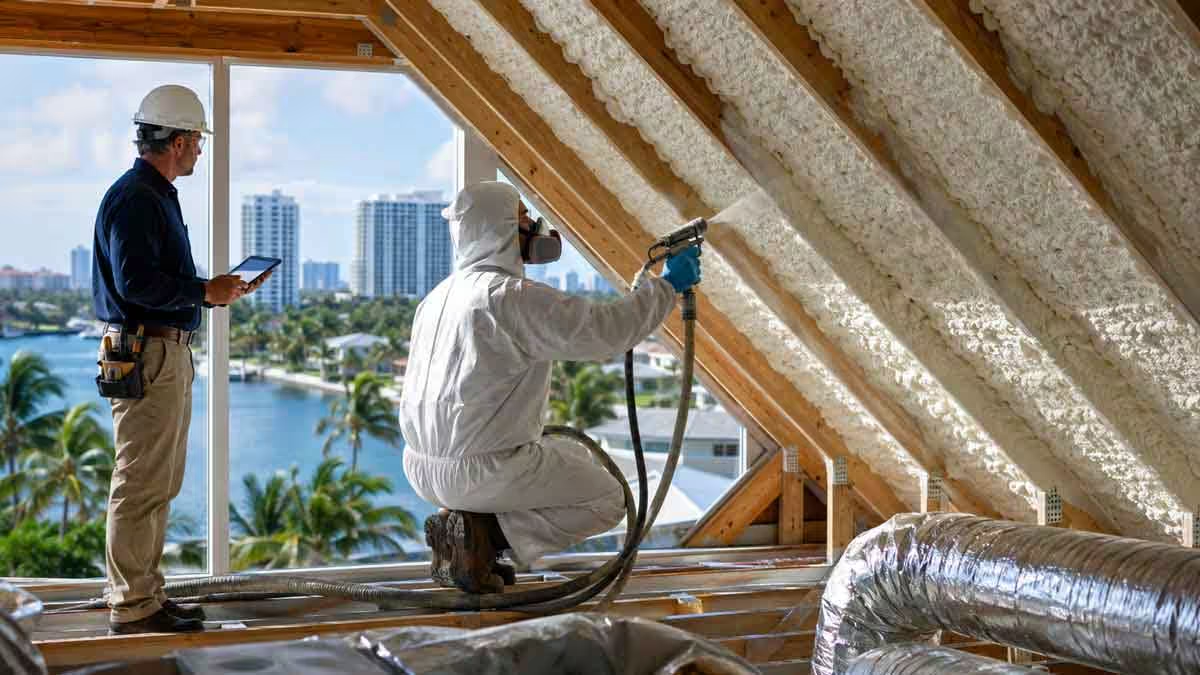
Contractor selection determines whether the FPL insulation rebate is accessible at all. Because the instant credit is issued solely by the Participating Independent Contractor at the time of invoicing, engaging a non-participating contractor forfeits the credit with no retroactive remedy available.
Using FPL’s PIC search tool
FPL maintains an online PIC search tool. The critical verification step is reviewing the “Status” column in the search results. A contractor may hold an active Florida state license while no longer maintaining active FPL PIC enrollment.
Only active PIC status authorizes a contractor to issue the certificate. Broward Insulation maintains active FPL PIC status in the South Florida Tri-County region, allowing residential clients across Broward, Miami-Dade, and Palm Beach counties to confirm eligibility with confidence. Review our full scope of attic insulation services to get started.
Documentation mistakes that delay or void the rebate
- Failing to confirm existing R-value below R-8 prior to installation.
- Installing insulation in an inaccessible space or over a drop ceiling.
- Using insulation material without ASTM-verified thermal properties.
- Omitting the product specification sheet at the premises upon project completion.
- Contracting a PIC whose participation status lapsed between the initial search and the installation date.
Proceeding with the FPL insulation rebate program
The qualification pathway is straightforward when each step is executed in the correct sequence:
- Verify that the existing ceiling insulation tests below R-8.
- Confirm the home was constructed before 1982 and operates on central electric HVAC.
- Select an active FPL Participating Independent Contractor before signing a contract.
- Receive the $220 deduction on the final invoice at project completion.
South Florida homeowners operating within IECC Climate Zone 1A benefit from the R-30 minimum threshold. Even so, the region’s high humidity means that a minimum-code installation alone may not deliver optimal long-term performance.
Broward Insulation has delivered program-compliant insulation work across South Florida since 1977. To confirm your eligibility for the FPL insulation rebate, verify your existing R-value, and initiate an approved installation, contact Broward Insulation to schedule a pre-installation attic assessment.