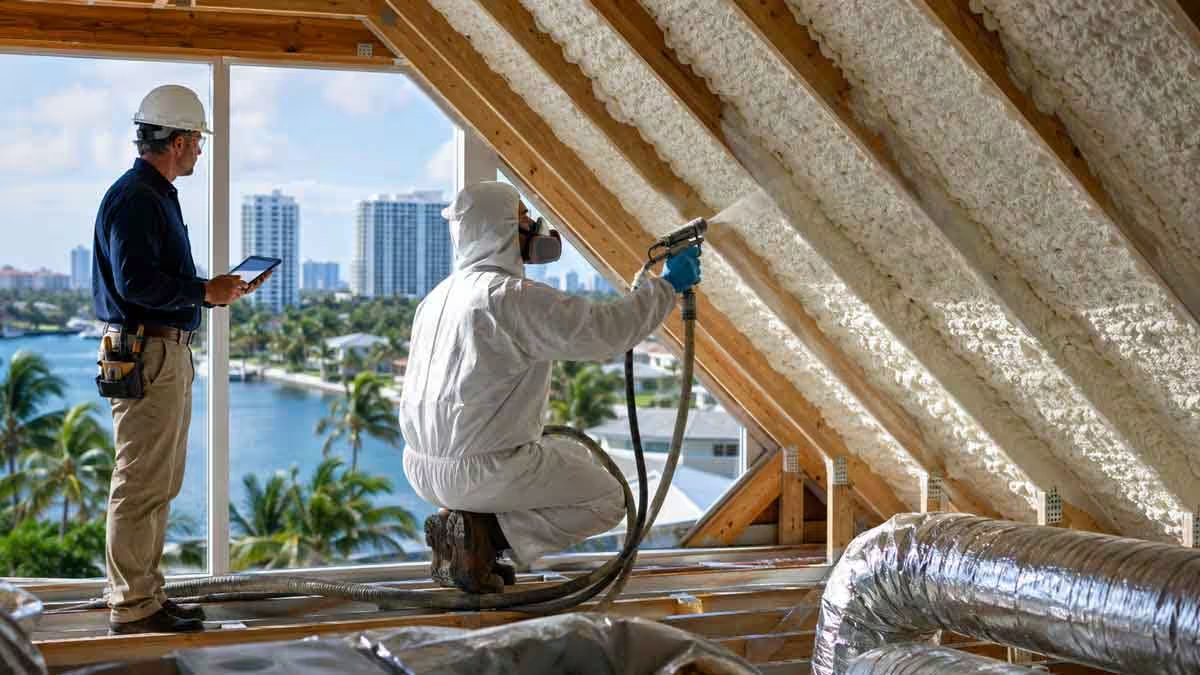
Fort Lauderdale Spray Foam Insulation Compliance (2026 Guide)
Executive Summary: Code rules come first. When installing spray foam attic insulation in Fort Lauderdale, your project must strictly adhere to the Florida Building Code and local permitting requirements before any wall or roof-deck work begins.
In South Florida’s demanding climate, R-values, precise airflow management, and fire safety protocols determine whether a project passes inspection or faces costly rework. Licensed crews keep your job legal, safe, and effective against coastal moisture.
This guide breaks down exactly what Fort Lauderdale property owners, builders, and facility managers need to verify to ensure their spray foam insulation project complies with local ordinances and building science standards.
Verify Local Building Code Requirements
Code compliance drives every spray foam installation Broward Insulation Service performs in the area, starting well before any foam is applied. The Florida Building Code, Residential, Section R316 governs foam plastic insulation directly.
- Surface Burning Limits: Section R316.1 mandates a flame spread index of 75 or less and a smoke-developed index of 450 or less, tested to ASTM E84 standards.
- On-Site Verification: Section R316.2 requires manufacturer data sheets and labeling on site, confirming the product meets those limits at the specific thickness and density being installed.
Confirming this before installation keeps a permitted project moving instead of stalling at inspection. If an application exceeds standard ASTM E84 testing thickness, the code allows alternative approval paths through NFPA 286 room corner testing, provided the manufacturer’s documentation supports that exact application.
As a licensed insulation contractor, Broward Insulation Service manages this documentation and code review directly, with no middlemen interpreting the requirements on your behalf. Explore our full spray foam insulation services to learn more about our process.
Confirm Spray Foam R-Value Standards
Once foundational code checks are clear, the next step is confirming your project’s plans against the R-values that spray foam actually delivers at the specified thickness. Local compliance requires tying thermal performance to air sealing capabilities.
- Wall Benchmarks (Climate Zone 2): Fort Lauderdale falls within IECC Climate Zone 1A/2, where Florida Building Code wall cavity requirements run lower than the R-20+ benchmarks used in colder northern zones. Standard open-cell foam (R-3.5 to R-3.8 per inch) can often meet this target in a typical wall cavity.
- Product Selection: Medium-density closed-cell formulations reach a higher thermal output per inch. In coastal construction, this added density provides critical moisture resistance and structural wind-load performance.
- Air Sealing (Blower Door Tests): Climate Zones 1 and 2 require a blower door result of 5 ACH50 or less. An R-value only reflects a material’s rated performance; passing a blower door test verifies how well the envelope is actually sealed.
Ensure Proper Attic Ventilation Practices
After insulation depth is set, understanding attic airflow keeps your compliance plan working as intended. This is where many contractors fail code inspections.
Crucial Code Nuance: Vented vs. Unvented Attics
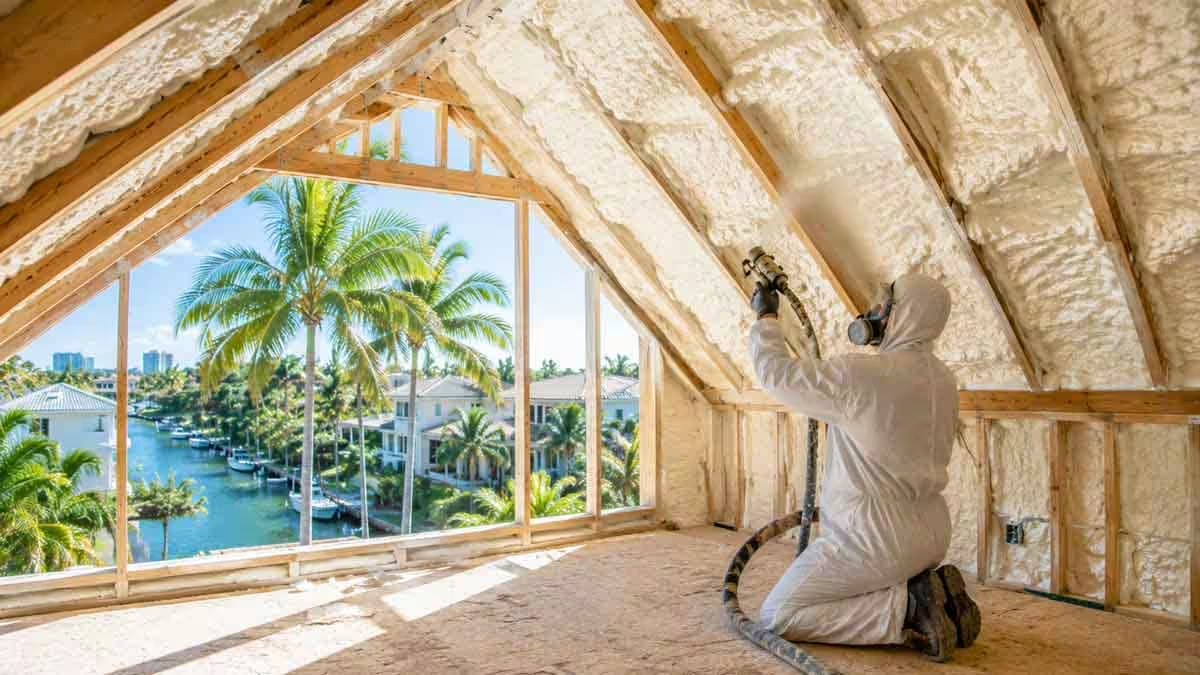
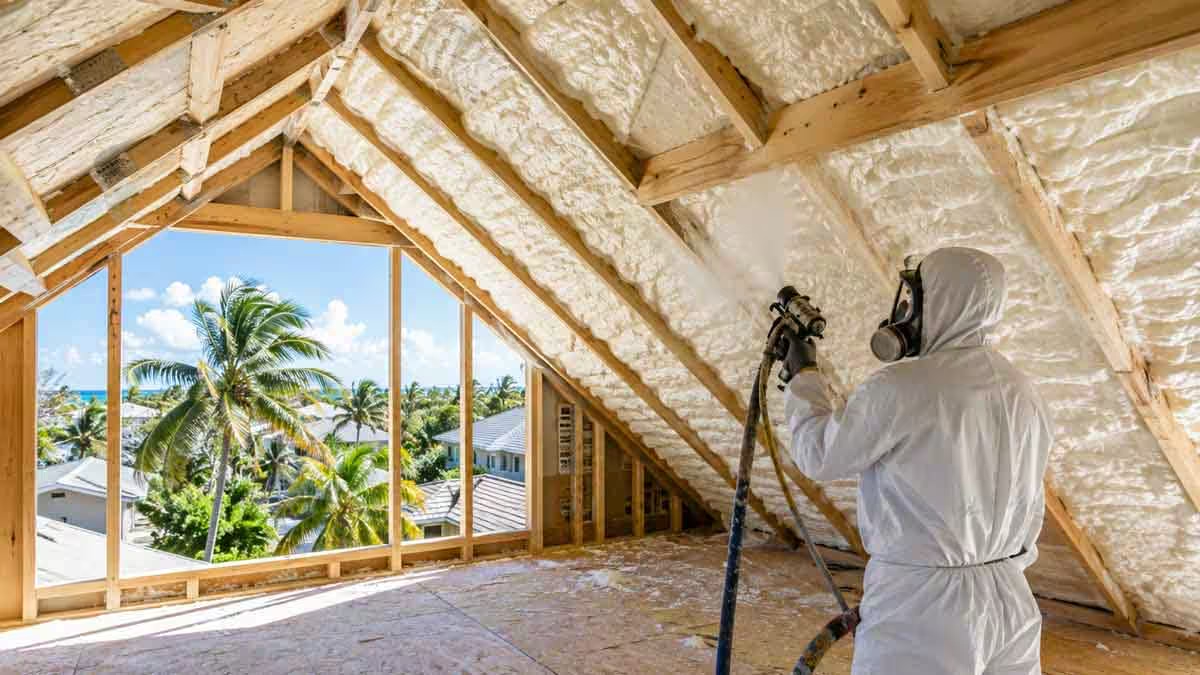
If you are applying spray foam directly to the underside of the roof deck to create an unvented attic assembly (standard for bringing HVAC ductwork into conditioned space), existing soffit, ridge, and gable vents must be completely sealed per Florida Building Code guidelines. For traditional attic floor insulation, proper ventilation paths must remain unobstructed.
- Precheck Airflow Paths: Inspect rafters, wiring, and leaks so ventilation fixes start with a clean attic.
- Control Heat and Humidity: Keep the attic within the manufacturer’s temperature limits during application, as excessive humidity can affect curing.
- Pause Between Lifts: Allow each layer to cure properly to prevent the foam from shrinking or pulling away from the studs.
Meet Fire Safety & Thermal Barrier Rules
Spray foam delivers unmatched thermal control, but it requires the right fire protection to meet inspection standards:
- Thermal Barrier Basics: In habitable rooms, the International Residential Code (IRC) calls for a 15-minute thermal barrier over spray foam. The standard choice is 1/2-inch gypsum board, which slows fire spread and adds critical escape time.
- Ignition Barrier Use: In limited-access areas (like uninhabitable attics), an ignition barrier may be allowed instead of a full thermal barrier. Approved intumescent coatings, plywood, or OSB can serve this role.
- Flame Retardants Have Limits: Manufacturers incorporate flame retardants, but spray foam is a plastic product. Under steady flame, it can ignite and produce smoke, making ASTM E84 compliance non-negotiable.
Address Moisture Control & Mold Prevention
South Florida humidity constantly strains wall and roof assemblies. Compliance requires active moisture control, as wet cavities degrade structural integrity before visible damage appears.
Closed-cell foam forms a continuous barrier and provides significantly greater resistance to water vapor and bulk moisture than open-cell foam. Insulation alone does not eliminate mold risk—water intrusion, air leakage, and excessive indoor humidity must be corrected prior to installing insulation.
Obtain Required Permits & Inspections
As your spray foam insulation plan moves ahead, you need municipal approval to stay in line with local rules. The Development Services Department (DSD) updated processing, payment, and fee steps under House Bill 803, meaning your permit timing must be tracked accurately.
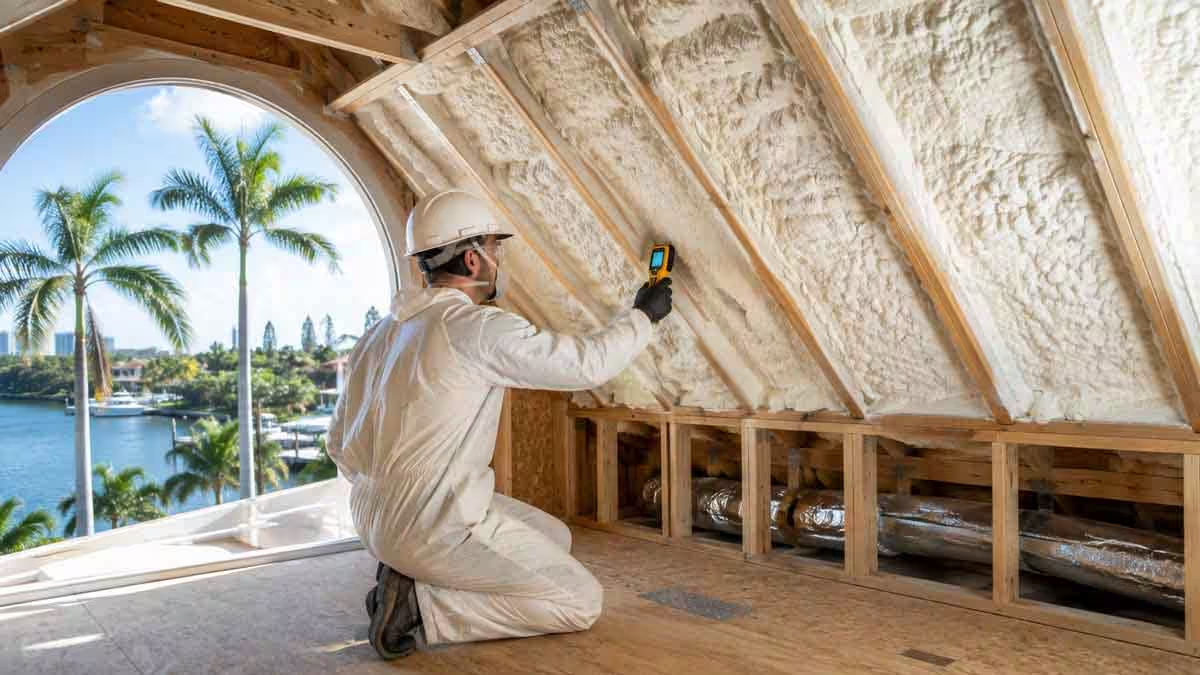
It pays to file early. DSD typically finishes first reviews within 30 days. From there, inspections are scheduled through the LauderBuild portal. Proper permit steps, product specs, and clear installation records help you avoid costly delays.
Hire a Licensed Insulation Contractor Today
Don’t let code confusion or failed inspections delay your project. At Broward Insulation Service, we handle the entire compliance process—from documentation and permit filing to precision installation for Fort Lauderdale homes and commercial properties.
Schedule Your Fort Lauderdale Insulation Assessment Today or call our local team to discuss your project requirements.