




The result is familiar: AC systems that run constantly, rooms that never reach a comfortable temperature, humidity that seeps in regardless of what the thermostat says, and energy bills that stay high no matter what gets replaced or upgraded.
Spray foam insulation addresses the root problem rather than the symptoms. At Broward Insulation, we install open-cell and closed-cell spray foam across residential and commercial properties throughout Fort Lauderdale, Broward County, and the wider South Florida region-sized to the application, not defaulted to a single solution.
Open-Cell vs. Closed-Cell Spray Foam: What Matters for South Florida
The choice between open-cell and closed-cell spray foam isn’t just a cost question. In South Florida’s climate, it’s a performance question with real consequences.
Closed-Cell Spray Foam
Closed-cell foam has a dense, rigid cellular structure with an R-value of approximately R-6 to R-7 per inch-the highest of any commonly installed insulation material. More importantly for this region, it functions as both an insulator and a vapor barrier. Moisture vapor cannot migrate through properly installed closed-cell foam, which matters enormously in a climate where outdoor humidity averages 75% or higher for much of the year.
Closed-cell foam also adds structural rigidity to wall cavities and roof assemblies, which has meaningful implications for wind resistance in hurricane-prone areas. For roof deck applications, exterior walls, and any surface with significant moisture exposure, closed-cell is typically the correct specification.
Open-Cell Spray Foam
Open-cell foam has a softer, more flexible structure with an R-value of approximately R-3.5 to R-3.8 per inch. It expands more aggressively during application-up to 100 times its liquid volume-making it effective for filling irregular cavities, penetrations, and hard-to-reach areas.
For interior attic applications where moisture drive is managed elsewhere in the building assembly, open-cell foam is a cost-effective option that still dramatically outperforms fiberglass or blown-in alternatives on air sealing. It also performs well acoustically, which is relevant for multi-family residential and commercial interiors.
The right choice depends on application location, budget, and building assembly. Our team evaluates each project individually rather than defaulting to one product.
Spray Foam Applications We Handle
Attic Insulation
Attics are the single highest-priority insulation application in South Florida. An uninsulated or under-insulated attic can account for 25-40% of a building’s total cooling load. Radiant heat from roof surfaces drives attic temperatures well above 140°F on summer afternoons, and that heat conducts directly into living and working spaces below.
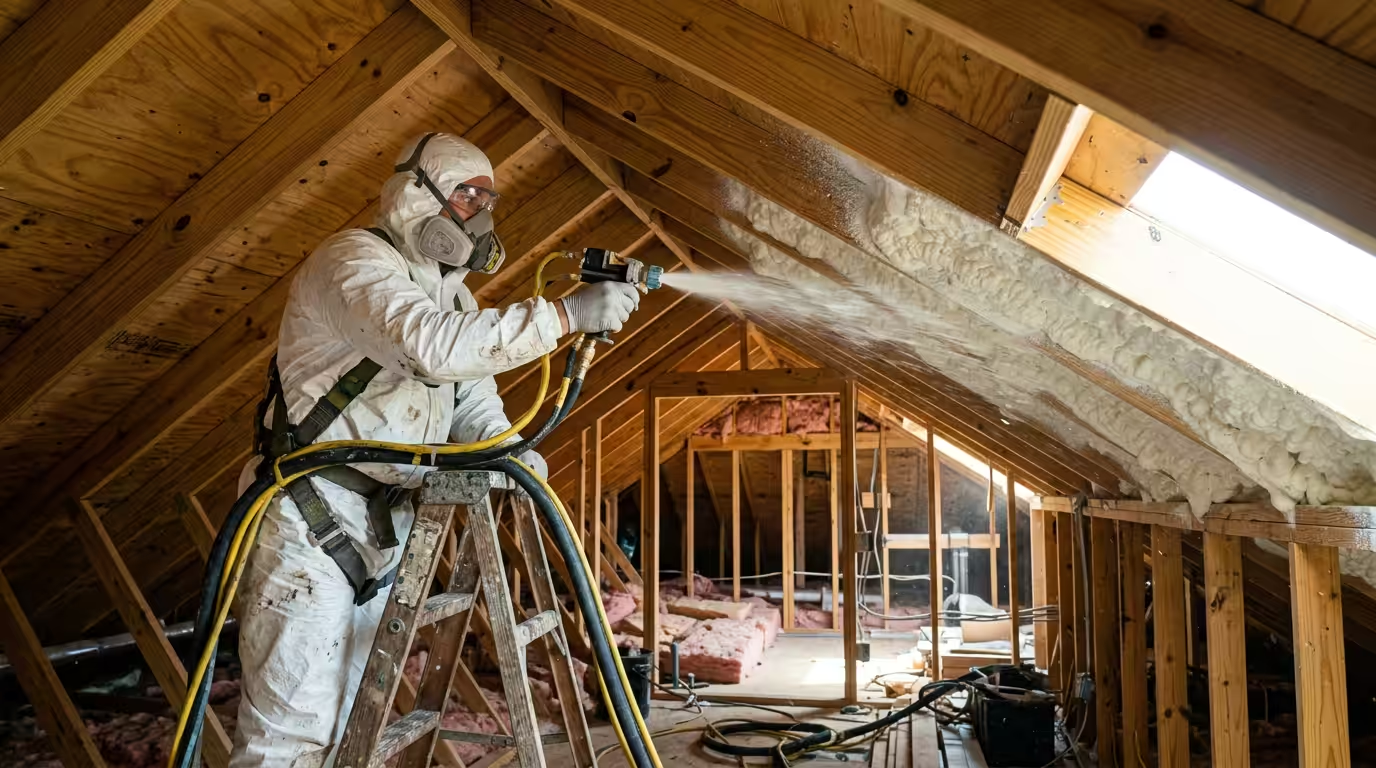
Spray foam applied to the attic floor (above the ceiling) air-seals the thermal boundary and prevents conditioned air from escaping into the attic. Alternatively, spray foam applied to the roof deck underside creates an unvented conditioned attic-a building science approach that keeps HVAC equipment and ductwork inside the thermal envelope, significantly improving system efficiency.
For most South Florida homes and commercial buildings with ductwork in the attic, the conditioned attic approach delivers better overall performance.
Roof Deck and Underside Applications
Applying closed-cell spray foam directly to the underside of the roof deck encapsulates the attic within the conditioned building envelope. Roofing materials still take the full brunt of solar radiation, but the thermal transfer into the building drops substantially. For flat commercial roofs, spray foam can also be applied to the exterior roof surface as a seamless, waterproofing insulation layer.
Wall Insulation
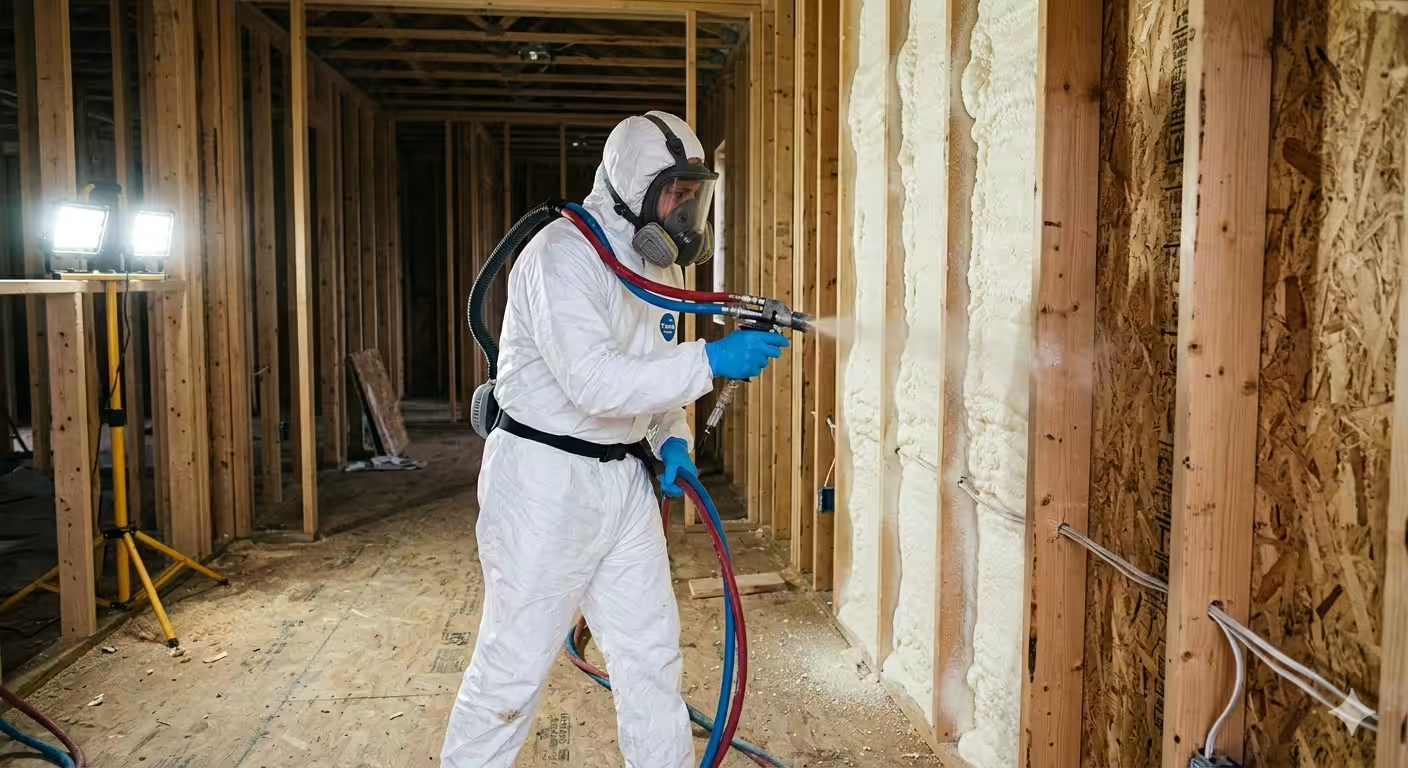
New construction in South Florida benefits significantly from spray foam in exterior wall cavities. Closed-cell foam eliminates the thermal bridging and air infiltration gaps common in fiberglass batt installations, and its vapor control properties are well-suited to hot-humid climate wall assemblies.
For existing buildings, injection foam and drill-and-fill methods allow wall cavity insulation without full drywall removal-relevant for renovation projects and commercial retrofits.
Crawl Spaces and Under-Floor Applications
Properties with elevated foundations or crawl spaces face moisture intrusion from below. Closed-cell spray foam on crawl space walls and floor joists creates a semi-conditioned space that resists moisture migration, prevents mold development in floor assemblies, and improves comfort in rooms directly above.
Commercial Buildings
Office buildings, retail spaces, warehouses, and industrial facilities throughout Broward County have distinct insulation requirements based on occupancy type, HVAC configuration, and energy code obligations. Broward Insulation works with commercial contractors, property managers, and building owners on new construction and retrofit projects, with familiarity with Florida Energy Code compliance documentation requirements.
Spray Foam Insulation Cost in Florida: What Shapes the Price
Spray foam costs more upfront than fiberglass or blown-in insulation. The relevant comparison isn’t installation cost alone-it’s installation cost weighed against energy savings, HVAC sizing reductions, and reduced maintenance over the building’s life.
Typical installed cost ranges in South Florida:
- Open-cell spray foam: $1.00-$1.50 per board foot (1 sq. ft. at 1″ thickness)
- Closed-cell spray foam: $1.75-$3.00 per board foot depending on thickness specification
A standard residential attic floor application in a 2,000 sq. ft. home typically runs $2,500-$5,000 depending on depth, access conditions, and existing insulation removal requirements. Roof deck applications cost more due to greater thickness requirements and application logistics.
Commercial projects are quoted per scope-square footage, application type, accessibility, and specification all affect pricing. We provide detailed written estimates after an on-site assessment, not ballpark figures over the phone.
Several Florida utility companies offer rebate programs for spray foam insulation upgrades. We can identify applicable programs for your property type and location during the inspection.
What Differentiates a Quality Spray Foam Installation
Spray foam is one insulation product where installation quality directly determines performance outcome. The material is mixed on-site from two chemical components, and temperature, humidity, ratio calibration, and application thickness all affect how the foam cures and performs.
Common installation failures include off-ratio mixing (producing foam that never achieves full R-value or adhesion), inadequate thickness for the specified R-value, and improper surface preparation that causes delamination over time.
Broward Insulation uses calibrated proportioner equipment, trained applicators, and conducts thickness checks during installation. We also ensure proper ventilation protocols during and after application-relevant for occupied buildings and properties with sensitive occupants.
Benefits

Maximum Energy Efficiency
Properly installed spray foam can reduce air leakage, improve thermal performance, and help lower cooling load depending on the building, HVAC system, attic conditions, and application area.

Fire, Moisture & Pest Resistance
Closed-cell spray foam can help control moisture movement and air leakage when installed correctly. Fire performance, pest resistance, and code requirements depend on the product, assembly, and required thermal or ignition barriers.

Premium Material Choice
Manufacturer-direct supply from Knauf, BASF, Dow, and GAF. We spec the right cell density, R-value, and thickness for your assembly — never one-size-fits-all.

Healthy Indoor Air
Low-VOC formulations, proper cure time, and verified post-install ventilation. Safe for families, tenants, and occupied commercial spaces.
What You Can Expect
Personal Consultation
Owner or senior tech reviews your needs, site, and goals – by phone, video, or in-person assessment.
Preparation
Site protection, safe masking.
Installation
Closed-cell or open-cell foam applied—fast, clean, and precise.
QA & Cleanup
Post-install walkthrough, thermal check, and white-glove cleanup.
Recent Spray Foam Projects
Sorry, no posts matched your criteria.
Open-cell or closed-cell which do I need?
Closed-cell for any surface exposed to moisture (roof decks, exterior walls, crawl spaces) and anywhere structural rigidity matters. Open-cell is fine for interior attic floors and acoustic walls where moisture drive is managed elsewhere. We spec per assembly, not per quote sheet.
How long until I can re-occupy after spray foam?
24 hours is standard for residential. Larger commercial applications can require longer ventilation depending on volume sprayed and HVAC configuration. We give you the exact re-entry window in your written estimate.
What R-value will I get per inch?
Closed-cell: R-6 to R-7 per inch. Open-cell: R-3.5 to R-3.8 per inch. We do thickness checks during installation to verify the spec is met.
Does spray foam last?
Properly installed spray foam lasts the life of the building — 50+ years without settling, sagging, or losing R-value. We warranty material and labor.
Request a Same Week Assessment
Contact Broward Insulation for your custom insulation estimate—owner on every job, no upsells, all work guaranteed.
Brand partners


Every installation includes product and labor warranty, code compliance, and all work performed or reviewed by the owner on-site.
RELATED SERVICES

Spray Foam Insulation
Maximum energy savings and comfort for luxury properties and large-scale facilities.
Traditional Insulation
Classic fiberglass, batt, and blown-in for homes, condos, and new construction.

Attic Insulation
Cool your attic, drop your AC runtime, and end hot upstairs rooms — installed, inspected, rebate paperwork handled.

Pipe Insulation
HVAC, pool, and plumbing pipe insulation for reduced loss and moisture control.