Commercial Warehouse Insulation: Cooling Metal Roofs with Spray Foam
South Florida’s industrial real estate market is booming, with massive distribution centers and commercial warehouses springing up from Miami-Dade to Palm Beach. However, these massive metal and tilt-wall structures face a unique enemy: the relentless Climate Zone 1A sun.
Without proper thermal protection, an uninsulated commercial warehouse in South Florida acts like a giant oven. By 2:00 PM on a July afternoon, a corrugated metal roof can reach surface temperatures exceeding 160°F. That radiant heat transfers directly into the facility, creating hazardous working conditions, spoiling heat-sensitive inventory, and forcing industrial chillers to run past their breaking point.
Here is why closed-cell spray foam insulation (ccSPF) is the definitive solution for South Florida commercial warehouses, and how it delivers massive ROI for industrial property owners and facility managers.
The Metal Building “Oven Effect”
Metal buildings are highly thermally conductive. When solar radiation heats a metal roof deck, that heat is immediately radiated down into the open warehouse space below. If the warehouse is air-conditioned, the HVAC system must constantly battle this massive thermal load.
If the facility relies solely on massive exhaust fans, the interior ambient temperature can still hover dangerously close to 100°F. This leads to two major liabilities for business owners:
- Employee Safety & Productivity: High warehouse temperatures lead to rapid worker fatigue, increased risk of heatstroke, and severe drops in labor productivity.
- Inventory Loss: For logistics companies storing pharmaceuticals, cosmetics, electronics, or perishable goods, a poorly insulated roof can lead to millions of dollars in ruined inventory due to temperature fluctuations.
Why Fiberglass and Rigid Board Fail in Warehouses
Historically, metal buildings were insulated using fiberglass blankets draped over the purlins, or rigid foam boards taped together. In South Florida’s high-humidity environment, both methods frequently fail.
Fiberglass acts like a sponge. When humid air enters the warehouse and hits the cooler metal roof at night, condensation forms. The fiberglass absorbs this water, becomes heavy, sags, and loses all its R-value—eventually raining dirty water onto the inventory below. Rigid boards, while better at resisting water, are incredibly difficult to seal seamlessly against the irregular corrugations of a metal roof, leaving massive air leaks that invite humidity.
The Closed-Cell Spray Foam Solution
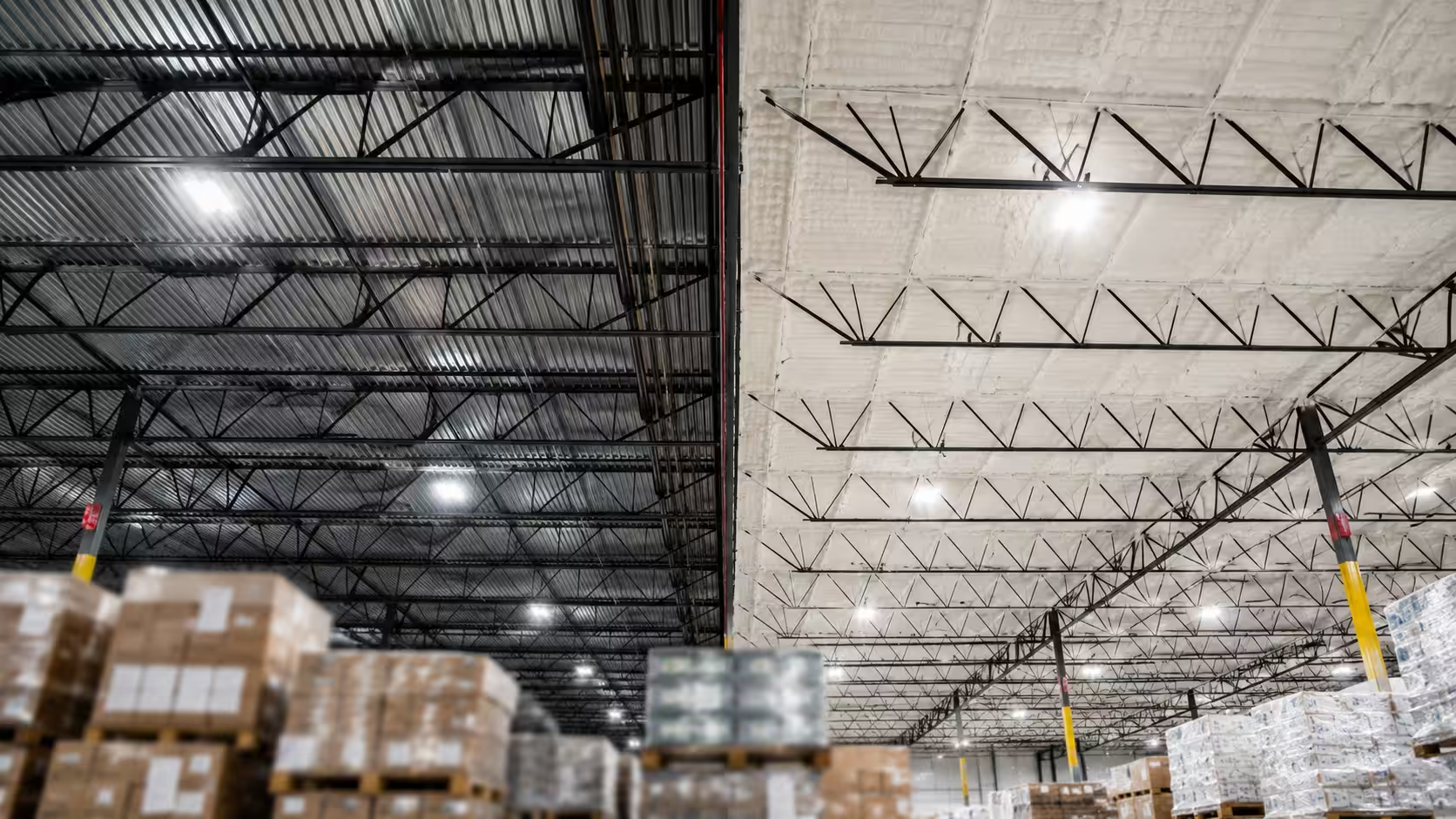
The only foolproof, long-term solution for industrial metal roofs is applying closed-cell spray polyurethane foam (ccSPF) directly to the underside of the roof deck.
1. Total Thermal Break & Vapor Barrier
Closed-cell spray foam expands upon application, instantly filling every corrugation, seam, and fastener hole in the metal roof. It cures into a rigid, monolithic blanket with an exceptionally high R-value (roughly R-6.5 to R-7 per inch). Because it is a Class II vapor retarder, humid air can never reach the metal deck, completely eliminating condensation and “indoor rain.”
2. Structural Integrity & Wind Uplift Resistance
In South Florida, hurricanes are a guaranteed threat to commercial real estate. Metal roofs are particularly susceptible to wind uplift, where high-pressure winds rip the metal panels right off the purlins. Closed-cell spray foam cures into a dense, hard plastic that essentially glues the metal panels to the structural steel. Studies show that ccSPF can increase the wind uplift resistance of a metal roof by up to 300%, potentially qualifying the building for reduced commercial property insurance premiums.
3. Drastic OPEX Reductions
For climate-controlled warehouses, sealing the roof deck with spray foam often drops the interior cooling load by up to 40%. This allows facility managers to downsize their commercial HVAC equipment during replacement cycles. Furthermore, pairing a spray-foamed roof with properly insulated commercial chilled water piping ensures your entire mechanical system runs at peak, condensation-free efficiency.
Partner with South Florida’s B2B Insulation Experts
Whether you are a General Contractor finalizing the blueprint for a new 100,000 sq. ft. distribution center, or a Property Manager retrofitting an aging facility, you need an insulation partner with the capacity, equipment, and expertise to execute on a massive scale.
Since 1977, Broward Insulation has provided accurate takeoffs, strict scheduling, and white-glove project management for industrial properties. From multi-family soundproofing to massive warehouse spray foam applications, we keep South Florida business running smoothly.
Ready to optimize your facility’s thermal envelope?
Don’t let radiant heat and rising utility bills eat into your operating margins. Click here to contact Broward Insulation today to schedule a facility walk-through and request a detailed commercial bid.
Frequently Asked Questions
Can you spray foam an existing commercial metal roof?
Yes. Closed-cell spray foam can be applied directly to the underside of an existing metal roof deck, provided the surface is clean, dry, and free of excessive rust or peeling paint. It is one of the most effective ways to retrofit an older industrial building without removing the roof.
Is spray foam insulation safe for food-grade warehouses?
Once fully cured, closed-cell spray foam is an inert, non-toxic plastic that does not off-gas or shed fibers (unlike fiberglass). It is frequently used in agricultural and food-storage facilities because it can be easily washed down and prevents pests from nesting in the roof structure.
How long does a warehouse spray foam project take?
This depends heavily on the square footage and accessibility of the roof deck. Our commercial crews utilize high-capacity spray rigs and elevated scissor lifts to move rapidly. We work closely with facility managers to phase the project in sections, minimizing disruption to your daily logistics and warehouse operations.