Elastomeric vs. Fiberglass Pipe Insulation: The Climate Zone 1A Guide
When specifying pipe insulation for commercial HVAC, refrigeration, or plumbing systems in South Florida, the materials you choose will dictate the lifespan of the building’s infrastructure.
In dry climates, contractors have the luxury of choosing materials based purely on R-value and cost. In Climate Zone 1A, where ambient humidity routinely exceeds 80%, the primary metric for success is condensation control and moisture impermeability.
The two most common materials specified are fiberglass (with an All-Service Jacket) and closed-cell elastomeric foam. Here is the building science on how they perform against vapor drive, and why one is vastly superior for cold-water applications in Florida.
The Flaw of Fiberglass on Cold Lines
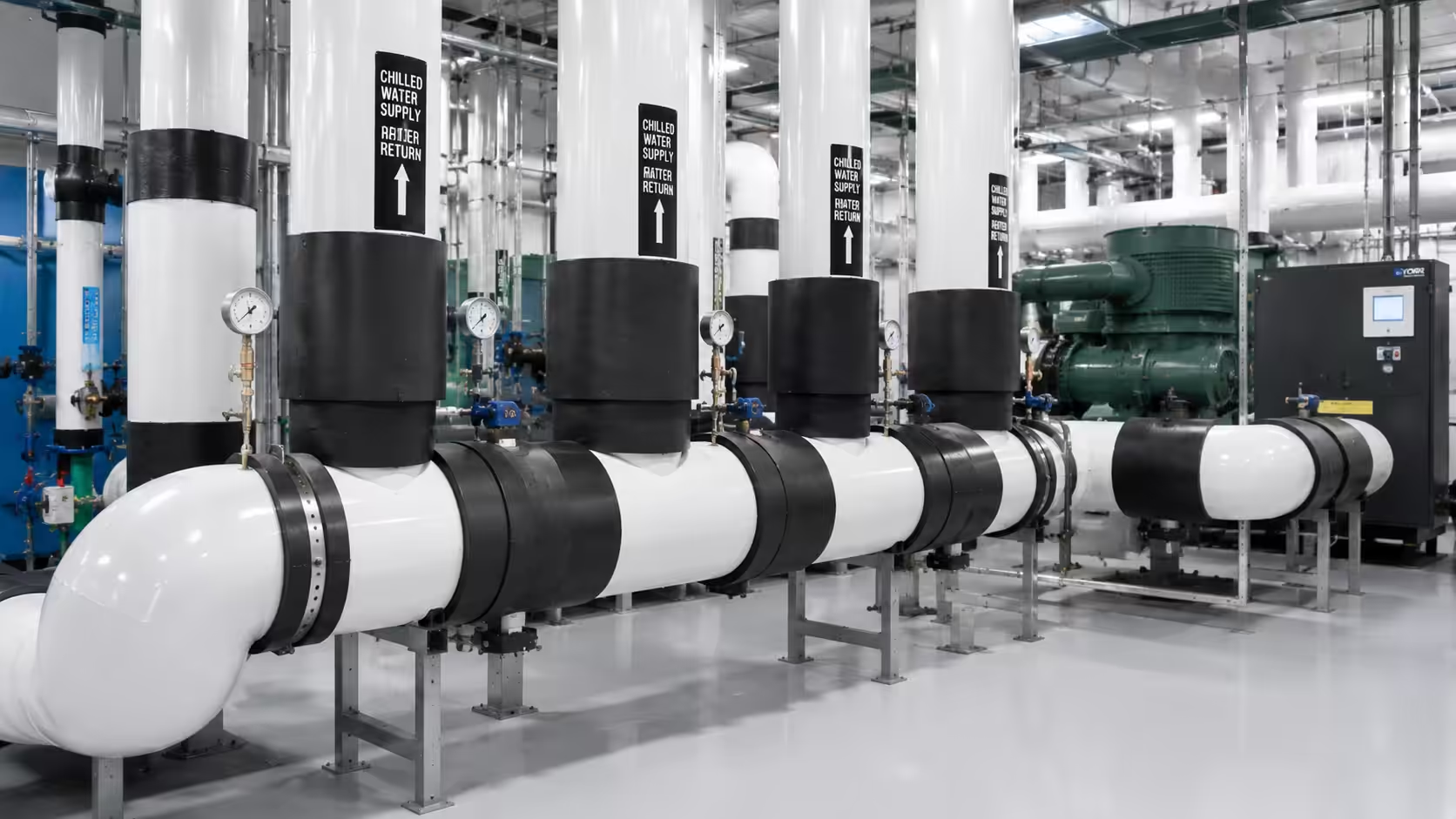
Standard fiberglass pipe insulation is an excellent, cost-effective thermal barrier for hot water lines and steam pipes. However, it is an inherently open-cell material. It relies completely on trapped air to provide its R-value.
When installed on chilled water or AC suction lines (which operate around 40°F to 45°F), fiberglass requires a perfect, continuous vapor barrier jacket (usually an ASJ – All Service Jacket) to prevent ambient moisture from reaching the cold pipe.
If that jacket gets a single pinhole, tear, or poorly taped seam, the system fails. Vapor drive forces moisture into the fiberglass. Because it is open-cell, the fiberglass acts like a sponge, absorbing the condensation. Once wet, fiberglass loses virtually all of its thermal resistance and holds water directly against the pipe, accelerating severe corrosion and mold growth.
Why Closed-Cell Elastomeric Dominates
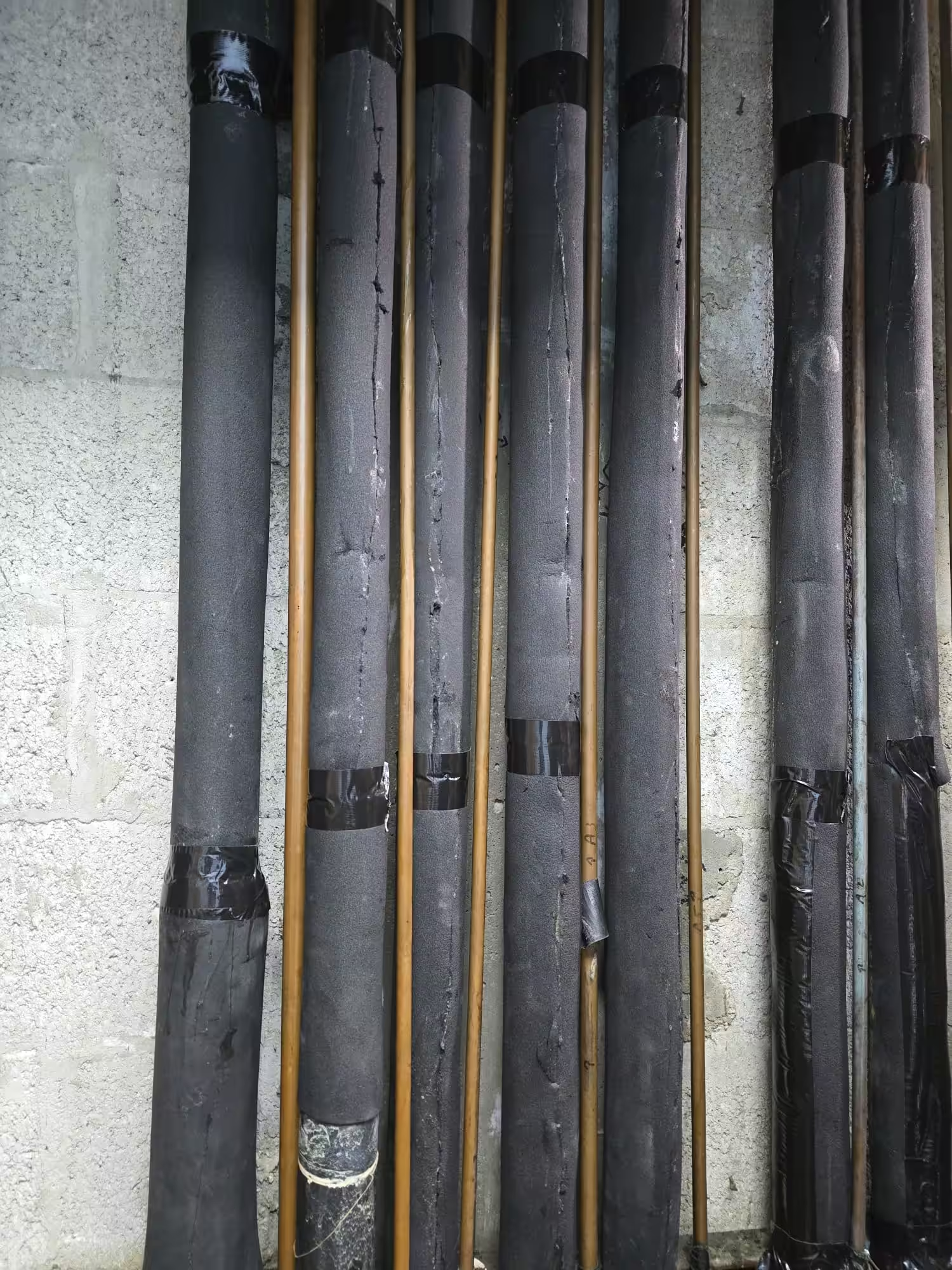
Closed-cell elastomeric rubber insulation (often recognized by its black color and brand names like Armaflex or Aerocel) is the gold standard for cold mechanical systems.
Unlike fiberglass, elastomeric foam is built from millions of tiny, independent, nitrogen-filled cells. This structure makes it inherently resistant to moisture transmission.
- Built-in Vapor Barrier: Elastomeric foam does not require a separate, fragile paper or foil jacket to stop moisture. The material itself is a vapor retarder. Even if the surface is scratched or lightly damaged, moisture cannot travel through the cellular structure to reach the pipe.
- Flexibility and Seam Integrity: Elastomeric insulation is highly flexible, making it vastly superior for wrapping complex pipe arrays, valves, and tight radiuses where rigid fiberglass would require intricate, failure-prone custom cuts.
The Verdict for Architects and GCs
If you are insulating heating lines or domestic hot water, fiberglass is perfectly acceptable. But if you are insulating chilled water, VRF, or AC refrigerant lines in South Florida, specifying fiberglass is a massive liability. You must specify closed-cell elastomeric foam or FOAMGLAS to permanently defeat vapor drive.
Ensure your mechanical systems are protected by calling the South Florida pipe insulation experts at Broward Insulation. We install precision commercial and residential thermal barriers engineered for Climate Zone 1A.