AC Pipe Sweating in the Attic: Mold Risks and Condensation Control
You look up at the drywall ceiling in your hallway, and your stomach drops. There is a growing, brown water stain. Your first instinct is to call a roofer, but if it hasn’t rained in Fort Lauderdale for three days, the roof isn’t your problem.
The culprit is almost certainly your AC unit. Specifically, you are dealing with severe AC pipe sweating.
In South Florida’s brutal Climate Zone 1A, uninsulated or poorly insulated HVAC refrigerant lines act like a magnet for atmospheric moisture. Here is exactly why your attic pipes are raining on your drywall, the hidden mold risks it creates, and how to permanently stop the condensation.
Why Your AC Pipes are Sweating
Your air conditioning system has a cold refrigerant line (the suction line) that runs from the outside compressor, through your attic, and into your air handler. The refrigerant inside that copper pipe is usually around 40°F.
Meanwhile, your South Florida attic in the middle of July can easily reach 130°F with extremely high humidity.
When that 130-degree humid air hits the 40-degree copper pipe, physics takes over. The moisture in the air condenses instantly onto the cold metal. If the insulation surrounding that pipe is missing, cracked, or degraded, the condensation pools up and drips directly onto your attic floor, soaking through your drywall ceiling.
The Hidden Mold Risk
Water damage to your drywall is only the visible symptom. The true danger of pipe sweating happens out of sight:
- Fiberglass Degradation: If the dripping condensation falls onto blown-in or batt fiberglass insulation, that insulation instantly loses its R-value. Wet fiberglass is useless for blocking heat.
- Attic Mold Blooms: Warm, dark, and wet. Those are the exact three ingredients required for toxic mold growth. If a sweating pipe constantly drips onto wooden roof trusses or drywall backing, mold will begin to colonize the area within 48 hours.
Why You Can’t Just Tape It
When homeowners or amateur handymen try to fix a sweating pipe, they usually wrap it in duct tape or buy cheap, open-cell foam noodles from a big box store. This will fail.
Standard foam degrades rapidly under the intense radiant heat of a Florida attic. It shrinks, cracks, and exposes the pipe. Furthermore, if you wrap a pipe without creating a completely airtight seal, vapor drive will push moisture underneath the tape, causing the copper line to corrode invisibly.
The Permanent Fix for South Florida Homes
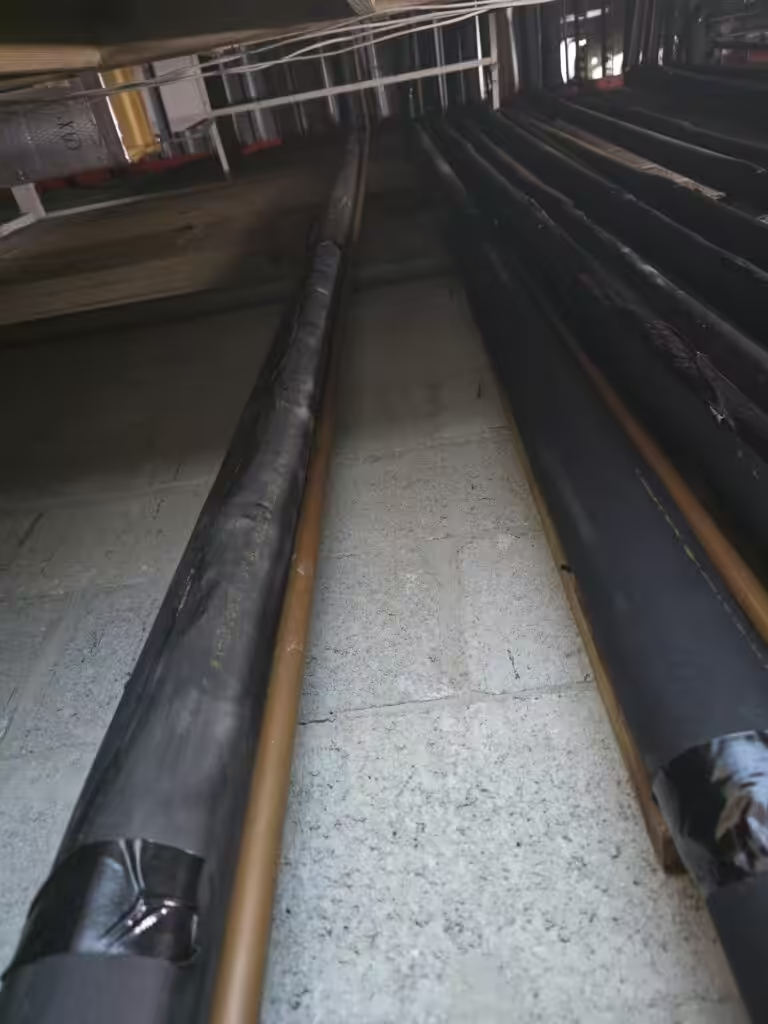
Stopping condensation requires commercial-grade thermal barriers. At Broward Insulation, we do not use cheap foam. We strip the degraded insulation down to the bare copper and install high-density, closed-cell elastomeric rubber insulation.
Because it is closed-cell, it forms a permanent vapor barrier. We meticulously seal every seam, elbow, and joint with manufacturer-grade adhesives, ensuring that humid attic air can never reach the cold copper line again.
If you have water stains on your ceiling or suspect your HVAC lines are compromised, do not wait for mold to set in. Contact Broward Insulation to stop AC pipe sweating. We will evaluate your attic, remove the degraded materials, and install a condensation control system that protects your home.