How to Stop Sweating Chilled Water Pipes in South Florida Commercial Buildings
In South Florida’s relentless subtropical climate, facility managers of hospitals, high-rise office buildings, hotels, and data centers face a continuous battle against humidity. While much attention is given to roofing or building envelope integrity, one of the most critical, yet frequently overlooked, problem areas exists within the facility itself: the **commercial chilled water piping system**.
When uninsulated or poorly insulated chilled water lines run through non-conditioned drop ceilings or mechanical shafts, they don’t just “sweat”—they create a persistent, hidden cascade of operational expenditure (OPEX) losses, structural damage, and potential liability. If your facility is dealing with dripping ceiling tiles, mysterious musty odors, or high energy costs, your mechanical pipe insulation is likely failing.
Here is a comprehensive guide to understanding, diagnosing, and permanently fixing condensation issues on commercial chilled water pipes in the South Florida environment.
The Physics of the Problem: Why South Florida Chiller Lines Sweat
To fix the issue, you must understand the building science driving it. Chilled water systems typically supply water at temperatures between 40°F and 45°F. Meanwhile, South Florida’s ambient humidity often pushes the outdoor air’s dew point into the 70s.
The “dew point” is the temperature at which air is so saturated with moisture that it must condense into liquid water. When unconditioned 90% humidity air comes into contact with a 45°F steel pipe surface, it instantly reaches the dew point. In South Florida, the exterior air is *always* warmer and wetter than the air surrounding your chilled water lines, creating massive **vapor drive**. This drive pushes water vapor directly toward the cold pipe surface, searching for any gap or tear in the insulation system.
The Hidden Costs of Failure (More Than Just Drips)
For facility managers, ignoring sweating chilled water lines is a significant OPEX mistake. The consequences go far beyond a few stained ceiling tiles:
- Microbial Growth & IAQ Issues: Constant moisture inside warm drop ceilings is the prime breeding ground for mold and mildew. This compromises indoor air quality (IAQ), leads to tenant complaints, and can violate health codes, particularly in hospitality or healthcare settings.
- Slip-and-Fall Liability: Condensation dripping from high-level pipes can pool on floors below, creating immediate slip-and-fall hazards for employees and the public.
- Premature Equipment Failure: Constant moisture causes corrosion on piping, hangers, and fittings. It also ruins expensive interior finishes and electronic equipment located below the mechanical lines.
- System Inefficiency: Wet insulation loses virtually all its R-value. When your chilled water lines are wet, they gain heat from the building, forcing your central chiller plant to work harder to maintain supply temperatures, drastically increasing energy OPEX.
The Fix: Engineering a Perfect Vapor Barrier System
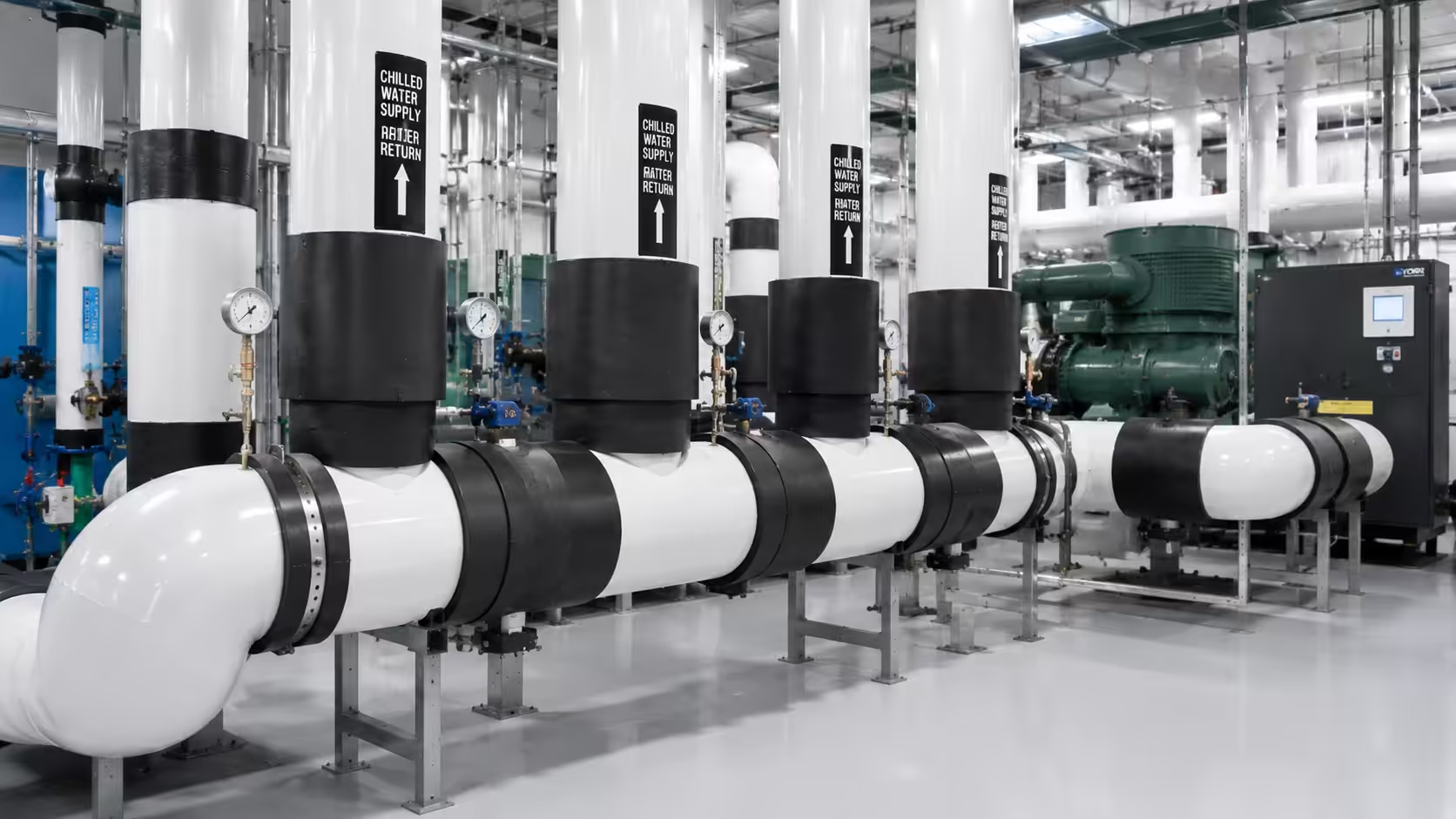
In South Florida, you are not simply “insulating” mechanical pipes; you are engineering a complete vapor barrier system. Standard fiberglass batts or poorly sealed foam sleeves will fail within a single season. True condensation control requires specific materials and white-glove craftsmanship.
Step 1: Choose the Right Non-Permeable Material
Because vapor drive is so extreme, the insulation material itself must resist moisture absorption. Our primary recommendations for South Florida chilled water lines include:
- Flexible Elastomeric Foam (e.g., Armaflex): This is the most common commercial choice. Its closed-cell structure makes it inherently non-absorbent and highly resistant to water vapor transmission.
- Cellular Glass (e.g., Foamglas): For severe conditions or industrial applications, cellular glass is a superior solution. It is completely impermeable, zero-permeability insulation that will not absorb water under any circumstances.
Step 2: Install high-Density Jacketing & Precise Sealing
The best insulation material in the world is useless if ambient air can sneak through the seams. To ensure long-term integrity, a complete barrier must be built around the insulation:
- Vapor Retarder Jacketing: For indoor systems, all service jacketing (ASJ) or rigid PVC jacketing provides an extra layer of non-permeable protection and gives the mechanical room a clean, professional finish.
- Vapor Dams: Technicians must install permanent vapor dams at regular intervals. If a tear occurs, the dam prevents moisture from traveling along the entire length of the pipe, localizing the failure for easier repair.
- Seam and Joint Sealing: Every longitudinal and circumferential joint must be sealed with low-permeance vapor retarder tape or mastic coatings to create a single, monolithic, airtight system.
FBC-EC C403.2.10 Compliance & B2B Partnership
Retrofitting chilled water insulation is not just a maintenance task; it is often a code-compliance requirement. The Florida Building Code (Energy Conservation, 7th Edition) Section 303.1.2 explicitly requires non-permeable jacketing for all piping conveying fluids below the dew point. Failing mechanical insulation violates these energy codes.
Broward Insulation is specialized in commercial and industrial mechanical insulation across South Florida. Jeremiah Dailey personally oversees every B2B project, ensuring precise line-item estimation, white-glove installation, and strict adherence to commercial construction schedules.
Don’t wait for mold complaints or structural failure. Contact Broward Insulation today for a facility mechanical system evaluation and commercial pipe insulation proposal.
Frequently Asked Questions
Can you insulate chilled water pipes while they are running?
While it is possible in some scenarios, it is highly recommended to perform chilled water insulation retrofits during a scheduled system shutdown or in winter months. The pipe surface must be completely clean and dry before applying any insulation, or you risk trapping active condensation against the steel.
How thick should pipe insulation be for chilled water in Florida?
For standard 45°F chilled water lines, Florida Building Code (C403.2.10) generally requires a minimum of 0.5 inches of closed-cell insulation for smaller pipe diameters, increasing to 1.0 inch or more for larger lines to ensure the surface temperature remains above the ambient dew point.
What is the best type of commercial pipe insulation?
For South Florida mechanical systems conveying cold fluids, flexible closed-cell elastomeric foam is the industry standard for commercial buildings due to its inherent vapor resistance and ease of installation. Cellular glass is the superior choice for severe industrial environments where durability and zero permeability are required.