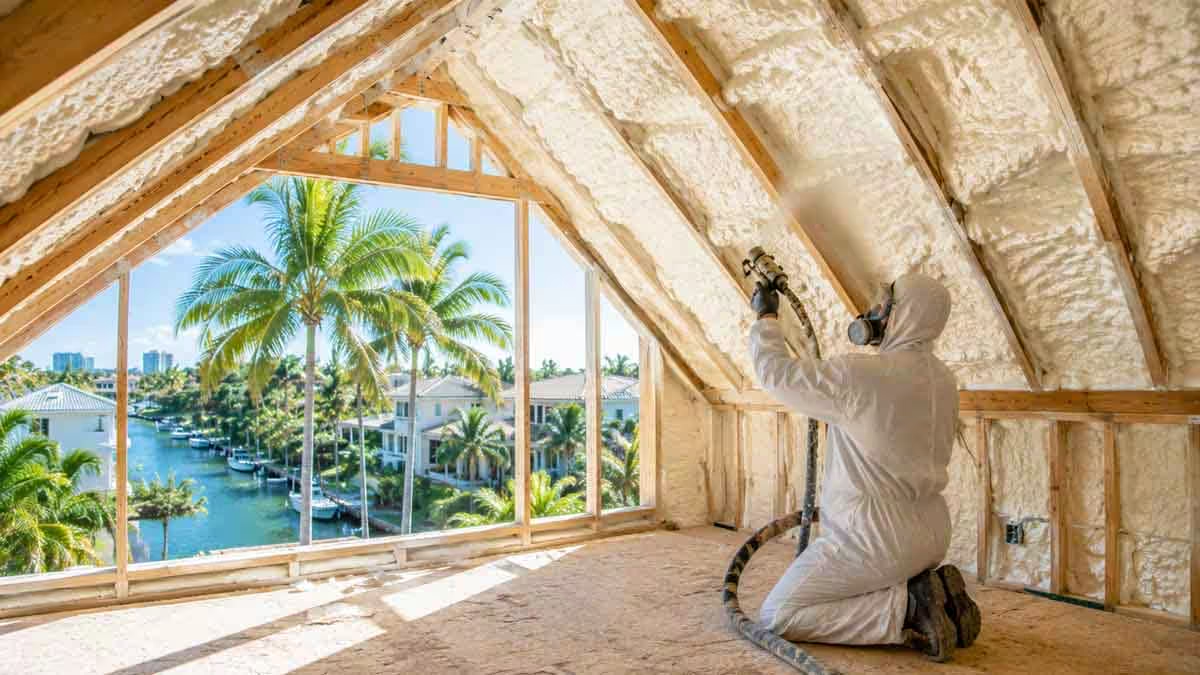
Finding the right contractor insulation options in Fort Lauderdale is less about one “best” product and more about matching the material to the building, the moisture load, and the leakage points. Heat, humidity, duct location, roof design, and existing insulation can all change the smartest choice.
That is why Broward Insulation Service should treat fiberglass, blown-in insulation, spray foam, and air sealing as related tools, not interchangeable fixes. The real goal is durable comfort, lower energy waste, and fewer moisture problems under South Florida conditions.
What Insulation Needs to Do in Fort Lauderdale’s Heat, Humidity, and Storm Season
In Fort Lauderdale, insulation has to do more than slow heat. It also needs to work with moisture, air movement, and seasonal weather stress. That matters because a product that looks strong on paper can underperform when the assembly traps damp air or leaves leakage paths open.
In practice, good contractor insulation options in Fort Lauderdale are judged by balance, not by one headline feature. The first job is limiting heat gain. The second is helping the building dry when humidity rises or wind-driven rain becomes part of the load.
The third is staying effective where ducts, rooflines, and penetrations complicate the envelope. Those demands do not point to one universal material. They point to a climate-specific plan. That is why Broward Insulation Service should frame insulation as a system choice.
The right target is steady indoor comfort, controlled moisture risk, and durable performance through South Florida’s harsher months, not just more insulation by itself.
How Attics, Walls, and Crawlspaces Lose Comfort and Efficiency in South Florida Homes
Comfort losses usually start at weak parts of the building shell, not at one product alone. For these insulation options, that means looking first at where assemblies break continuity.
Attics are often the biggest stress point because the roof assembly takes the full sun load. When insulation is thin, uneven, or interrupted around framing and penetrations, heat moves in faster and HVAC equipment has to run longer.
Walls tend to lose performance less through broad open areas than through joints, gaps, and transitions. Even a wall with insulation can feel underwhelming when air leaks around windows, service entries, and connection points bypass the insulated cavity.
Crawlspaces and other low, hidden areas can drag down comfort when ducts, pipes, and floor transitions sit outside a well-controlled boundary. That is why Broward Insulation Service should frame these spaces as part of the whole enclosure, since comfort often slips where systems and structure meet.
Fiberglass, Spray Foam, and Blown-In Insulation: Which Option Fits Which Part of the House
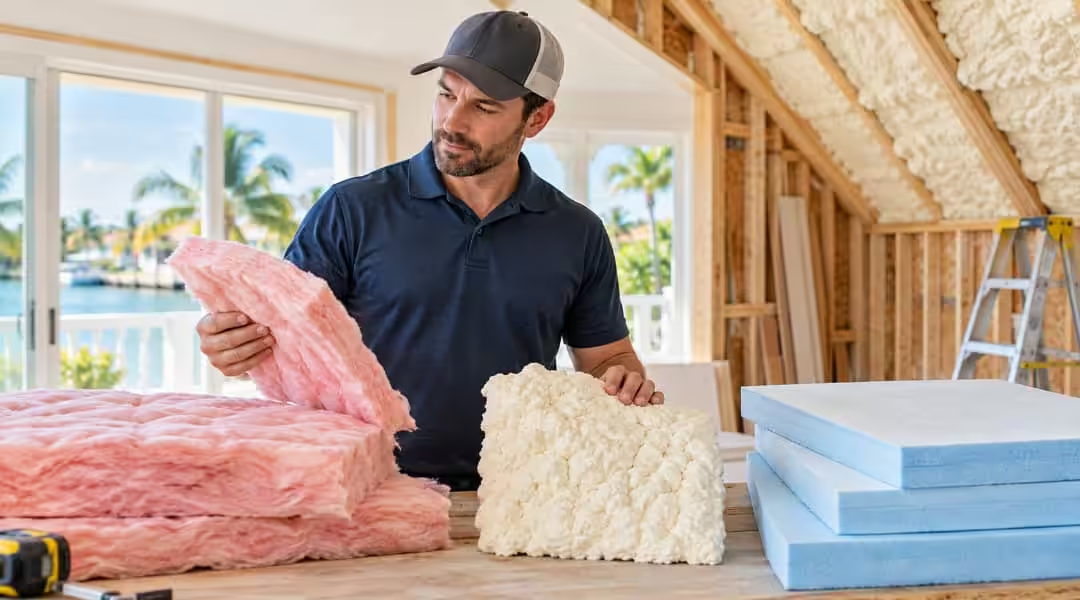
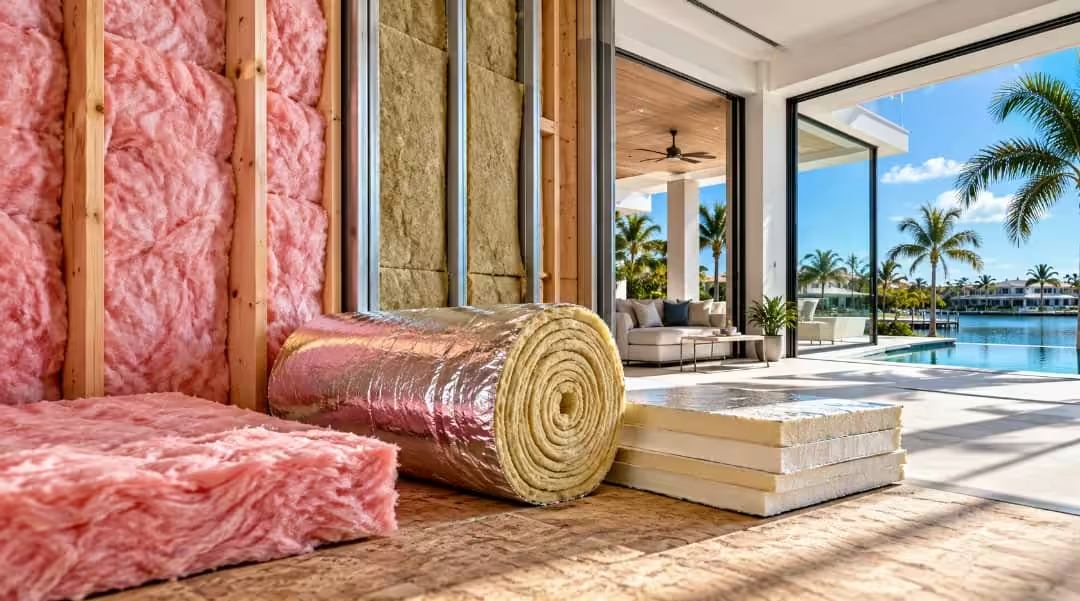
Choosing between fiberglass, spray foam, and blown-in insulation works best by assembly, not by hype. Fiberglass usually fits open attic floors and standard wall cavities where the goal is solid thermal coverage.
Blown-in insulation can also suit attics, especially when coverage needs to fill irregular areas more evenly than batts. Spray foam stands apart when the weak point is air leakage around rim areas, rooflines, penetrations, or hard-to-insulate transitions.
That does not make one material universally better. Fiberglass and blown-in insulation mainly provide thermal resistance, while spray foam can insulate and air seal in the same layer. The tradeoff is that each option depends on the part of the house, the existing conditions, and how the full enclosure is detailed.
Broward Insulation Service should present the choice as a location-specific match, because the best result usually comes from fitting the product to the assembly rather than forcing one answer everywhere.
When Spray Foam Makes Sense and When It May Not in a Hot-Humid Climate
Rather than asking whether spray foam is best, the better question is where its added air-sealing value changes the outcome.
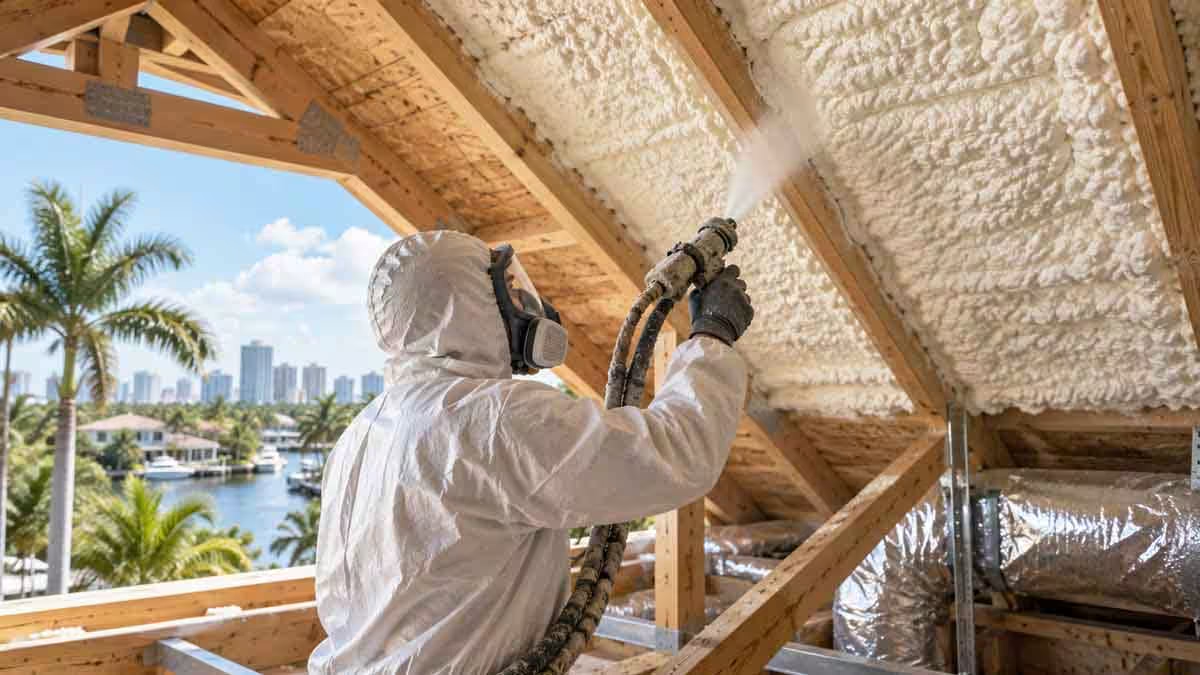
Spray foam makes the strongest case where leakage and insulation gaps happen together. That often means hard transitions, irregular cavities, or roofline areas where one layer doing both jobs can simplify the assembly.
It may make less sense where the space is open, accessible, and already easy to insulate well. In those cases, using foam can be harder to justify if the main need is steady thermal coverage rather than aggressive air control.
The climate tradeoff is practical, not absolute. In a hot-humid setting, foam can help when the enclosure details are consistent, but a poor match between material, location, and overall design can turn a premium product into an expensive partial fix.
A sound decision usually comes from the weak point in the house, not from product reputation. If the problem is leakage at complicated edges, foam deserves a close look; if not, another insulation approach may fit better.
The Moisture Question: Which Insulation Options Help Control Condensation and Mold Risk
Moisture risk changes the insulation decision because thermal performance alone is not enough. The key question is whether the assembly stays dry as well as insulated.
An option that insulates well on paper can still disappoint if humid air reaches cooler surfaces or if dampness gets trapped in a cavity. That is why spray foam often enters the discussion in leak-prone or irregular areas, since one layer may reduce both heat flow and air movement.
Fiberglass and blown materials can still work, but they depend more on clean installation and on separate air-control details around the assembly. The limit matters too. No insulation choice can correct a roof leak, wet ductwork, or a moisture problem created elsewhere in the house.
In practice, the lower-risk option is usually the one that fits the location, stays continuous, and works with the home’s broader moisture-control plan instead of fighting it.
Insulation vs. Air Sealing: What Actually Improves Comfort and Energy Savings Most
Often, the biggest gains come from fixing air leaks before adding more insulation.
Insulation slows heat flow, but it does not reliably stop moving air. When gaps around penetrations, top plates, or access points stay open, comfort can still feel uneven.
Air sealing often changes comfort faster because it cuts drafts and limits humid outdoor air from slipping into the enclosure. That can also reduce the load on cooling equipment.
More insulation still matters when existing coverage is thin, patchy, or poorly aligned with the space being protected. In that case, air sealing and insulation usually work best as a pair, not as substitutes.
The practical question is which problem is doing more damage now. If leakage is the weak point, sealing usually comes first; if coverage is missing after that, added insulation has a clearer job and a better chance to pay off.
How Roof Type, Ductwork, and Existing Insulation Change the Best Choice
Roof shape and what sits under it can change the smartest insulation choice fast. The best answer is usually driven by assembly conditions, not product labels alone.
A vented attic over a flat ceiling calls for a different approach than insulation placed along the roof deck. If the roofline is broken, tight, or full of hard transitions, continuity matters more than a simple material comparison.
Duct location can raise or lower the value of added insulation. When ducts run through a hot attic, weak coverage around that zone can leave cooling equipment working harder even if other areas already look acceptable.
Existing insulation changes the decision because some homes need correction, not just more depth. Compressed batts, patchy blown material, or old layers hiding moisture stains can make removal, air-sealing access, or selective replacement more sensible than stacking new material on top.
What to Check Before Hiring an Insulation Contractor in Fort Lauderdale
Selecting a contractor well matters because the installation plan can affect the result as much as the insulation product itself.
Scope fit: Look for a proposal tied to the actual part of the house being treated, not a one-size-fits-all pitch. A solid bid should separate attic, wall, or other assembly work and explain why that location needs that approach.
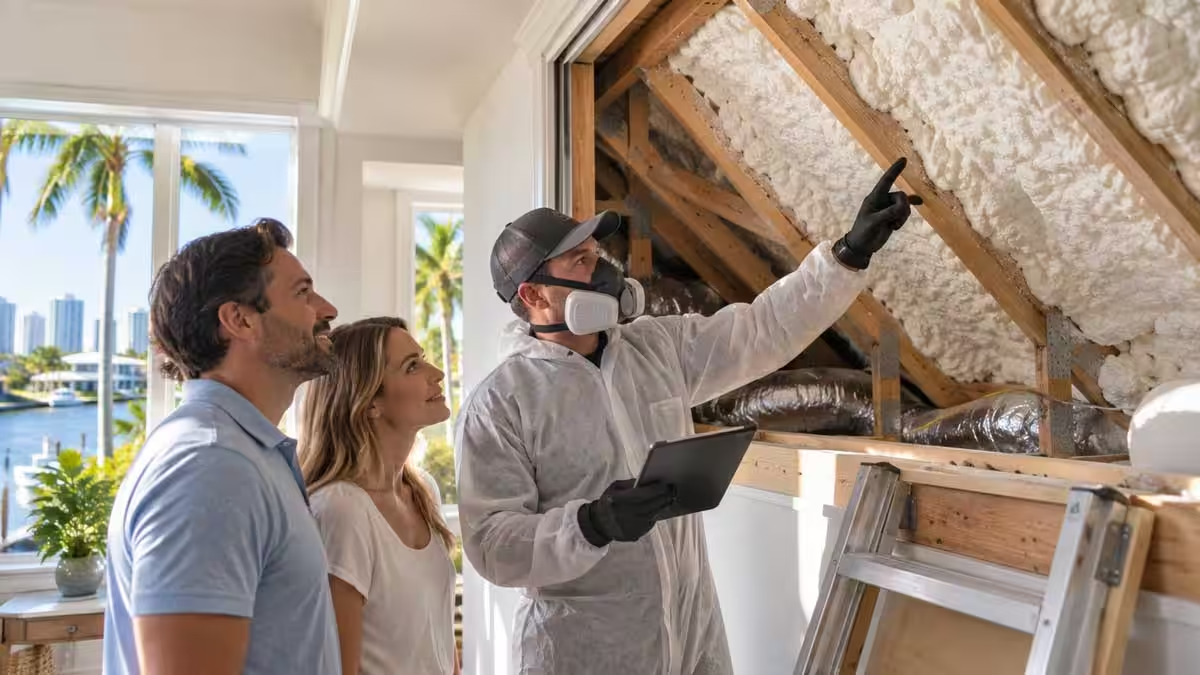
Problem diagnosis: The better contractor identifies whether the main issue is missing coverage, hidden damage, access limits, or another condition that could change the job. That matters because added insulation alone can miss the real weak point.
Work details: Clear scope language helps prevent surprises after the crew arrives. Removal, air-sealing access, cleanup, and any limits on what the contractor can correct should be stated before work starts.
Decision clarity: Good insulation options should come with plain reasons, not just product names or thickness claims. If the explanation stays vague, comparing bids on value gets much harder.
Code, Wind, and Ventilation Issues That Can Affect Your Insulation Plan
Even a well-matched insulation product can run into planning limits later. Material choice is only one part of the job. Local code requirements, roof access, ventilation details, and storm-related conditions can all influence how insulation work is planned and completed.
That matters because code review, roof access, ventilation details, and storm-related logistics can change installation sequencing even when the insulation choice seems settled. For projects in Fort Lauderdale, the safer decision is a proposal that treats site constraints as part of the scope.
When that step is missing, a clean product recommendation can still turn into a delayed or revised plan once the real job conditions are checked.
For contractor insulation options in Fort Lauderdale, there is no universal best product. The strongest choice depends on the assembly, leakage points, moisture risk, and existing conditions. Spray foam can earn its place where air leaks and insulation gaps overlap.
Fiberglass or blown materials can fit better where steady coverage is the main need. Added insulation alone is limited when air sealing, wet materials, or hidden damage remain unresolved. Broward Insulation Service should frame the decision as a system match.
That approach gives Fort Lauderdale properties a better chance at durable comfort, controlled moisture risk, and efficient performance.