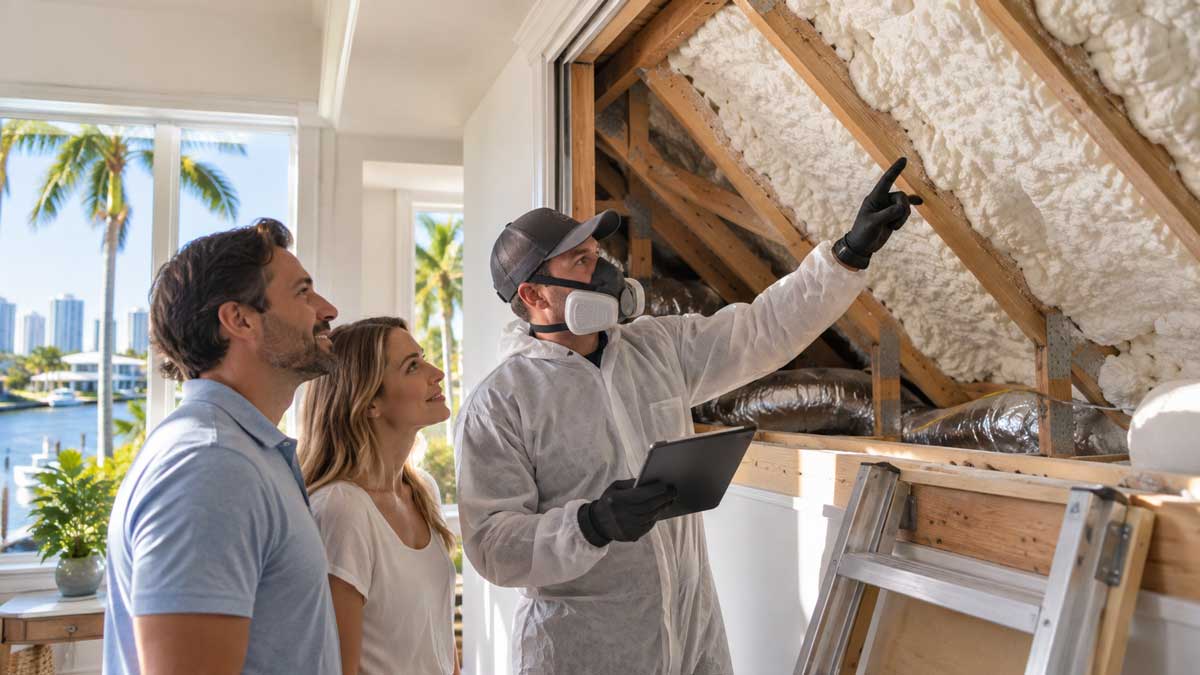
Spray Foam Attic Incentives for Fort Lauderdale Homeowners 2026
Homeowners may find incentive opportunities for attic upgrades in 2026, but not every spray foam project will qualify the same way. The main issue is eligibility, not just the headline savings.
Broward Insulation Service focuses on what actually affects value: current incentive rules, attic condition, project scope, timing, and paperwork. That matters because spray foam attic insulation can improve air sealing and efficiency, while available programs may only reduce part of the upfront cost.
Spray Foam Incentives Defined for Fort Lauderdale
For homeowners, insulation incentives usually mean financial programs that reduce the upfront cost of an efficiency upgrade. In practice, that can include utility rebates, financing offers, or local program discounts tied to qualifying work.
With spray foam attic insulation in Fort Lauderdale, the key point is simple: the incentive does not change what the product is.
It changes how part of the project may be paid for. That distinction matters. Some offers apply to energy upgrades broadly, while others depend on property type, installation standards, or proof that the work meets program rules.
Broward Insulation Service treats incentives as a cost-reduction layer, not a guarantee. A smart next step is to match the attic, the property, and the installation scope to current program requirements before pricing assumptions are made.
Current Incentive Programs & Eligibility
For 2026 projects, homeowners should not assume the federal Energy Efficient Home Improvement Tax Credit is available. The IRS states that the credit does not apply to qualifying property placed in service after December 31, 2025.
For qualifying insulation work completed in 2025, the credit was generally 30% of eligible insulation and air-sealing costs, subject to a $1,200 annual limit, with a separate limit for qualifying home energy audits. The IRS also states that labor for installing building envelope components does not qualify.
That makes eligibility and timing especially important. A project that qualified under the 2025 federal rules should not automatically be treated as eligible for a 2026 tax credit. For attic insulation projects, the smart screen is simple: verify current program availability, project timing, and documentation requirements before counting an incentive in the budget.
How Savings and Rebates Work
Instead, the practical value of a rebate is how it changes the project math. A current credit or rebate lowers net cost after approval, but it does not make every attic upgrade equally worthwhile. Real savings depend on three moving parts: the installed price, the amount actually returned, and how much energy loss the attic was causing before the work.
That is why headline offers can sound larger than the real budget impact. Some programs pay after installation, which means cash flow still matters at signing. Others apply only to part of the scope, not every related repair or upgrade.
In Fort Lauderdale, that makes estimate review more important than rebate chasing. The smart comparison is net project cost versus expected comfort, air sealing, and efficiency gains over time.
Energy, Cost, and Performance Evidence
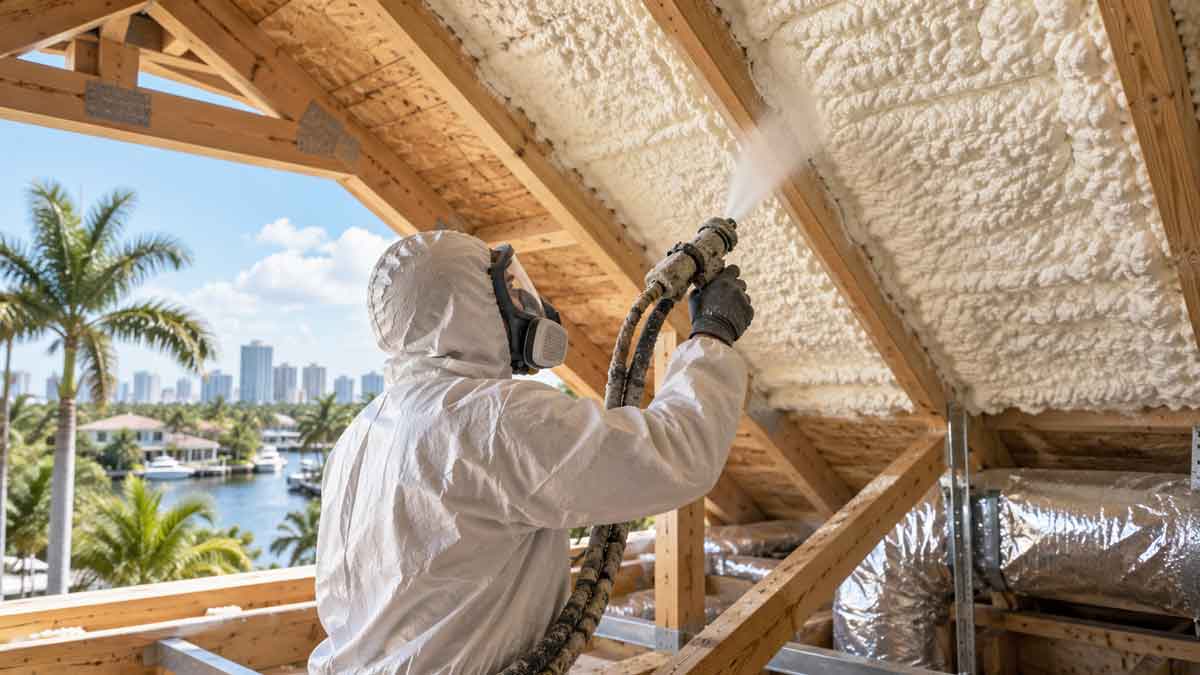
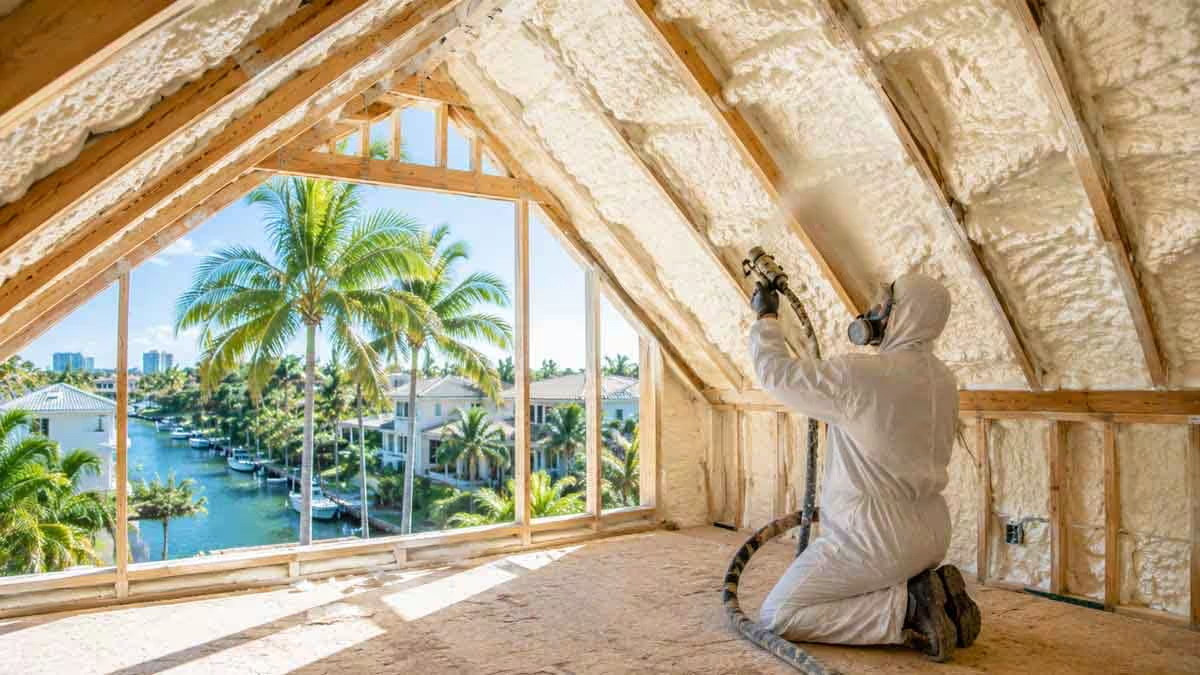
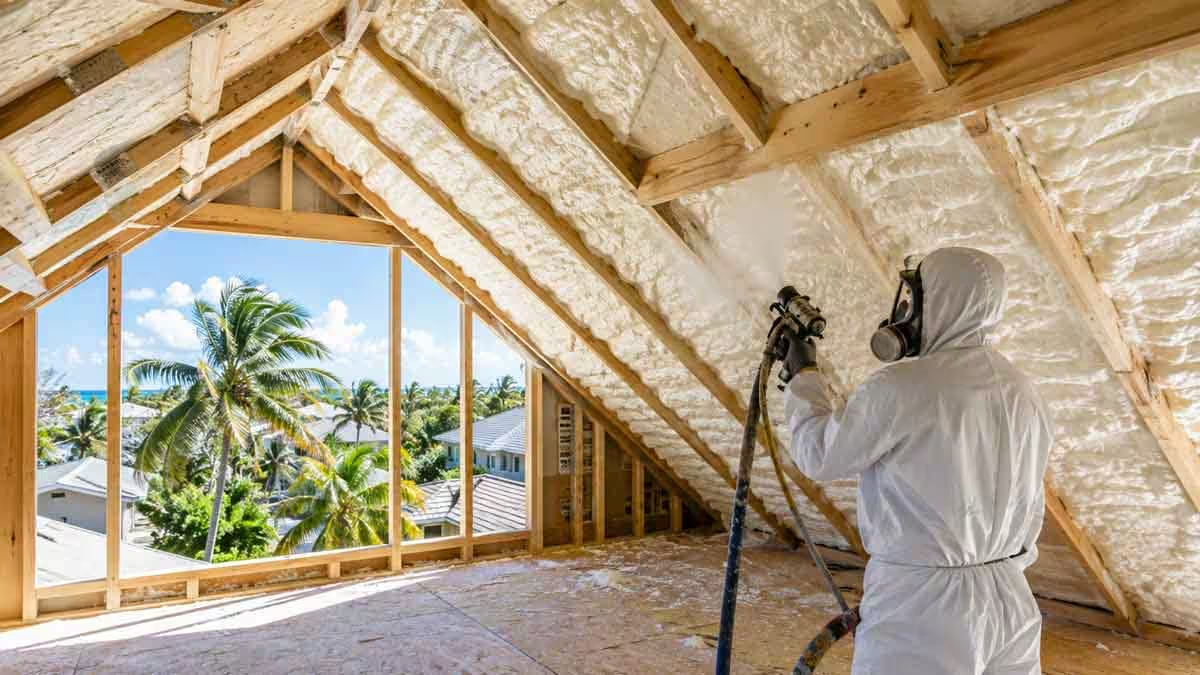
Performance matters because attic insulation has to do more than trim a bill. For spray foam attic insulation, the value case often rests on air sealing first. Spray polyurethane foam expands on application and can form a continuous air barrier, helping reduce unwanted air leakage and the loss of conditioned air.
That helps explain why homeowners and builders focused on energy efficiency, moisture control, and long-term building performance may consider spray foam as part of a broader insulation strategy. The cost case still depends on the attic’s starting condition.
A leaky attic with heavy heat gain has more room to improve than one that already performs fairly well. That makes expected comfort, humidity control, and HVAC workload part of the return, not just monthly utility savings.
Limitations and Trade-Offs to Consider
Every incentive has limits, and the insulation itself has trade-offs. Spray foam attic insulation can carry a higher upfront price than simpler attic options, so any available incentive may soften cost without removing it.
Project scope matters too. If an attic needs prep work, old material removal, or repairs before installation, those items may sit outside an incentive. Timing can also affect the value. A tax credit applies according to specific eligibility and installation rules, not simply because an upgrade was planned during a particular year.
Product choice is another factor. Some homeowners prioritize the tightest building envelope, while others may weigh lower initial cost more heavily. The practical takeaway is clear: judge the project on total installed cost, qualifying scope, and fit with the attic’s real condition, not the incentive headline alone.
How to Assess If Your Attic Qualifies
Qualification starts with the property, not the foam. For spray foam attic insulation, the property and the specific program requirements determine whether an incentive may apply.
Federal 2025 rules for the Energy Efficient Home Improvement Credit applied to qualifying improvements made to a taxpayer’s main home in the United States, including certain houses, condominiums, cooperative apartments, manufactured homes, and other qualifying residences. Those rules do not establish a federal insulation credit for property placed in service after December 31, 2025.
That makes a current program check essential. An attic that already performs well may offer less improvement potential than one with clear insulation gaps, air leaks, or comfort problems.
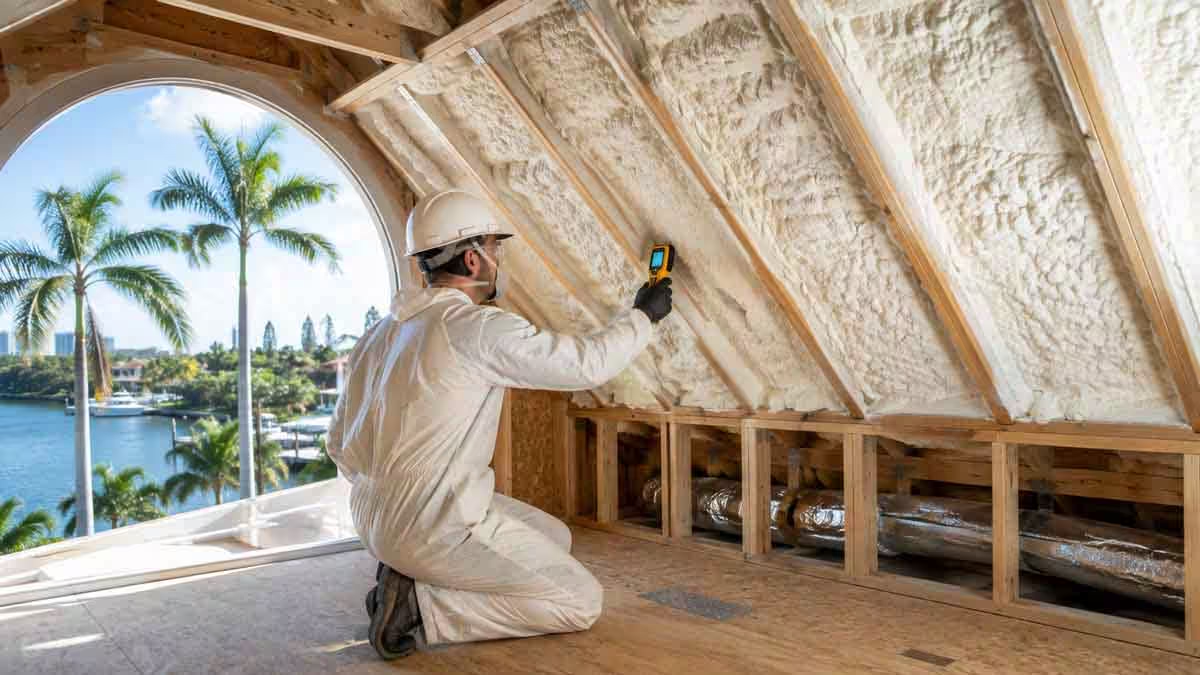
That makes a condition-based inspection the smartest filter before counting on savings.
Steps to Claim Spray Foam Incentives
Claiming an incentive usually comes down to paperwork, scope, and timing. Start by getting the attic work written in a clear proposal. The document should separate qualifying insulation work from prep, repairs, or other add-ons.
Keep product data, invoices, proof of payment, and completion dates together. That record set matters if a program asks for backup later. Incentives are generally tied to defined qualifying work, not just a general intent to improve comfort.
That means the claim is stronger when the installed scope matches the program language from the start. Before signing, confirm who submits the incentive, when it is submitted, and what forms are required.
A clean paper trail makes spray foam attic insulation easier to evaluate for available incentives and harder to dispute.
Realistically, spray foam attic incentives in 2026 require more careful verification than simply relying on prior federal tax-credit information. The IRS states that the Energy Efficient Home Improvement Credit does not apply to qualifying property placed in service after December 31, 2025.
That means homeowners should verify any current utility, local, or other qualifying program before including an incentive in the project budget. Spray foam can still make sense when air sealing, comfort, humidity control, and HVAC strain matter.
The practical move is to judge the attic, scope, paperwork, available programs, and net cost together.