Why Chilled Water Lines Fail in South Florida (And How to Insulate Them)
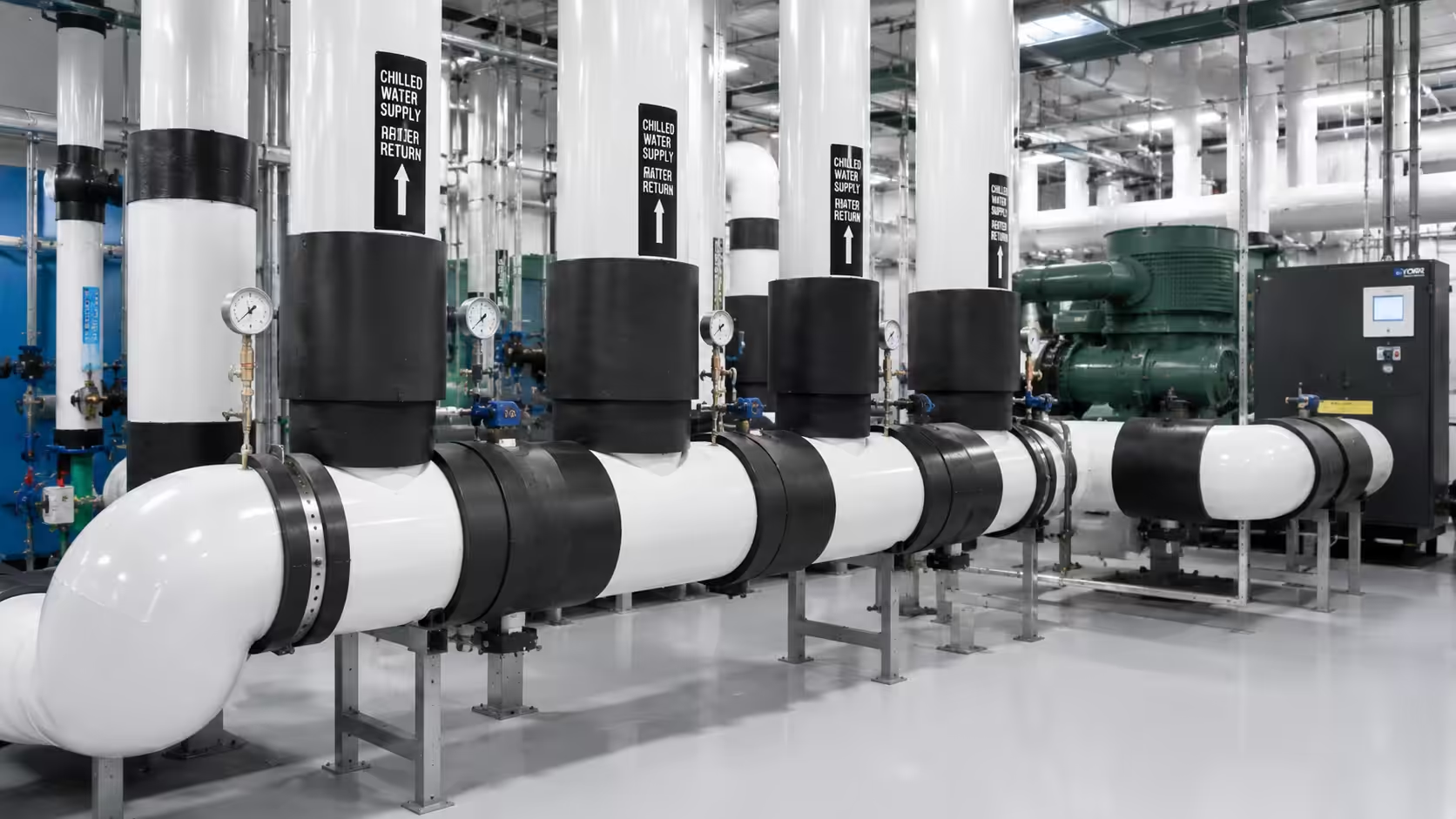
If you manage a commercial high-rise, a hospital, or an industrial facility in South Florida, you are fighting a constant, invisible war against the environment. The enemy is vapor drive, and the battleground is your chilled water lines.
In Climate Zone 1A, running 45-degree chilled water through a building surrounded by 92-degree ambient air with 80% humidity creates a massive thermal differential. If your pipe insulation is compromised, degraded, or installed incorrectly, catastrophic condensation is not a possibility, it is a physical certainty.
Here is the building science behind why commercial HVAC lines fail in Fort Lauderdale and Miami, and the exact materials required to stop the sweating for good.
The Physics of Vapor Drive in Climate Zone 1A
Condensation occurs when warm, moisture-laden air hits a surface that is below the dew point. In South Florida, the dew point often hovers around 75 degrees.
Because commercial chilled water systems typically operate between 40 and 45 degrees, the pipes are essentially magnets for moisture. Nature wants to equalize the pressure. The latent heat and moisture in the ambient air aggressively drive toward the cold pipe. If your insulation has even a millimeter-wide gap in the seam, moisture will penetrate the barrier, condense on the pipe, and begin to pool.
Why Standard Pipe Insulation Fails
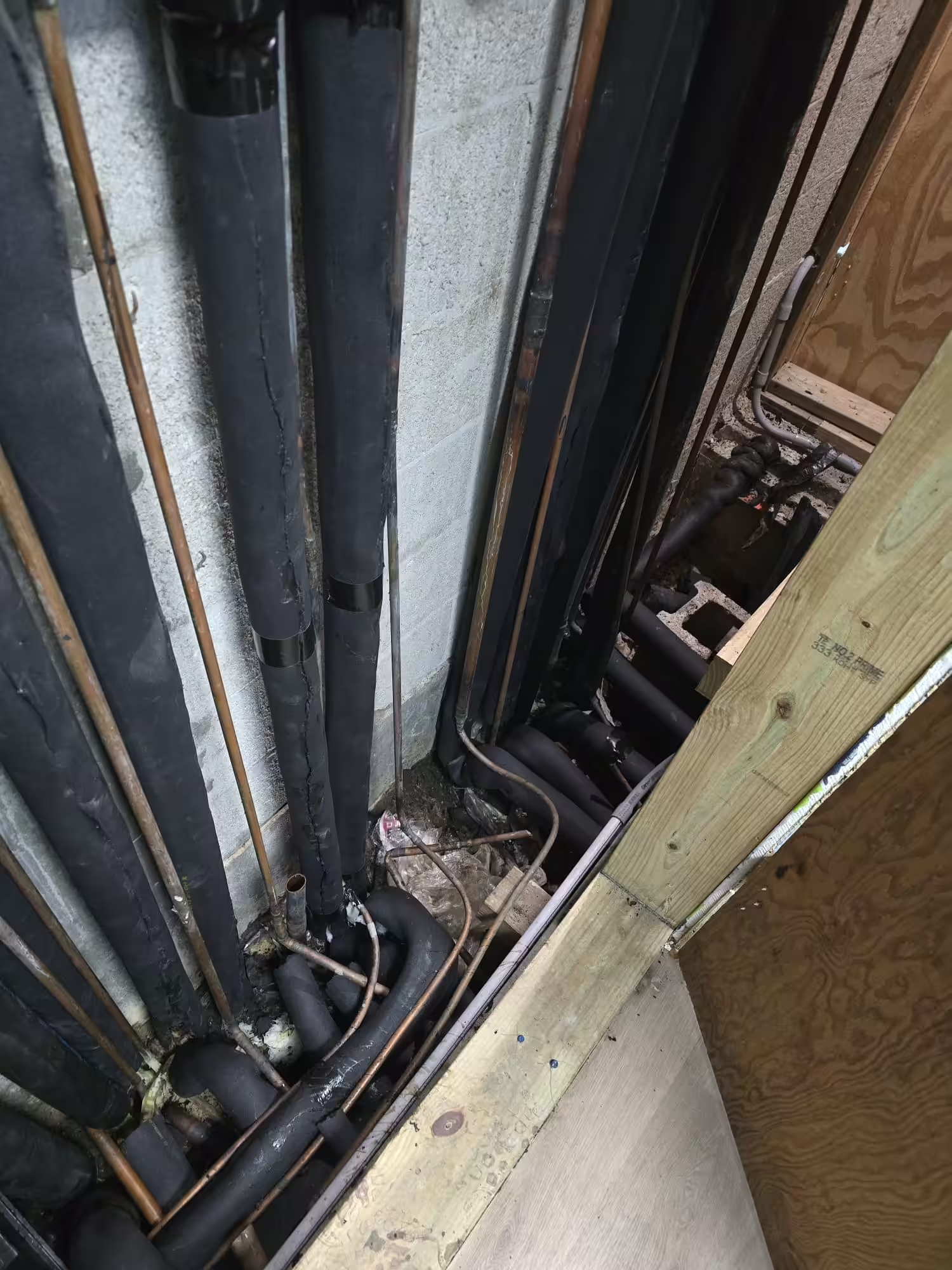
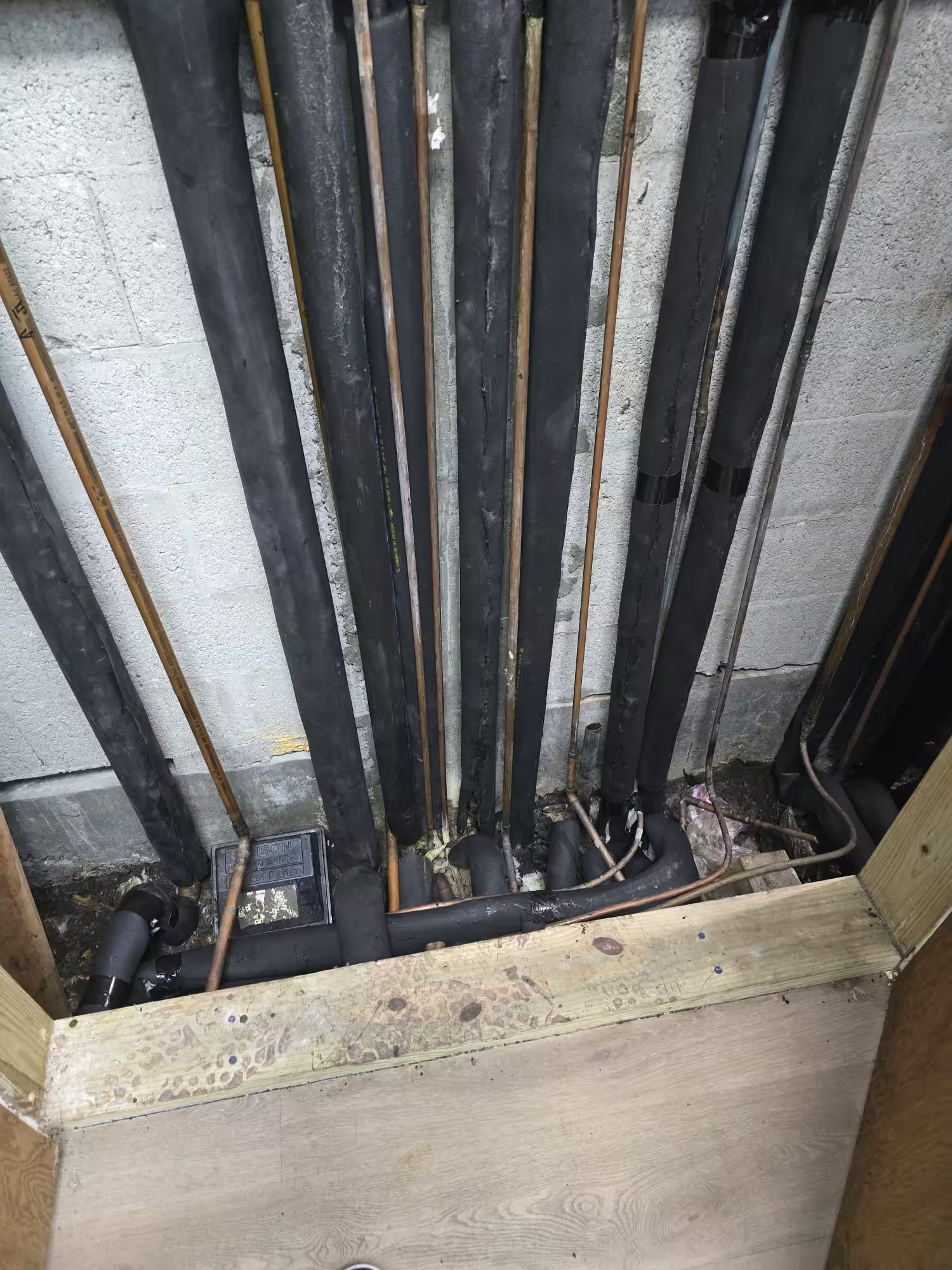
Many facility managers inherit buildings where the chilled water lines were insulated with standard fiberglass or cheap, open-cell foam. This is a critical building failure for two reasons:
- Moisture Absorption: Fiberglass loses almost all of its R-value the second it gets wet. Once vapor drive pushes moisture into the fiberglass, it acts like a sponge, holding water against the copper or steel pipe and accelerating corrosion.
- UV and Thermal Degradation: Roof-mounted HVAC lines are exposed to brutal UV indexing. Basic foams bake, crack, and shrink, exposing the raw pipe to the humid air.
The Solution: Closed-Cell Elastomeric and FOAMGLAS
To stop pipe sweating in Broward and Palm Beach counties, you cannot use residential-grade materials. You must build an absolute vapor barrier. At Broward Insulation, we engineer condensation control systems using two primary materials:
- Closed-Cell Elastomeric Rubber: This is the industry standard for chilled water, refrigeration, and VRF lines. Its closed-cell structure makes it inherently moisture-resistant, meaning it does not require an additional vapor retarder jacket in many applications.
- FOAMGLAS (Cellular Glass): For extreme industrial applications or areas requiring high compressive strength, cellular glass is 100% impermeable to moisture and completely non-combustible.
Precision Installation is Everything
You can buy the most expensive elastomeric foam on the market, but if the seams are not glued with absolute precision, vapor drive will win.
Every joint, elbow, and valve must be meticulously sealed using manufacturer-approved adhesives. The insulation must be continuous through wall penetrations and pipe hangers; otherwise, thermal bridging will occur, and water will drip directly from the hanger.
If your facility is dealing with dripping pipes, ruined ceiling tiles, or failing HVAC efficiency, it is time to upgrade your thermal barriers. Contact Broward Insulation for expert commercial pipe insulation. We will diagnose your condensation issues and install a vapor-tight system engineered to outlast the Florida heat.