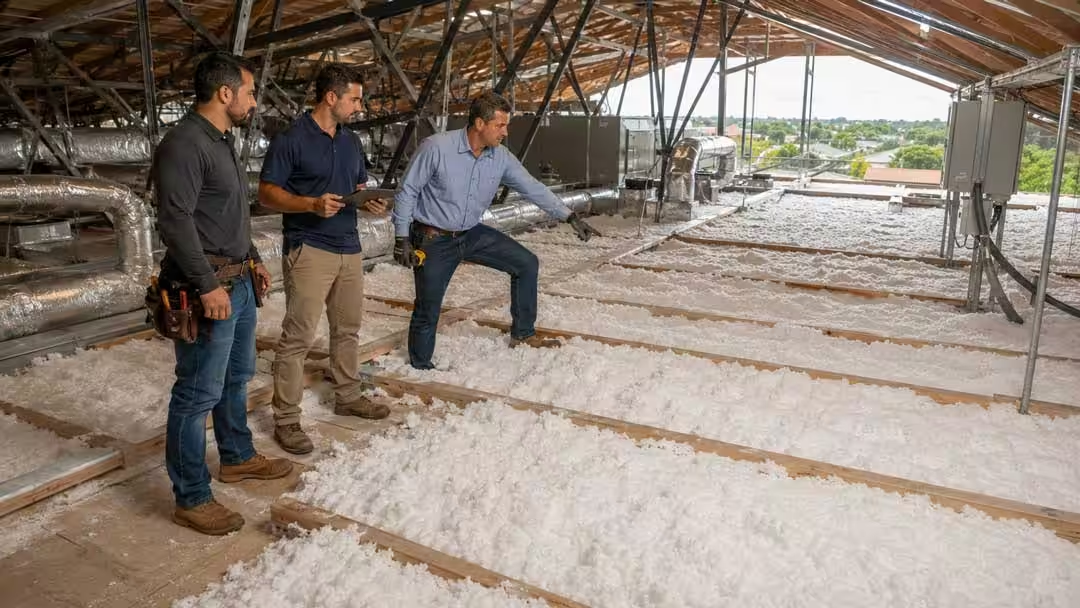
Attic Insulation Standards for Broward Commercial Properties
Commercial attic insulation standards establish minimum R-value requirements for commercial buildings. Florida building code places Broward County in a hot, humid climate zone with insulation requirements designed to improve energy efficiency and moisture control. As a result, attic insulation projects often require fiberglass insulation or spray foam insulation paired with proper air sealing.
Understanding attic insulation in Broward County helps commercial property owners prepare for code requirements, inspections, roof evaluations, common compliance questions, potential risks, and installation mistakes. The first step is understanding the required R-values.
What Are attic insulation in Broward County R-Value Standards?
Broward commercial attic standards generally require ceiling insulation with a minimum R-value of R-38. This serves as the baseline for many commercial buildings throughout the region. According to the Insulation MarketPlace guide, Florida follows IECC climate zones, with Broward County located in Climate Zone 2.
For Climate Zone 2, the recommended attic insulation level is typically R-38. The code also requires continuous ceiling insulation coverage across the building, including eave areas whenever practical. The same guide notes that commercial ceilings should extend insulation over top plates, while R-30 may only be permitted where structural limitations prevent installing additional insulation.
You see these requirements throughout attic insulation in Broward County projects designed to meet Florida energy code.
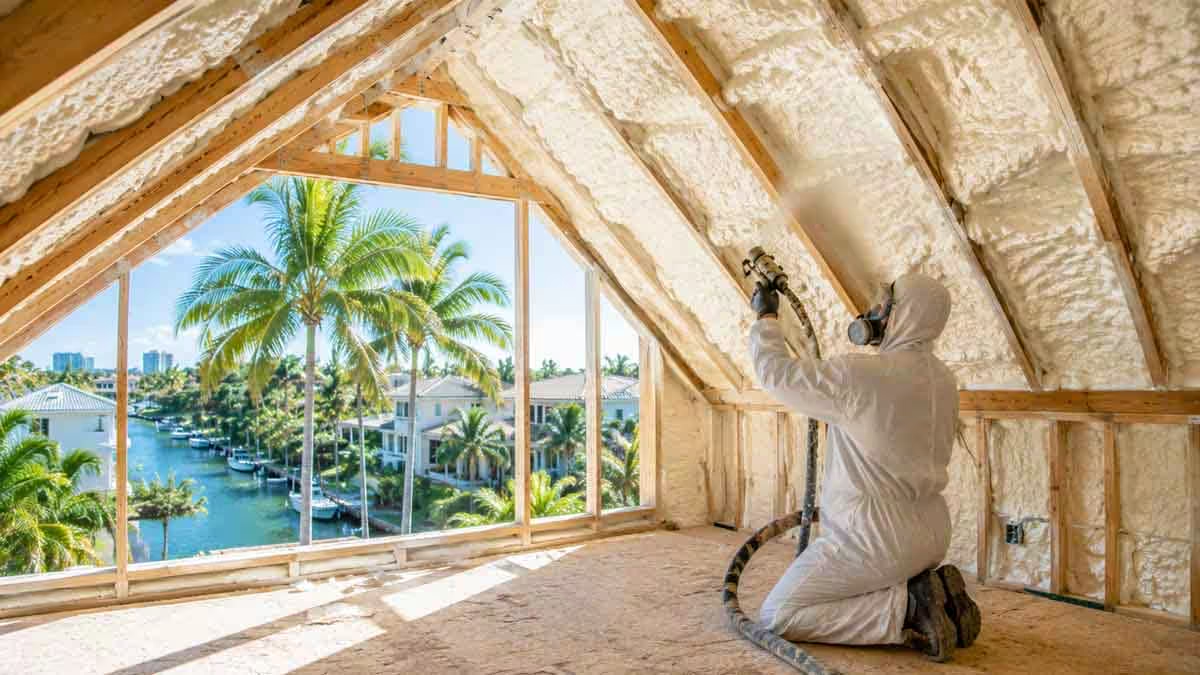
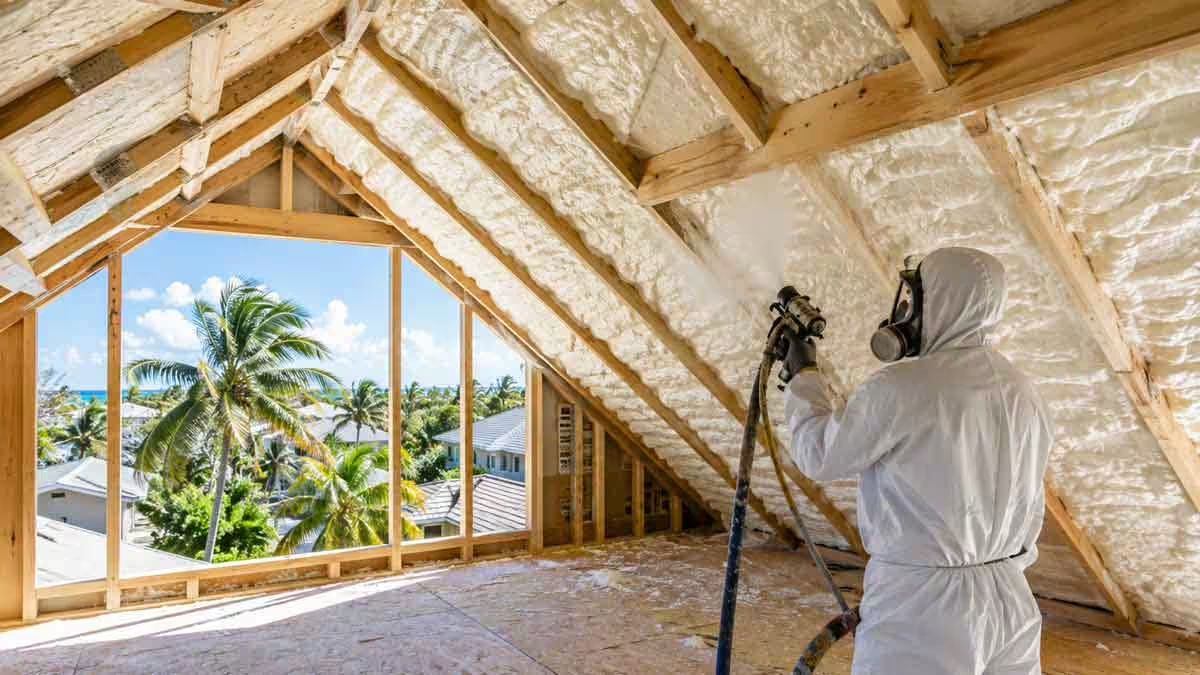
Compare Fiberglass vs. Spray Foam Insulation for Broward Commercial Attics
The table below compares several important considerations for commercial attic insulation systems.
| Point | Fiberglass Insulation | Spray Foam Insulation |
|---|---|---|
| Air sealing | Air can move through fiberglass, so separate air sealing is recommended. | Seals cracks effectively and reduces attic air leakage. |
| R-value per inch | Lower R-value per inch, requiring greater insulation depth. | Open-cell averages about R-3.4 per inch, while closed-cell reaches about R-6.25. |
| Space requirements | Works well when sufficient attic depth is available. | Ideal where commercial attic space is limited. |
| Initial investment | Often lower upfront for large open attic areas. | Usually requires a higher initial investment despite less overall thickness. |
| Main takeaway | Delivers strong performance when paired with proper air sealing. | Provides excellent air sealing but should still meet the required thermal performance target. |
How To Meet Energy Code Requirements for Broward County Attic Insulation
These five steps help commercial property owners meet Broward County attic insulation requirements during plan review.
- Verify your building occupancy type and applicable compliance path. The Florida Energy Conservation Code (FECC) 7th Edition applies statewide and incorporates the 2018 IECC together with ASHRAE 90.1-2016.
- Confirm that Broward County falls within Florida Climate Zone 2A, which reflects the area’s hot and humid conditions.
- Match your attic insulation system to the commercial requirements outlined in Chapter 4 CE. In many cases, the required insulation level is R-38.
- Provide complete ceiling insulation coverage over top plates when using an approved R-30 exception due to structural limitations.
- Submit plans that clearly identify insulation depth, continuous ceiling coverage, air sealing details, and eave continuity so reviewers can verify code compliance before approving the project.
Checklist for Insulation Performance in Broward Commercial Roofs
Use these five performance checks during commercial attic insulation projects.
- Verify that attic insulation remains continuous around deck edges, rooftop curbs, and penetrations where gaps can allow conditioned air to escape.
- Select insulation materials that match the building’s moisture exposure, roof design, and anticipated maintenance traffic. PIMA notes that polyiso delivers high R-values with reduced thickness.
- Confirm whether tapered insulation is needed on low-slope roofing systems to improve drainage and reduce standing water.
- Inspect for damp insulation, roof deck staining, or condensation after heavy rain or extended cooling cycles. Wet insulation can reduce performance and increase the risk of mold.
- Test air sealing around access hatches, mechanical penetrations, and service openings to help HVAC systems operate more efficiently.
Questions Asked About Broward County Commercial Insulation Rules
- Do commercial attic insulation projects require permits? In many cases, yes. Commercial build-outs, reroofing projects, and building envelope upgrades often require permit review and code compliance documentation.
- Must installation match the approved plans? Yes. Under the Florida Building Code, Energy Conservation, insulation location, thickness, and coverage must match the approved construction documents.
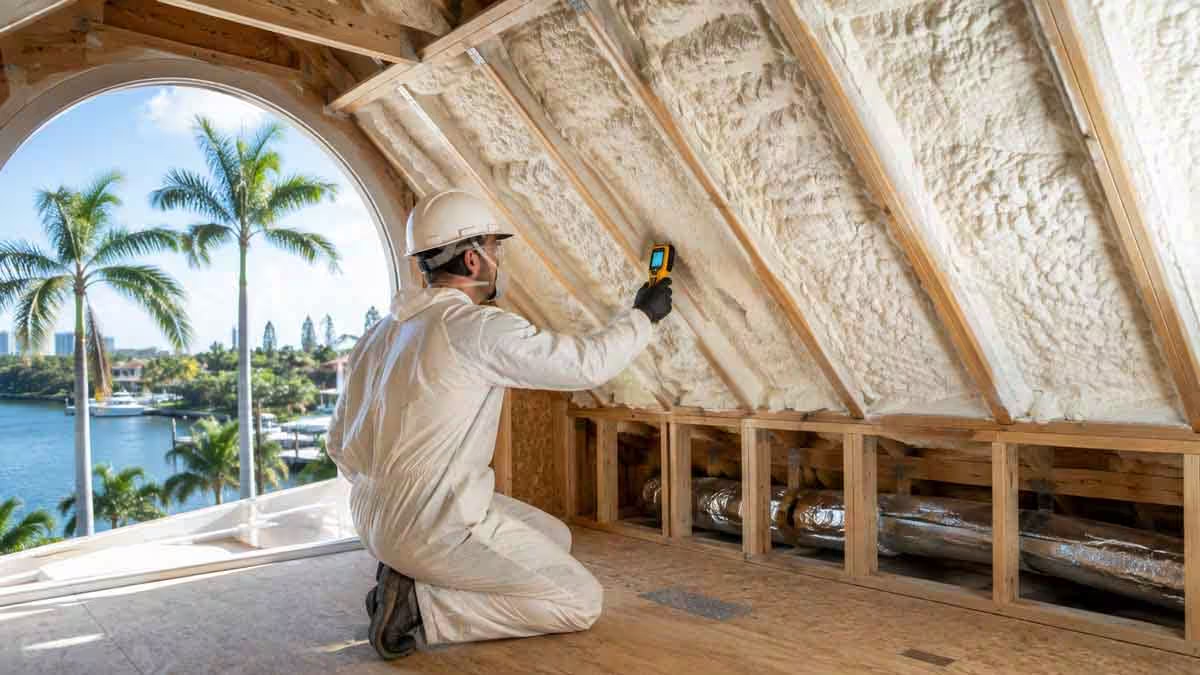
- Will the project be inspected? Most permitted commercial projects include inspections. Inspectors may verify insulation coverage, attic accessibility, and that insulation remains visible before additional construction closes the ceiling.
- What documentation should be retained? Keep manufacturer product data, insulation labels, installation records, and inspection documentation. These records help verify compliance if questions arise later.
Risks When Attic Insulation Fails Broward Code Compliance
Commercial buildings face several risks when attic insulation fails to meet code.
- Air leakage increases HVAC operating time and reduces overall energy efficiency. The U.S. Department of Energy identifies uncontrolled attic air leakage as a major source of wasted energy.
- Moisture intrusion may increase the likelihood of mold growth and reduced insulation performance.
- Failed inspections can delay occupancy approvals and construction schedules.
- Incomplete insulation coverage creates hot spots that reduce building performance.
- Poor insulation can increase HVAC wear while reducing occupant comfort throughout commercial workspaces.
What to Avoid During Commercial Attic Insulation Projects in Broward
These common mistakes can affect code compliance and long-term insulation performance.
- Misclassifying conditioned and unconditioned spaces may place the project under the wrong energy code requirements.
- Skipping permit verification can delay approvals. Energy Trust recommends confirming building conditioning details before construction begins.
- Confusing attic insulation with roof insulation. Current code distinguishes attic insulation installed below the roof deck from roof insulation installed above it.
- Ignoring air sealing allows heat, humidity, and moisture to enter the building, increasing HVAC strain throughout Broward County’s demanding climate.
Meeting the minimum code requirements is only the starting point for commercial attic insulation. Broward commercial properties benefit most from insulation systems that combine code-compliant R-values with professional air sealing and moisture management to improve long-term building performance.
Material selection also plays an important role. Spray foam insulation provides exceptional air sealing, while fiberglass insulation often delivers a lower initial investment for large commercial buildings, warehouses, and multi-tenant facilities.
Moisture control should always be evaluated before installation. If your commercial building may experience condensation, roof deck moisture, or ventilation concerns, schedule a Risk Audit with Broward Insulation Service before finalizing your attic insulation specifications.