How to Insulate a 1950s Concrete Block (CBS) Home in South Florida
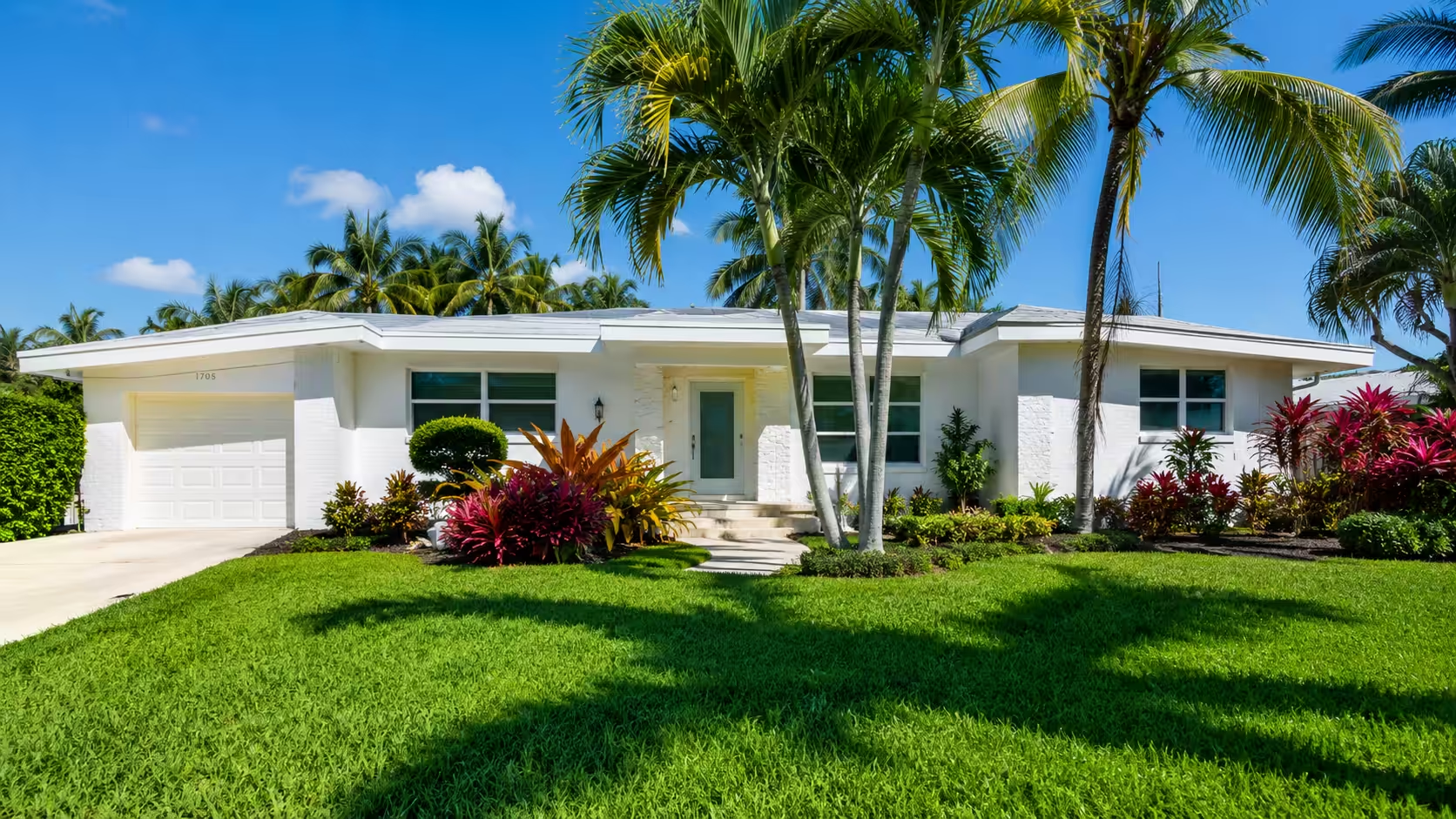
If you live in a mid-century home in Fort Lauderdale, Hollywood, Wilton Manors, or Miami-Dade, chances are your home is constructed with Concrete Block Structure (CBS). Built during South Florida’s post-war boom of the 1950s and 1960s, these homes are built like fortresses against hurricanes—but when it comes to energy efficiency and thermal comfort, they act like massive brick ovens.
Many owners of older CBS homes complain that their air conditioning units run constantly from May through October, yet the house still feels warm, humid, and stuffy. Before you spend $10,000+ replacing a functioning AC unit, the real culprit is almost certainly your uninsulated building envelope.
Here is a complete guide on how to properly insulate a 1950s concrete block home in South Florida to lower your utility bills, eliminate hot spots, and stop radiant heat transfer.
The 1950s CBS Heat Trap: Understanding Thermal Mass
Concrete block is a fantastic structural material, but it possesses high thermal mass and virtually zero insulating value (an uninsulated 8-inch concrete block wall has an R-value of roughly R-1 to R-2).
During a typical South Florida summer day, the exterior stucco and concrete blocks absorb intense solar radiation all morning. By 2:00 PM, those concrete blocks are completely saturated with heat. The blocks then begin radiating that stored heat inward into your living room, bedrooms, and hallway walls.
Even worse, concrete blocks retain heat long after the sun goes down. If your interior walls still feel warm to the touch at 9:00 PM, your AC system is fighting a continuous thermal battery that never gets a chance to cool off.
Step 1: Masonry Wall Foam Injection
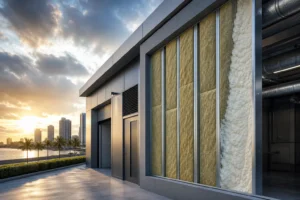
You cannot easily add exterior batt insulation to a stucco-finished CBS home without completely ruining its architectural curb appeal. The most effective, non-invasive solution for older concrete block walls is two-component masonry foam injection.
How Wall Foam Injection Works:
- Hollow Core Filling: Standard CBS blocks feature hollow vertical cores. A specialized liquid aminoplast or polyurethane foam is injected under low pressure into these hollow cells.
- Complete Thermal Barrier: The foam expands to fill every void, crack, and mortar joint inside the block wall, creating a solid thermal break.
- Zero Exterior Destruction: Technicians drill small, discrete injection holes either through the exterior mortar joints or from the interior wall cavities, which are easily patched and painted over.
- Acoustic & Pest Benefits: In addition to stopping radiant heat transfer, filling the hollow cores significantly reduces street noise and prevents pests from using block cavities as highways inside your home.
Step 2: Upgrading Degraded Attic Insulation (Target R-38)
In a 1950s home, heat isn’t just coming through the walls—it’s pouring down from above. Most homes built in the 1950s were originally constructed with little to no attic insulation (often thin R-4 or R-7 fiberglass batts that have long since flattened, rotted, or collected decades of dust).
When an uninsulated attic reaches 150°F on a July afternoon, that heat bakes your ceiling drywall. To fix this, you have two primary options:
Option A: High-Density Blown-In Fiberglass (Fastest ROI)
If your AC handler and ductwork are located inside your home’s conditioned living space, capping your existing ceiling with a thick layer of high-density blown-in fiberglass to reach R-38 (approx. 13 to 14 inches) is the most cost-effective upgrade. It creates a seamless blanket over joists and stops radiant ceiling heat instantly.
Option B: Closed-Cell Spray Foam on the Roof Deck (Best for Duct Protection)
If your AC handler or air ducts run through the open attic space, blown-in ceiling insulation isn’t enough. In a 150°F attic, cold air moving through your metal or flex ducts loses its chill before it ever hits your supply vents. Applying closed-cell spray polyurethane foam (ccSPF) directly to the underside of the roof deck converts your blistering attic into a semi-conditioned 80°F space, protecting your HVAC equipment and sealing out South Florida’s high humidity.
Step 3: Air Sealing & Duct Protection
Older homes leak air everywhere. Before blowing new insulation or injecting walls, a thorough air-sealing process should be completed. Key areas include:
- Top Plate Penetrations: Sealing around plumbing stacks, electrical wiring holes, and ceiling light fixtures where hot attic air leaks down into living quarters.
- AC Supply Vents: Sealing the boots where air vents meet the drywall to stop humid attic air from getting sucked into the duct stream.
- Crawl Space Transitions: For mid-century homes built on raised pier-and-beam foundations or hybrid slabs, encapsulating the crawl space with closed-cell spray foam prevents ground moisture from warping hardwood floors.
Maxing Out Utility Rebates & Incentives
Upgrading a 1950s CBS home in Broward, Palm Beach, or Miami-Dade qualifies for several financial incentives:
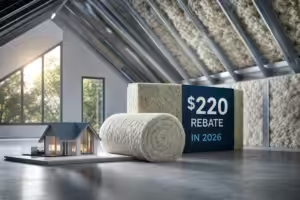
- FPL Instant Rebate: Florida Power & Light offers a $220 instant rebate for qualifying ceiling insulation upgrades if your existing attic insulation measures below R-8. As an approved contractor, Broward Insulation deducts this amount directly from your job quote.
- Federal Energy Tax Credit (Section 25C): Homeowners can claim 30% of the insulation product cost (up to $1,200 per year) on their federal tax return under the Inflation Reduction Act incentives.
Ready to Cool Down Your Mid-Century Home?
Living in a classic South Florida CBS home doesn’t mean you have to endure skyrocketing electric bills and warm bedrooms. Broward Insulation has been upgrading the thermal envelopes of mid-century homes across South Florida since 1977.
Contact our team today at (954) 486-2898 or request a free estimate online to evaluate your wall and attic insulation needs.
Frequently Asked Questions
Can you insulate concrete block walls from the inside?
Yes. If you are doing an interior remodel or replacing drywall, foam board or spray foam can be applied to furring strips on the interior block face. Alternatively, two-component masonry foam can be injected directly into the hollow core cells of the block without removing drywall.
What R-value should a concrete block home have in Florida?
The Florida Building Code (Climate Zone 1A) recommends a minimum of R-38 for residential ceiling/attic insulation and R-6 to R-8 continuous insulation for exterior masonry walls in energy retrofits.
Will insulating my 1950s block walls make my home quieter?
Yes. Dense injection foam inside concrete block cores significantly dampens exterior sound waves, reducing noise from traffic, lawnmowers, and neighbors.