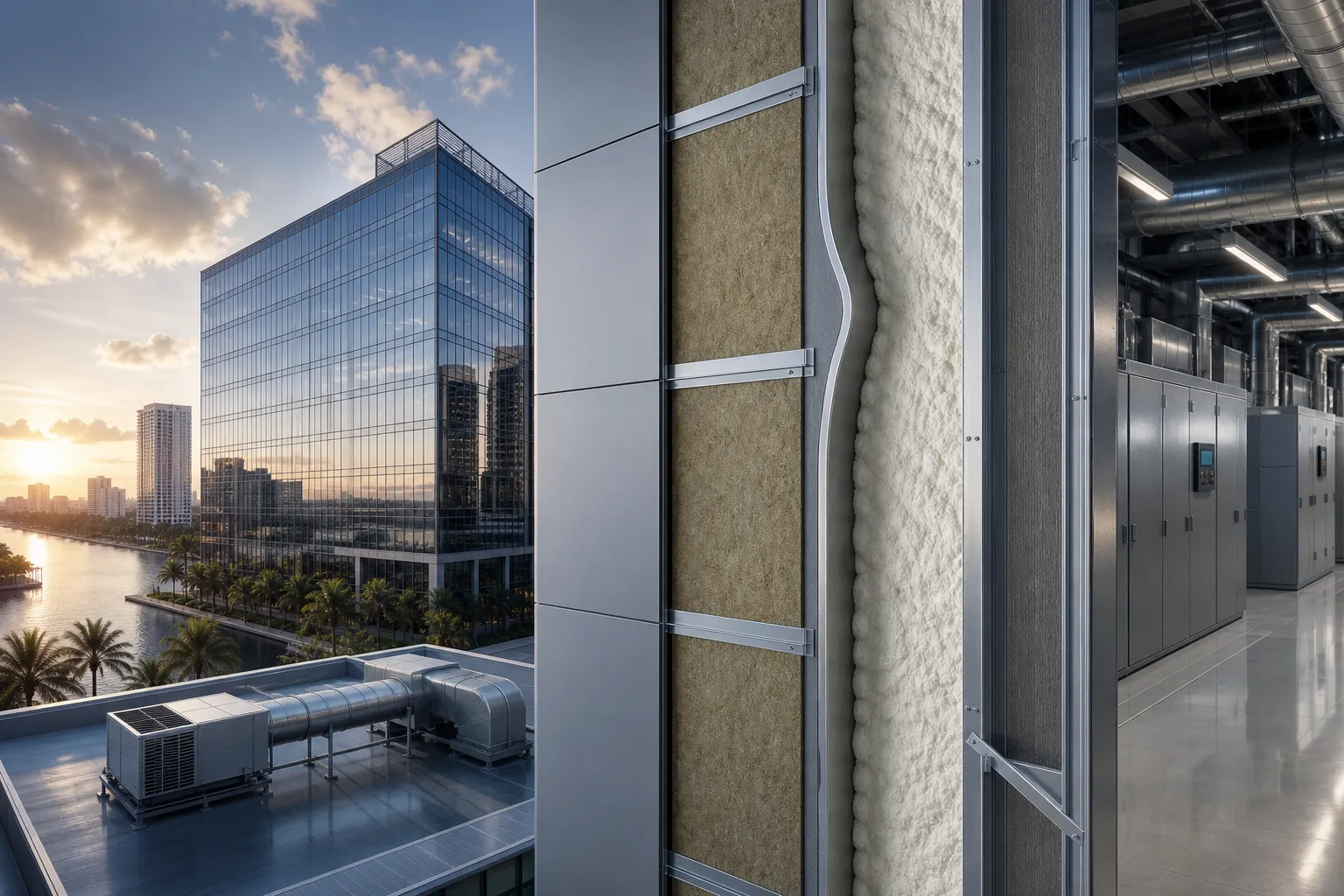
Fort Lauderdale Office Building Insulation: Materials & ROI
When it comes to office building insulation, Fort Lauderdale properties face year-round thermal and moisture challenges that most of the country simply doesn’t deal with. IECC Climate Zone 1A, the classification governing the entire South Florida Tri-County region, subjects commercial envelopes to sustained high ambient temperatures, intense solar radiation, and persistent inward moisture drive with no seasonal relief. For facilities managers and commercial property owners, these conditions translate directly into excessive HVAC runtime, escalating utility costs, and code-compliance exposure when the thermal envelope falls short of what this climate demands.
This guide draws on engineering standards applied across Broward County’s commercial sector, informed by nearly five decades of field experience in South Florida’s building science environment, to help office owners identify the right insulation system for their specific envelope conditions. The analysis covers material performance comparisons, installed cost ranges, Florida Building Code requirements, documented ROI benchmarks, and a contractor evaluation framework specific to the Fort Lauderdale commercial market.
Why Climate Zone 1A demands a different commercial insulation strategy
The thermal and moisture load unique to Fort Lauderdale offices
Generic national insulation specifications are calibrated for seasonal HVAC patterns found in buildings that experience meaningful relief from thermal loading during cooler months. Fort Lauderdale office buildings operate under fundamentally different physics. Sustained ambient temperatures, intense solar radiation on low-slope commercial roofs, and frequently high relative humidity, Fort Lauderdale regularly ranks among the most humid metro areas in the continental U.S. per NOAA climate records, create a continuous, year-round thermal and moisture load with no seasonal recovery period. Multi-story office structures face additional pressure differential challenges between lower and upper floors, which can drive humid exterior air into the building envelope and make air barrier continuity a critical design priority.
How a compromised thermal envelope amplifies HVAC expenditure
A poorly detailed commercial thermal envelope does not simply permit heat transfer; it forces mechanical systems to address both sensible heat load and latent moisture load at the same time. When hot, humid exterior air infiltrates the conditioned space through air leakage pathways or thermal bridges, the HVAC system must expend energy to remove both temperature and moisture content before comfort conditions can be maintained. In Climate Zone 1A commercial applications, unchecked air infiltration accounts for a substantial portion of total cooling energy consumption. That makes air barrier continuity and thermal bridge elimination the primary engineering priorities in any Fort Lauderdale office building insulation specification.
Best office building insulation materials in Fort Lauderdale
Closed-cell spray foam and rigid board as primary performance systems
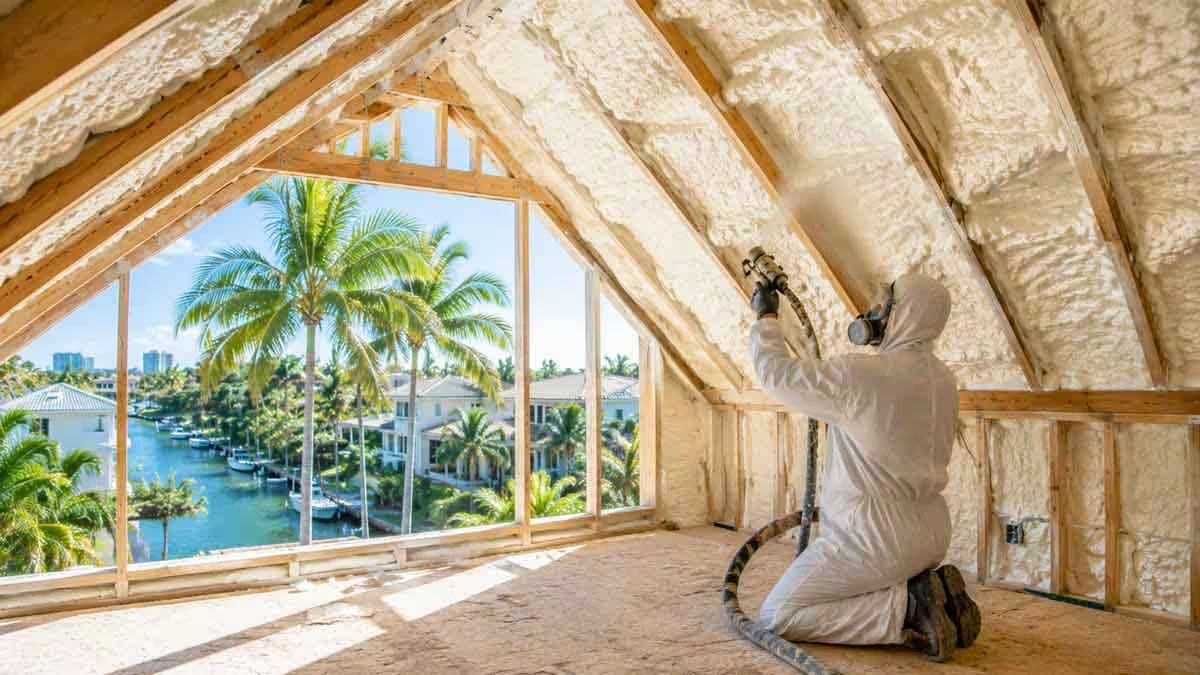
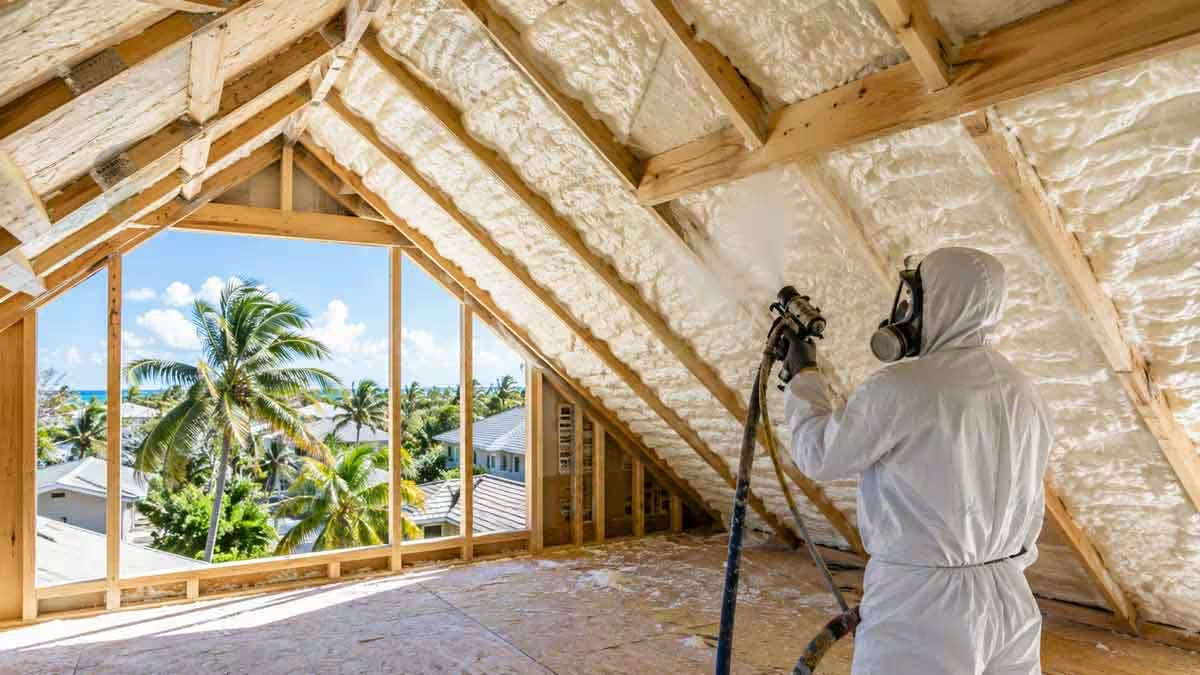
Closed-cell spray foam is the highest-performing insulation material for Fort Lauderdale office envelopes because it addresses three distinct building-science functions within a single application: air barrier continuity, thermal resistance, and vapor control. At typical commercial application thicknesses, closed-cell spray foam often performs as a Class II vapor retarder, confirm the specific product’s perm rating with your contractor, as this can vary by thickness and formulation. Its installed cost of $1.75 to $4.50 per square foot positions it at the higher end of the material spectrum, but its capacity to simultaneously eliminate air leakage pathways and control inward moisture drive makes that premium financially defensible in Climate Zone 1A. HVAC load reductions from spray foam envelope upgrades frequently offset the incremental material cost within the first several years of operation.
Rigid foam board serves as the preferred continuous exterior insulation for commercial roof and wall assemblies, where its primary engineering function is eliminating thermal bridging through structural framing members. Metal-framed construction is particularly vulnerable to thermal bridging because steel conducts heat at rates that effectively bypass cavity insulation entirely. When metal framing is present in Broward County commercial office buildings, a common configuration across the region’s commercial inventory, continuous rigid board applied to the exterior of the framing layer addresses this deficiency directly, with installed costs ranging from $1.00 to $3.00 per square foot.
Mineral wool, fiberglass, and hybrid assembly configurations
Mineral wool outperforms fiberglass in hot-humid commercial assemblies for three specific reasons: superior vapor permeability that allows wall cavities to dry inward, inherent fire resistance relevant to commercial occupancy classifications, and dimensional stability under the high humidity conditions characteristic of South Florida’s building environment. Fiberglass performs adequately when the overall assembly includes a robust air-barrier strategy, but it provides less tolerance for moisture intrusion in assemblies where drying potential is constrained. Blown-in fiberglass and mineral wool installed at commercial scale range from $0.75 to $2.25 per square foot.
Hybrid assemblies, combining rigid foam board exterior insulation with a cavity-fill material, are a technically strong specification for complex commercial envelopes and are commonly used for energy code compliance in Broward County commercial projects. This configuration addresses continuous thermal resistance across the framing plane and assembly drying potential within the cavity. By distributing R-value between the exterior continuous layer and the cavity fill, designers can achieve required thermal performance without relying on any single material to satisfy all building-science criteria.
Florida Building Code and Broward County compliance requirements
FECC Chapter 4 commercial envelope standards for Climate Zone 1A
Florida Energy Conservation Code Chapter 4, Section C402.2 (verify the applicable edition for your permit year, currently the 2023 Florida Building Code, Energy Conservation, 7th Edition) governs the opaque thermal envelope of commercial buildings throughout Fort Lauderdale. For Climate Zone 1A, the prescriptive compliance path requires ceiling and roof insulation at a minimum of R-30 for standard assemblies, with wood-frame wall assemblies requiring R-13 cavity insulation and mass wall assemblies requiring R-4 or R-3 continuous insulation. The code permits continuous insulation to satisfy roof assembly requirements, allowing R-30 in lieu of R-38 under defined assembly conditions. High-performance commercial specifications routinely exceed these minimums to achieve meaningful HVAC load reductions and FPL rebate qualification. For a practical overview of current building code insulation requirements, consult manufacturer guidance on statewide insulation compliance and assembly strategies.
Vapor retarder and permit requirements for commercial projects
The Florida Building Code takes an assembly-specific approach to vapor control in Climate Zone 1A. For unvented low-slope commercial roof assemblies, Class I and Class II vapor retarders are not permitted on the interior side of the assembly in Climate Zones 1, 2, and 3. The inward moisture drive characteristic of South Florida’s climate means that low-permeability barriers installed within the insulation layer create condensation risk by trapping moisture against cooler surfaces. Standard commercial roof assemblies in this zone rely on continuous insulation above the deck and Class III or no vapor retarder, with assembly design focused on air sealing and drying potential rather than vapor barrier placement.
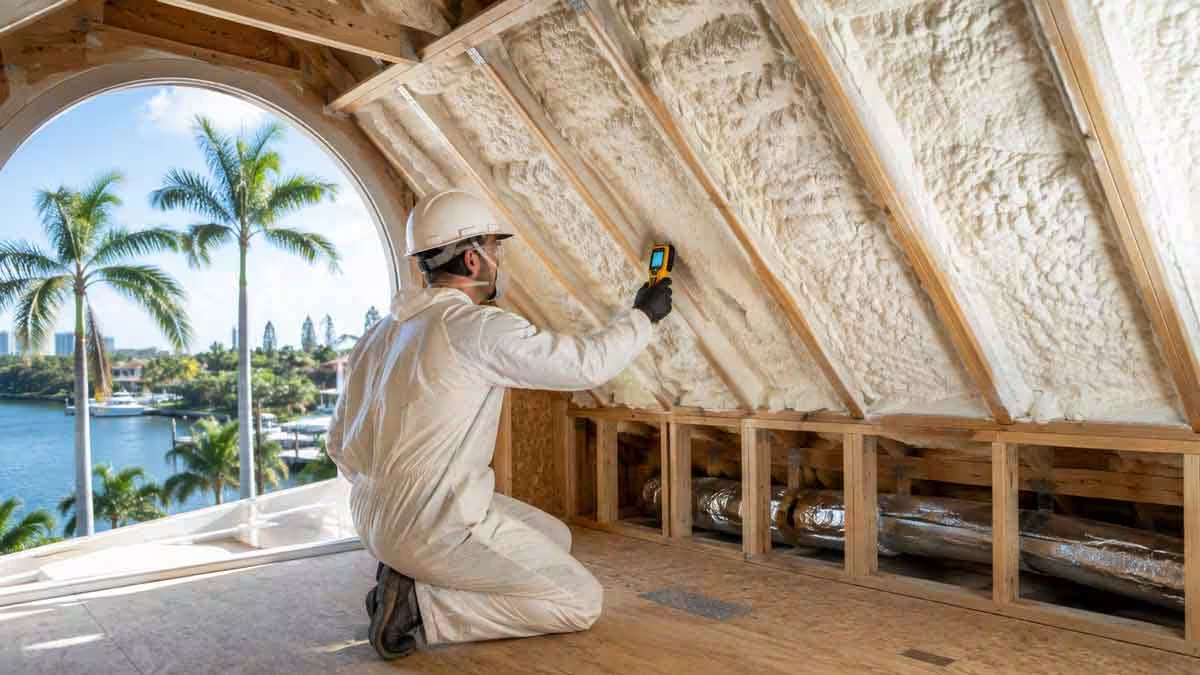
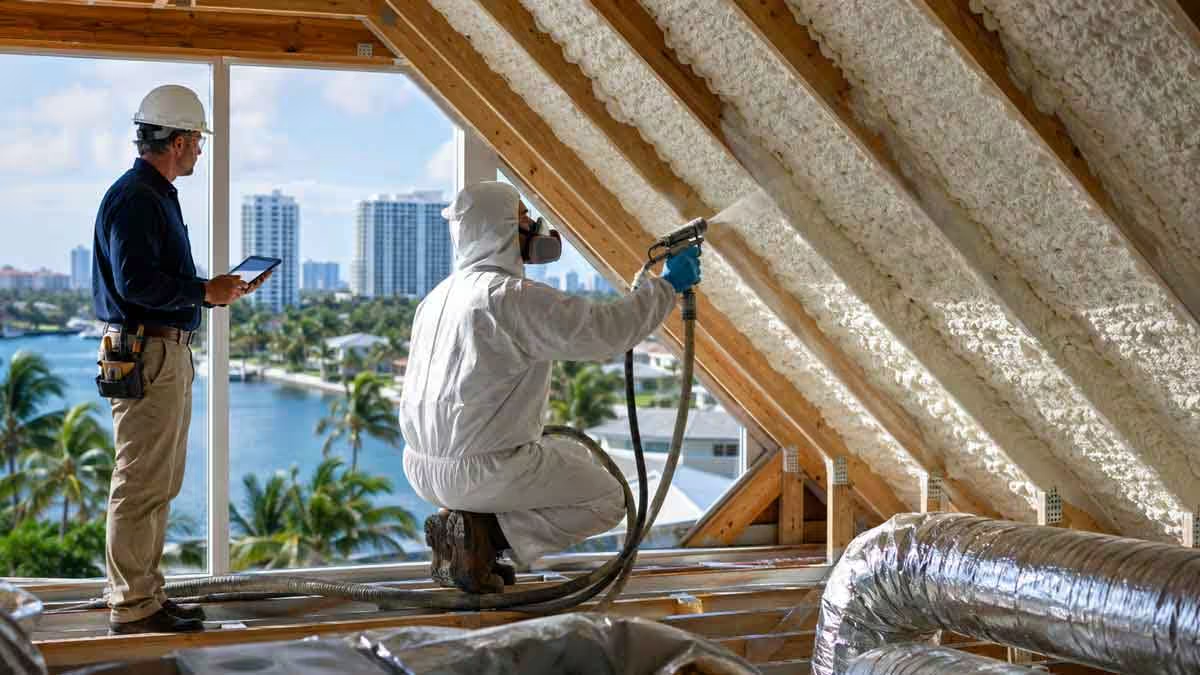
Commercial insulation installations in Fort Lauderdale require energy compliance documentation as part of the building permit application, including envelope R-value and U-value verification demonstrating compliance with FECC Chapter 4 Section C402.2. Broward County Building Division inspectors verify insulation installation before concealment. This matters for facilities managers because the contractor of record assumes responsibility for the compliance documentation submitted to the jurisdiction, not just the product data sheets. For additional detail on code enforcement and energy compliance procedures, see relevant Florida Building Commission guidance and enforcement resources.
Fort Lauderdale office building insulation ROI and FPL rebate opportunities
A documented commercial roof insulation retrofit in the Fort Lauderdale municipal portfolio produced 19,189 kWh per year in verified energy savings, $2,111 in annual utility cost reduction, and a simple payback period of approximately 11 years at prevailing electricity rates. This benchmark represents a conservative baseline for isolated roof insulation retrofits. Research from Florida building energy studies examining bundled envelope improvements, combining insulation, air sealing, and mechanical upgrades, has documented whole-building energy consumption reductions of up to 62 percent for the full improvement package, with simple payback periods approaching five years. Note that the 62 percent figure applies to comprehensive bundled upgrades, not insulation alone. For office buildings with roof assemblies below the R-30 code minimum, the case for action is straightforward: the upgrade corrects a compliance deficiency while generating measurable operating cost reductions.
Florida Power and Light’s commercial energy-efficiency rebate programs include building envelope upgrades within the eligible measure categories for business customers. Facilities managers working with an FPL-Approved Participating Contractor benefit from a streamlined rebate qualification process: the contractor submits energy compliance documentation directly, reducing both the administrative burden on the property owner and the time required to process rebate payments. Broward Insulation holds FPL-Approved Contractor status, verify directly with FPL’s contractor directory, which allows the company to manage energy audit documentation and rebate application workflow as an integrated part of the commercial insulation project rather than a separate administrative exercise. Confirm current FPL rebate program details and eligible measures before project initiation, as program terms are updated periodically.
How to evaluate and hire a commercial insulation contractor in Fort Lauderdale
Licensing, insurance, and verification criteria
Before hiring any contractor for commercial insulation work in Fort Lauderdale, confirm three things:
- An active Florida Certified General Contractor (CGC) license, verifiable through the DBPR license search at myfloridalicense.com
- A current certificate of general liability insurance and workers’ compensation coverage
- Documented commercial project experience in Broward County
The CGC classification is the standard state-certified license for commercial insulation installations under the Florida Building Code. It is valid across all 67 Florida counties, though verifying local permitting registration requirements with the Fort Lauderdale Building Services Division or Broward County Building Division is always advisable before work begins. FPL-Approved Contractor status is a meaningful additional qualifier because it signals working familiarity with energy compliance documentation, a practical requirement on permitted commercial projects. For an overview of enforcement and energy code guidance, review Florida Building Commission enforcement materials.
Due-diligence framework for contractor selection
A thorough contractor evaluation for a Fort Lauderdale commercial office insulation project should cover five areas:
- Commercial references: Review verifiable reference projects with documented envelope performance outcomes in the Broward County market. See project examples such as the Fort Lauderdale Data Hub for comparable work and verified outcomes.
- Code knowledge: Confirm demonstrated knowledge of FECC Chapter 4 commercial envelope requirements and the ability to produce compliant energy documentation for the permit submittal. For code-level enforcement and education materials, consult Florida Building Commission resources on energy code enforcement.
- Material submittals: Require material submittals and installation specifications tied to the specific roof or wall assembly being addressed.
- Permitting track record: Verify active permitting experience with the Broward County Building Division, including familiarity with energy inspection checkpoints specific to commercial projects.
- Written scope of work: Require written documentation that addresses both thermal performance targets and moisture management strategy within the proposed assembly.
Broward Insulation’s construction market experience was founded in 1977 and has operated continuously across the South Florida Tri-County market for nearly five decades, building hyper-local commercial field experience that includes High-Velocity Hurricane Zone framing conditions, documented performance data from comparable local office projects, and FPL rebate processing expertise developed through years of approved contractor participation. Its 4.9-star Google rating and FPL-Approved Contractor status are independently verifiable performance indicators that facilities managers can confirm before executing a contract.
Conclusion
Fort Lauderdale office building insulation is a building-science specification with direct consequences for Florida Building Code compliance, HVAC operating costs, and long-term asset performance in one of North America’s most thermally demanding commercial climates. Closed-cell spray foam and rigid board are the primary performance systems for Climate Zone 1A work, with hybrid assemblies serving complex envelopes, a hierarchy that reflects the specific engineering requirements of this region, not generic national standards. Compliance obligations under FECC Chapter 4 Section C402.2 and Broward County permitting apply to all commercial insulation work, and the documented ROI from Fort Lauderdale roof insulation retrofits, combined with FPL rebate access, makes the financial case for addressing envelope deficiencies compelling. For manufacturer-level guidance on Florida code and insulation strategies, review authoritative summaries of Florida building code insulation requirements and assembly recommendations.
Office owners and facilities managers evaluating commercial insulation upgrades in the Fort Lauderdale area should prioritize contractors with active Florida CGC licensure, documented commercial project experience in Broward County, and FPL-Approved Contractor status. Broward Insulation’s decades of continuous operation in this specific market, its independently verified 4.9-star performance rating, and its compliance-focused engineering approach make it a strong choice for Fort Lauderdale commercial office building projects. Contact Broward Insulation to schedule a commercial envelope assessment and receive a project-specific insulation specification aligned with current Florida Building Code requirements and FPL rebate eligibility.