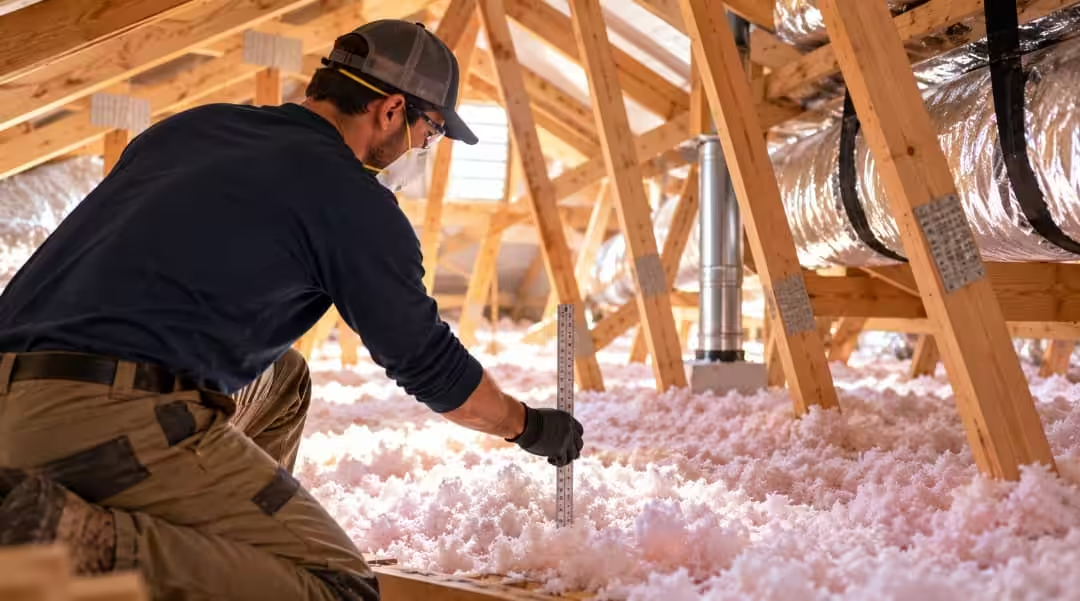
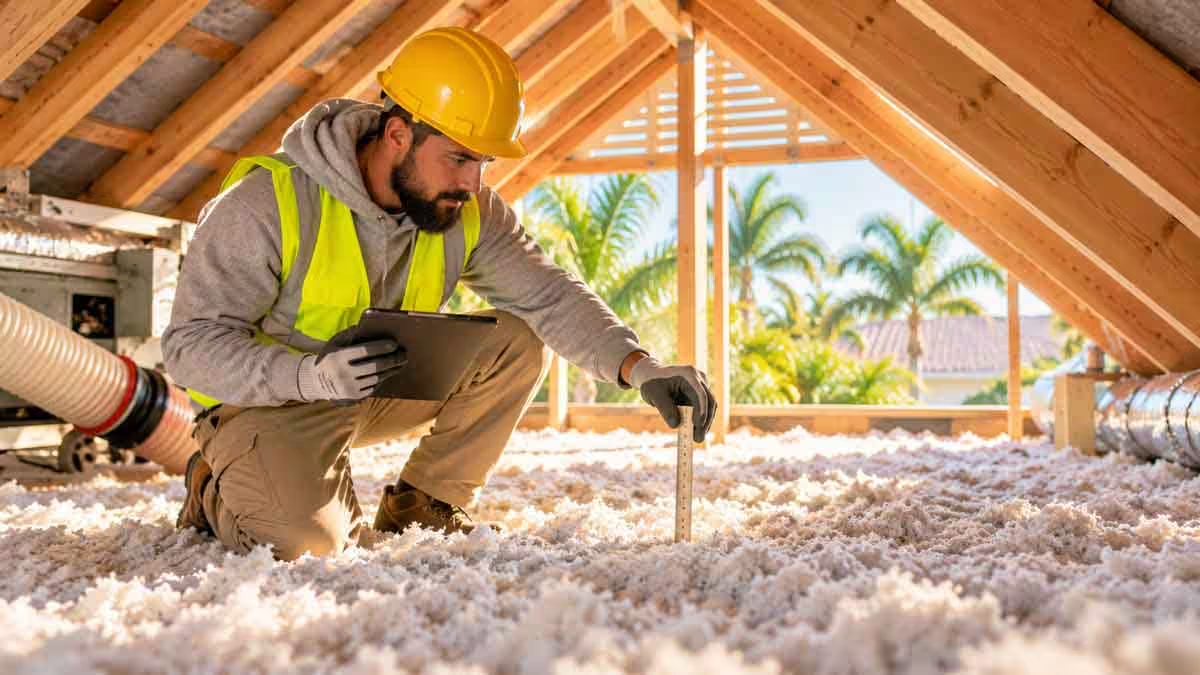
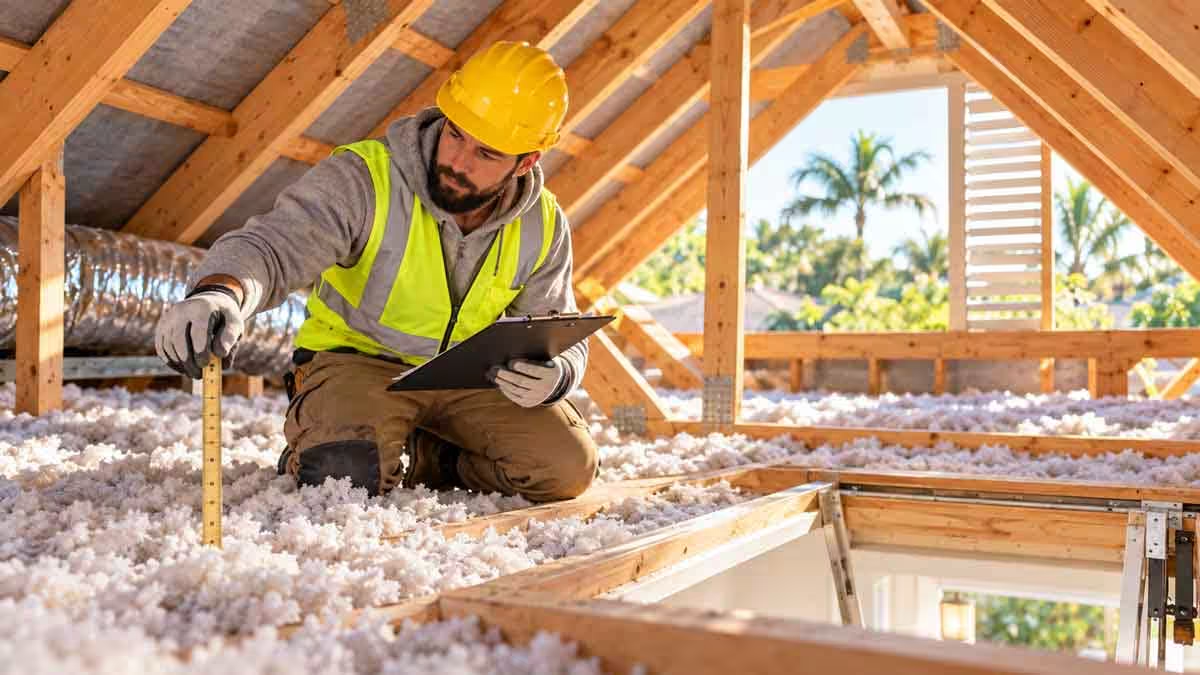
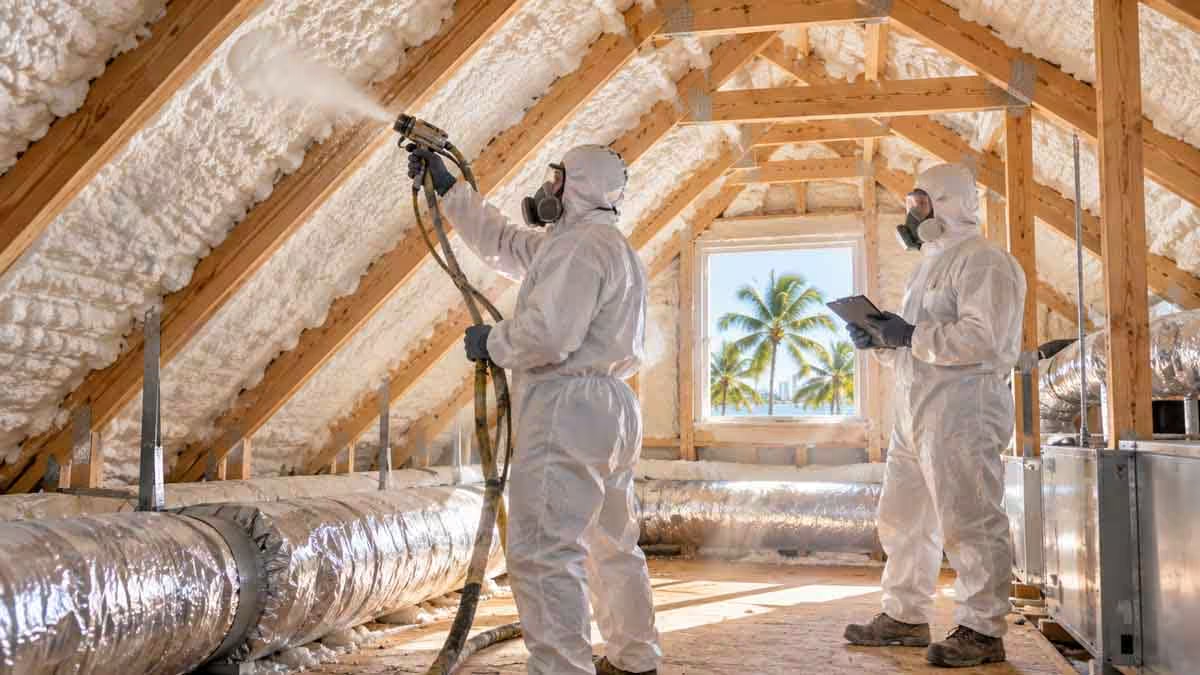
Radiant barriers and reflective insulation may be worth considering in a Broward attic, but their value depends on the product, the available air space, the roof assembly, existing insulation, ventilation, and installation quality.
This guide explains how to distinguish these materials, when they may complement conventional insulation and air sealing, and which moisture, dust, coverage, and maintenance issues to review before adding a reflective layer.
The key question is not whether foil works by itself, but whether it addresses the main source of heat transfer in the attic system.
What Is the Difference Between Radiant Barriers and Reflective Insulation in Broward Attics?
When comparing radiant-barrier and reflective-insulation products for a Broward attic, start with the product specification rather than relying on the label alone. Check whether the product is a radiant-barrier layer intended to face an air space or a reflective-insulation assembly that includes additional material.
Then confirm the required orientation, coverage, ventilation, and compatibility with the existing attic insulation before deciding whether it suits your project. A qualified attic insulation contractor in Broward County can help assess how the proposed material fits the existing assembly.
How Broward County’s Roof Slope, Roof Deck Material, and Venting Affect Radiant Barrier Performance
Roof slope, deck type, and ventilation all influence performance. A radiant surface generally works best when it faces an appropriate air space. In Broward County, sustained exposure to strong sunlight can increase roof heat gain and contribute to higher attic temperatures.
Roof deck materials also differ in how they absorb, store, and release heat, which affects the timing and amount of heat transferred into the attic. Ventilation can help remove accumulated attic heat when the system is properly designed, but its effectiveness depends on the airflow paths and the overall roof assembly.
Poor ventilation can leave more heat in the attic, while blocked or improperly configured vent paths may create additional moisture-management concerns. The reflective layer should therefore be evaluated alongside the existing insulation, air sealing, and ventilation strategy.
Comparison Between Radiant Barrier vs Conventional R-Value Insulation: Cost, Cooling Savings, and Payback Time
For a Broward County attic, compare a radiant barrier with conventional R-value insulation by separating three questions: the added material and installation cost, the expected effect on cooling demand, and the time needed to recover that cost.
Treat a radiant barrier as a targeted reflective layer whose value depends on the attic assembly and installation conditions, rather than assuming it can replace insulation. Conventional insulation should be evaluated by the additional R-value it provides and whether other weaknesses, such as air leakage, remain.
Before choosing either option, have the attic assembly assessed so the upgrade addresses the main source of heat transfer and projected savings are not overstated. The most appropriate investment may be improving existing insulation, sealing air leaks, adding a radiant barrier, or combining measures where the building conditions support them.
Checklist of Preconditions When Radiant Barriers Actually Lower Cooling Bills in South Florida
After you weigh cost and payback, use this five-step check.
Seal air leaks and verify that existing attic insulation is adequate. A radiant layer will not offset major heat gain from gaps or insufficient R-value.
Confirm that the selected product can face an appropriate air space in the proposed installation. Its effectiveness depends on the reflective surface and surrounding assembly.
Assess how much direct sunlight the roof receives during hot South Florida days. The potential benefit depends partly on how much radiant heat contributes to the attic’s overall heat gain.
Check whether ducts or cooling equipment sit in the attic. Reducing attic heat may benefit equipment located there, although the result depends on insulation, duct sealing, and other conditions.
Verify that the attic can remain dry, reasonably clean, and properly ventilated where ventilation is part of the design. Dust, moisture, and installation defects can reduce the reflective surface’s effectiveness.
Process for Correct Installation of Radiant Barriers in Broward Attics to Avoid Dust, Moisture, and Performance Loss
Use these five installation steps in Broward attics.
Address roof leaks, damp decking, and major air leaks before installing the radiant barrier. Dry, sound attic surfaces help reduce moisture-related risks.
Install the product according to its specifications and the intended assembly. Some radiant barriers are attached to roof framing, while other reflective products require different placement. Maintain the air space required by the product design.
Keep soffit, ridge, and other designated ventilation paths clear when the attic uses a vented assembly. Blocked vents can interfere with intended airflow and moisture management.
Install the sheets with the specified coverage and fastening method, then repair tears or missed sections as directed by the manufacturer. Gaps and damaged areas can compromise continuity.
Protect the reflective surface from dust accumulation, moisture, loose insulation, and damage during later service work. A contaminated or damaged surface may reflect less radiant heat.
Common Questions Homeowners Have About Using Reflective Insulation in Broward Attics
These four quick answers cover common questions about reflective insulation in a Broward attic.
Can reflective insulation replace regular attic insulation? No. A radiant barrier helps limit radiant heat transfer under suitable conditions, but it does not replace adequate conventional insulation or necessary air sealing.
Where should reflective insulation go? Placement depends on the product and assembly. Many radiant barriers require an air space beside the reflective surface. If the required air space is missing or dust accumulates on the surface, performance may decline.
Will it help every Broward home? No. Benefits are more likely when roof-related radiant heat is a significant contributor to attic heat gain and the building conditions support effective installation.
Does the shiny surface stay effective forever? Its performance can decline if the surface becomes dirty, damaged, or affected by moisture. The product should remain in the specified condition and be protected during subsequent attic work.
Limitations and Risks of Relying on Reflective Materials in Hot and Humid Climates
Before relying on a reflective layer in a Broward attic, treat it as one part of the assembly rather than the only improvement. Confirm that the product is installed with the required air space, remains accessible for inspection where necessary, and will not be covered by dust, damaged by later work, or exposed to unresolved roof leaks.
Also review existing insulation, air sealing, ductwork, and ventilation before estimating savings. Correcting those conditions may be more appropriate than adding reflective material alone. Ask the installer to explain how the proposed layer will interact with the roof deck and attic-floor insulation, and request product-specific installation and moisture-control guidance.
In a hot, humid climate, the goal is to manage heat transfer without compromising the assembly’s moisture-control strategy. Reflective materials should not be used to conceal existing moisture problems or substitute for a properly designed insulation system.
What Kind of Energy Savings and Indoor Temperature Reductions to Expect from Radiant Barriers in Broward
For a Broward attic, treat a radiant barrier as a conditional upgrade rather than a guaranteed bill-cut measure. Before assigning it a savings target, assess the existing insulation, air sealing, duct placement, roof assembly, and ventilation.
Compare the expected cooling-load benefit with alternatives such as improving weak insulation or reducing air leakage. A radiant barrier should be evaluated as part of the attic system, not as a substitute for every other measure. No specific indoor-temperature reduction or electric-bill percentage should be promised without a property-specific assessment.
Typical Mistakes That Reduce the Effectiveness of Radiant Barriers in Local Attic Installations
When reviewing a radiant barrier in a Broward attic, check five potential installation problems: missing clearance between the reflective surface and adjacent materials; dust or debris on the reflective face; blocked ventilation routes; treating the barrier as a substitute for conventional attic insulation; and gaps, tears, or unsealed sections created during installation or later service work.
Confirm the barrier’s placement, continuity, ventilation, and relationship to the rest of the insulation system before judging its value. Product instructions and the approved attic design should guide any corrections.
Radiant barriers and reflective insulation can be useful in some Broward attics, but they are not universal substitutes for conventional insulation or air sealing. Before adding a reflective layer, review the attic assembly, available air space, ventilation, existing insulation, ductwork, and the risk of dust or moisture affecting performance.
Compare the proposed upgrade with other improvements that may better address the main source of heat transfer. An attic assessment can help you decide whether attic insulation in Broward County, a radiant barrier, or another measure best fits the property.