Sustainable Insulation Options for Commercial Contractors: Low-Carbon Materials That Meet Performance Demands
Choosing sustainable insulation for commercial work means more than chasing a green label. The better question is which materials lower environmental burdens without creating new performance problems. Insulation choices should weigh R-value, recycled content, embodied greenhouse gas emissions, sourcing, end-of-life handling, and project requirements. That distinction matters.
A product may sound greener yet fit the assembly, climate, or code path poorly. Broward Insulation Service examines low-carbon insulation through that practical lens: building performance first, with carbon impact close behind.
What Makes Insulation “Low-Carbon” in Commercial Construction?
In commercial construction, low-carbon insulation is not a single product label. It is a material choice judged by carbon impacts across its life cycle: raw material extraction, manufacturing, transport, installation, replacement, and end of life.
A product may perform well thermally yet carry a heavier carbon burden upfront. The reverse can also be true. For insulation options for commercial contractors, the useful question goes beyond recycled content or a green marketing claim.
A low-carbon option usually reflects lower embodied carbon. It must also meet the project’s real performance demands. These include durability, code fit, moisture tolerance, and installation conditions.
If those needs are missed, early replacement, waste, or poor field performance can erase part of the carbon benefit. This approach weighs the full service life, not one feature alone. The low-carbon standard is therefore practical, not symbolic.
It means lower emissions, with enough building-grade performance to hold up in service.
How Embodied Carbon and Operational Performance Pull in Different Directions
Embodied carbon and operating results matter because the lower number is not always the better spec.
Embodied carbon is the upfront emissions tied to making and delivering a product. Operational performance is what the assembly does later, especially for heat flow, moisture control, and service life.
Those goals can pull apart when a lower-carbon material needs more thickness, stricter detailing, or earlier replacement. A lighter manufacturing footprint does not guarantee lower whole-building impact once maintenance and energy use enter the picture.
Commercial buildings can have demanding performance requirements, particularly in warehouses, medical buildings, data centers, and other facilities where thermal stability and reliable operation matter. Those requirements still shape what counts as a practical low-carbon choice.
For commercial specs, the decision point is balance rather than purity. A strong option lowers upfront emissions without creating operational penalties that erase part of that gain over time.
Which Sustainable Insulation Materials Compete on Real-World Performance
Actual job requirements reveal a clear test: the strongest insulation options for commercial contractors stay competitive when real performance screens tighten.
Thermal fit: A credible low-carbon option still has to deliver the needed assembly performance. If it requires major thickness, framing changes, or lost usable space, its practical advantage shrinks fast.
Moisture resilience: Real-world contenders must handle the wetting, drying, and moisture conditions the enclosure will see. A lower-carbon product can fall out of the running when moisture risk raises maintenance or replacement exposure.
Service-life stability: Materials compete better when their key properties hold over time. If long-term performance depends on unusually strict protection or ideal conditions, specification risk rises with it.
Project compatibility: The best candidates also match the building program, sequencing, and code path. No single option usually wins everywhere. The durable choice is usually the one that balances carbon goals with fewer downstream compromises.
Where Mineral Wool, Cellulose, Cork, and Foam Alternatives Fit Best
Placement matters most once broad contenders are on the table, because each low-carbon insulation type solves a different commercial problem. These materials may be considered for specific projects, but their suitability depends on the assembly and project requirements.
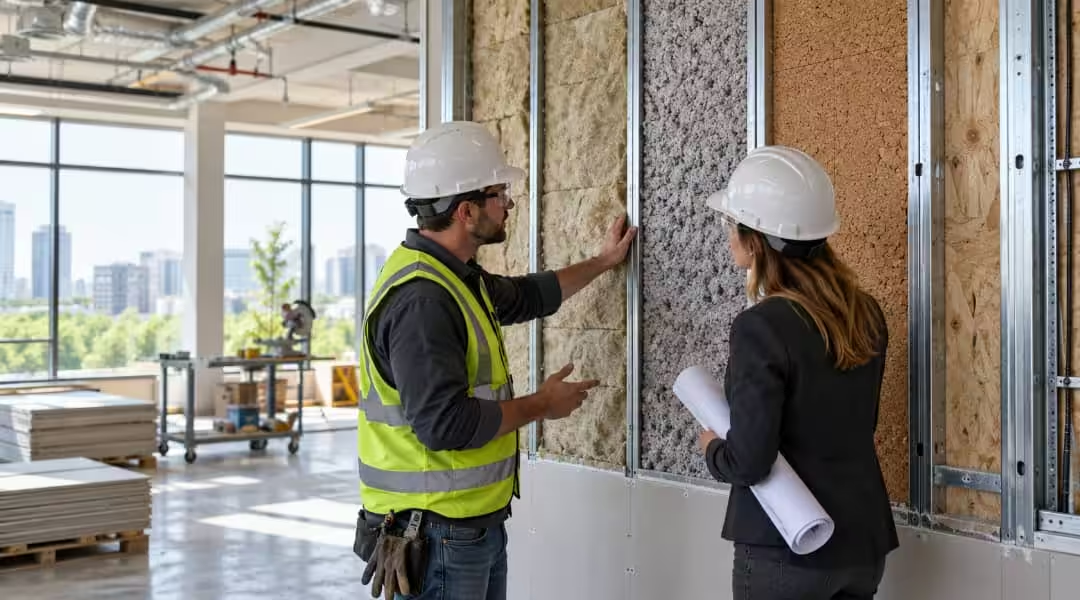
Mineral wool: A potential fit where fire performance, dimensional stability, and sound control matter. It can earn attention in assemblies that need durable acoustic or fire-related performance.
Cellulose: Best suited to assemblies that can use blown-in coverage and protect the material from bulk water exposure. Its appeal weakens when wetting risk, settling concerns, or detailing complexity raise long-term uncertainty.
Cork: Often fits niche applications better than broad commercial specifications. Thermal and moisture traits can be attractive, but thickness, availability, and system familiarity may limit routine use on larger projects.
Foam alternatives: These fit best when a project needs higher thermal resistance in less space, but the sustainable case depends on the specific chemistry and blowing agent. Space savings can help, yet carbon claims still need product-level review.
How Fire, Moisture, Acoustics, and Code Requirements Narrow the Options
Those material fits narrow fast once assemblies face fire ratings, wetting risk, sound targets, and the code path. At that point, the best low-carbon choice is usually the one that clears more constraints with fewer add-ons.
Fire performance often becomes the first hard screen. If an assembly needs specific fire performance or an approved fire-resistance rating, some otherwise attractive low-carbon materials drop out before thermal performance even matters.
Moisture exposure is the next filter, especially where bulk water, humid air, or slow drying can occur. A material that performs well on paper may become a higher-risk specification if it depends on perfect protection from wetting.
Acoustic goals can also shift the shortlist. When wall or floor assemblies need reliable sound control, density, fit, and long-term stability matter more than a simple sustainability label.
Code compliance ties the whole decision together. For insulation options for commercial contractors, the practical winner is usually the product that satisfies fire, moisture, and acoustic demands without forcing complicated detailing or substitutions later.
Why R-Value Alone Is a Weak Filter for Commercial Insulation Decisions
Rather than treating one thermal number as the whole decision, it helps to ask what that number leaves out in commercial assemblies.
R-value is a narrow snapshot, not a full performance profile. It can show resistance to heat flow, yet still miss how an assembly handles joints, penetrations, and transitions.
Assembly design changes the meaning of the same rated product. Once thickness limits, cladding attachments, roof geometry, or cavity depth enter the picture, a higher nominal value may not deliver the cleanest overall result.
Long-term performance also matters more than a label comparison suggests. If the material is harder to fit well, more vulnerable to damage, or less stable in service, the installed outcome can drift from the stated number.
That is why insulation options for commercial contractors are usually filtered through system fit, not R-value alone. A better commercial choice is often the one that reaches the target with fewer design penalties, field complications, and performance surprises later.
What Installation Quality Can Do to a Material’s Carbon and Energy Payback
Good installation can determine whether a lower-carbon insulation choice pays back as planned or starts losing that advantage.
Gaps, compression, and missed transitions reduce real thermal performance. When that happens, HVAC loads can stay higher for longer, which slows the energy payback that helped justify the material choice.
Poor fit can also raise carbon impacts through rework and waste. Extra cuts, damaged material, contaminated fill, or early replacement add emissions that product comparisons usually do not capture on paper.
Some materials are less forgiving in the field than others. A product with strong stated performance may deliver less in service if the assembly has many penetrations, irregular cavities, or sequencing conflicts.
That does not mean only the easiest material is the best one. It means insulation options for commercial contractors look stronger when crews can install them consistently, protect them during follow-on trades, and preserve the intended assembly performance.
How Climate and Building Type Change the Best Material Choice
Climate and occupancy reset the decision criteria, so the best low-carbon choice is rarely universal.
Building type comes first because project goals are not identical. Warehouses, medical buildings, data centers, multifamily properties, and other commercial facilities can have different requirements for energy efficiency, moisture control, durability, and comfort.
Building use can shift that balance. A high-occupancy facility may place greater emphasis on comfort and HVAC performance, while a specialized commercial space may have stricter requirements for moisture, sound, fire performance, or operating conditions.
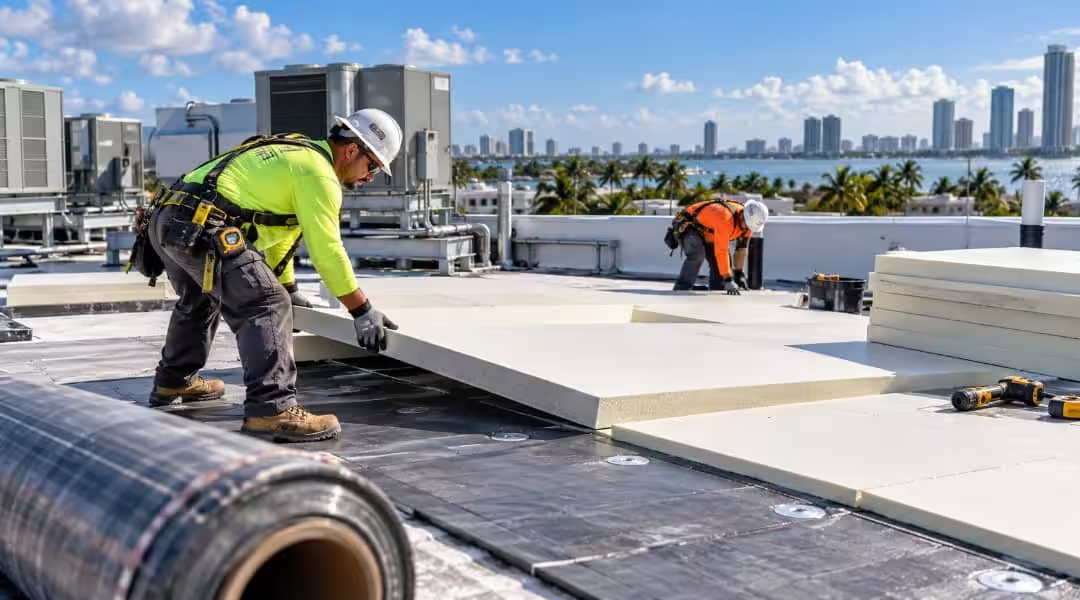
Climate changes what matters most in service. South Florida’s heat and humidity increase the importance of moisture control, air sealing, and consistent thermal performance when evaluating sustainable insulation.
That is the practical lesson for insulation options for commercial contractors. Different commercial properties may all pursue lower carbon, but the soundest specification matches the local climate and the building’s operating demands at the same time.
What the Tradeoffs Look Like on Cost, Availability, and Spec Risk
Cost usually narrows the shortlist before performance questions are fully resolved. A lower-carbon insulation product may look attractive on paper. Yet it can raise total project cost through added thickness, longer lead times, unfamiliar detailing, or limited installer familiarity.
Availability matters just as much. If a material is hard to source in the needed volume, substitutions become more likely. Those substitutions create specification risk. The risk is not only technical. It can also affect schedule control, coordination with adjacent trades, and approval time.
These effects become more likely when reviewers are less familiar with the assembly. Some products justify that complexity when a project has strong carbon targets or a clear performance fit. Others do not.
For insulation options for commercial contractors, the practical choice often delivers a credible carbon improvement without fragile procurement, redesign pressure, or late-stage value engineering. In other words, the best sustainable specification is often the one most likely to survive bidding and construction intact.
Sustainable insulation can meet commercial performance demands, but only as a qualified choice. The strongest options lower upfront carbon without creating moisture, fire, acoustic, space, or installation penalties later.
That usually rules out any single best material across every assembly. Mineral wool, cellulose, cork, and foam alternatives each fit better in specific conditions, not universally. R-value alone is too narrow for sound commercial selection.
Climate, building type, code demands, installer consistency, and specification risk all matter. The practical path is to favor materials that balance lower embodied carbon with durable, buildable, code-ready performance.
That balance, not a green label, is what makes a sustainable specification hold up.